Health & Fitness
Here's How Clean Alexandria's Drinking Water Was In 2018
Virginia American Water released a report detailing water quality standards for water in Alexandria homes and businesses.


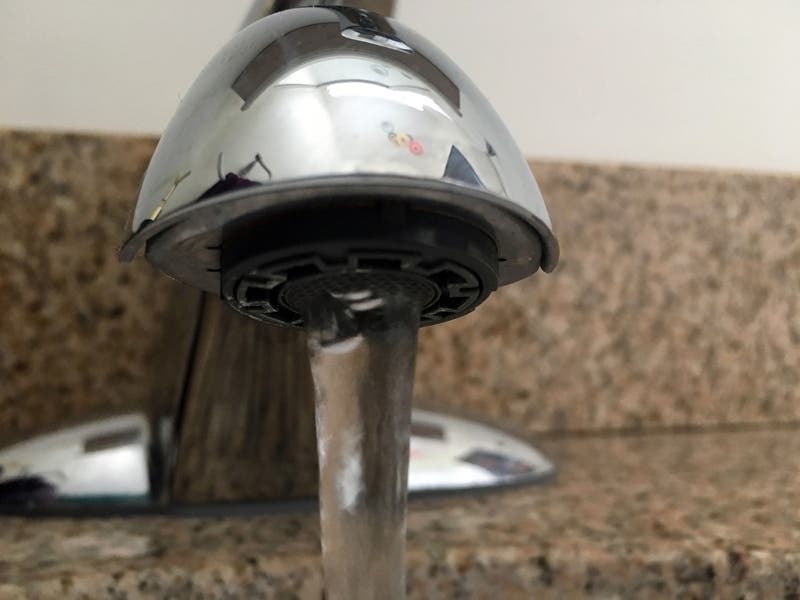
ALEXANDRIA, VA—Virginia American Water, the utility provider of drinking water for Alexandria, has released a report on the water quality in 2018.
Alexandria's water comes from two water treatment plants owned by Fairfax Water: the J. J. Corbalis water treatment plant on the Potomac River and Griffith plant is at the Occoquan Reservoir. The report overall found water provided to Alexandria homes and businesses met or surpassed state and federal drinking water standards.
Here's a breakdown of the results for Alexandria:
Find out what's happening in Old Town Alexandriafor free with the latest updates from Patch.
By subscribing, you agree to Patch's Privacy Policy and Terms of Use.
- pH
- The water averaged 7.7 pH units
- A pH of 7 is neutral; acidic is lower and basic is higher
- Water hardness
- Hardness results from calcium and magnesium, minerals naturally present in water
- Hardness levels averaged 75 parts per million, which is moderately hard
- Sodium
- Sodium level was 19.5 parts per million (ppm)
- The recommended maximum contaminant level is 20 for people on a "strict" sodium diet
- Turbidity
- Defined as clarity of the water
- The major source in drinking water is soil runoff
- 0.03 Nephelometric Turbidity Units (NTU) for 95 percent of samples
- Highest measurement was 0.27 NTU
- The treatment technique requirement is 1 NTU or less
- Compliance achieved
- Total Organic Carbon (TOC) Removal
- TOC provides a medium for the formation of disinfection by-products such as trihalomethanes and haloacetic acids
- TOC is naturally present in the environment
- The quarterly running annual average was 1.3
- The quarterly running annual average is to be above 1 to be in compliance
- Compliance achieved
- Coliform bacteria
- The major source is bacteria naturally found in the environment
- The highest percentage detected is 0 percent
- Compliance achieved
- Disinfection levels
- Chlorine is a disinfectant used to control microbes
- Free chlorine is used as a disinfectant in the water in April, May and June during the water main flushing program, causing a taste and odor of chlorine in your water
- The less noticeable combined chlorine (chloramines) is used other times in the year
- The highest monthly average was 3.1 ppm
- The low-high range was 1.0 to 3.7 ppm
- The highest level of disinfectant allowed in drinking water is 4 ppm
- Compliance achieved
- Disinfection by-products
- Trihalomethanes and haloacetic acids are by-products of drinking water chlorination
- The average amount of trihalomethanes found was 24.9 parts per billion (ppb) and the low-high range was 8.6 to 46.5 ppb
- The highest contaminant level of trihalomethanes allowed is 80 ppb
- The average amount of haloacetic acids found was 25.0 ppb and the low-high range was 6.3 to 63.0 ppb
- The highest contaminant level of haloacetic acids allowed is 60 ppb
- Compliance achieved
- Lead and copper
- Results are for June to August 2016
- The typical source is corrosion of household plumbing
- The amount of copper detected was 0.136 ppm
- The maximum contaminant level goal for copper is 1.3 ppm
- There was no lead detected
- The maximum contaminant level goal for lead is 0 ppm
- Compliance achieved
- Regulated substances
- The alpha emitters (from decay of natural and man-made deposits) detected was 1.79 pCi/L (picocuries per liter) (tested in 2013-2014)
- The maximum contaminant level allowed is 15 pCi/L
- Barium (from discharge of drilling wastes; discharge from metal refineries; erosion of natural deposit) found was 0.028 ppm
- The maximum contaminant level allowed is 2 ppm
- Beta /photon emitters (from decay of natural and man-made deposits) found was 2.28 pCi/L (tested in 2013-2017)
- The maximum contaminant level allowed is 50 pCi/L
- Radium 226 (from decay of natural and man-made deposits) found was 0.284 pCi/L (tested in 2013-2014)
- The maximum contaminant level allowed is 5 pCi/L
- The fluoride (from erosion of natural deposits or water additive to promote strong teeth) found was 0.7 ppm
- The maximum contaminant level allowed is 4 ppm
- Nitrate as nitrogen (from runoff from fertilizer use; leaching from septic tanks, sewage; erosion of natural deposits) found was 1.19 ppm
- The maximum contaminant level allowed is 10 ppm
- Compliance achieved
- Unregulated substances
- All are by-products of drinking water disinfection
- There is no regulatory limit
- Chloroform found was 36.8 ppb
- Bromochloroacetic acid found was 4.4 ppb
- Bromide found was 0.04 ppm
- Dibromoacetic acid found was 1.3 ppb
- Dichloroacetic acid found was 40.6 ppb
- Monobromoacetic acid found was 3.6 ppb
- Trichloroacetic acid found was 18.7 ppb
- Bromodichloromethane found was 8 ppb
- Chlorodibromomethane found was 3 ppb
- Chlorate found was 0.37 ppm
- Monochloroacetic acid found was 8.8 ppb
Get more local news delivered straight to your inbox. Sign up for free Patch newsletters and alerts.