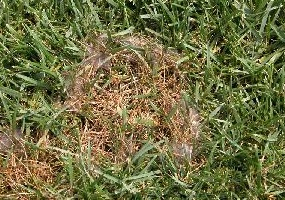
This week I've been inspired to explore lawn fungus in more detail by a question I received from a reader in ALASKA!
Dawn from Alaska writes:
Help! I just put in a lawn 14 days ago. I discovered pythium blight. First, I suspected dollar spot, but it turns out I might have several types as I see bright orange spores now too. We don't ever have this problem here. I did research, and first used soap and ammonia in a small area to start – that was Friday. Saturday, I read that seaweed extract could be good, so sprayed that on. Sunday, I notice pythium blight and used aqua shield botanical. Monday it was growing through the yard rapidly. Monday night I used Bayer Fungicide for lawn. Only one you can find here. Looks better some areas, greasy spots are lightening to brown, and areas that had round white spots have calmed down and drying up. There is some cobwebbing and rust spores and the greasy spots still look viable. I watered the very dry parts well on Tuesday, and did not water on the side that doesn't get to much sun. I wanted to know if I should put seaweed extract or aqua shield or both back on to get good bacteria on the lawn and help root system. I've never put so much on a lawn in such a short amount of time. The grass still seems to be thriving. What would you suggest? I just want the root system to survive and the grass that made it. Thank you so much I appreciate any help.
Find out what's happening in Old Town Alexandriafor free with the latest updates from Patch.
Well, Dawn I believe that Alaska is having a relative heat wave this summer, which means your lawn is experiencing what many lawns do in the lower 48. During these hot and humid months Pythium Blight, Dollar Spot, and Brown Spot are known to settle into new lawns because of their immature root structures, or stressed lawns due to the hot weather. You may have one or more diseases running through your new lawn, and working your way up to the Bayer Fungicide was the right thing to do. The bright orange spores sound like rust while the cobwebbing is indicative of pythium blight. Professionals use Banol, which is made by Bayer to treat pythium blight a derivative of what you applied. While I think using organics like seaweed and aqua shield are an important part of any lawn maintenance, I recommend the following to control the disease and bring back the healthy grass:
1) Aerate and Overseed: Understanding that your lawn is still very new – I recommend only aerating areas affected by disease and over-seeding those areas as well.
Find out what's happening in Old Town Alexandriafor free with the latest updates from Patch.
2) Continue to mow your lawn: Do not stop mowing. There is a temptation not to mow when a lawn looks like it’s suffering from disease, but this makes it worse. Continue to mow, but ONLY in dry conditions. Mowing wet will spread the spores and worsen the impact of the disease.
3) Water: Keep up with watering, but avoid watering at night. I recommend watering early in the morning.
4) Continue with Fungicide Treatments: Continue with the treatments in the areas that suffer from disease. As the disease subsides, switch to preventative fungicide applications. Pythium blight is particularly good at lying dormant over winter – so I recommend using preventative fungicide for lawns with a history of disease.
5) If you can’t get it under control – hire a professional. It will save you time, money, and aggravation.
Here’s hoping your lawn bounces back soon!
Best,
Aaron Gorski
Owner, The Greener Side Lawn & Landscaping, LLC