Health & Fitness
Planting Fall’s Favorite Staples – Bulbs, Trees, and Shrubs
This week, I'm imparting some tips on how to plant some of fall's favorite staples – bulbs, trees, and shrubs.
Tip of the Week: How to successfully plant new trees, shrubs, or bulbs this fall!
Fall is the perfect time to plant or transplant just about anything. The temperatures are cooler, and yet the ground is still warm enough to successfully establish new root systems. Trees, shrubs, and bulbs make the perfect fall plantings. Follow these tips when planting these annual fall garden staples.
Planting or Transplanting Bulbs. Planting bulbs in the fall is the perfect opportunity to ensure early spring and summer color. Look for a bulb that is firm and large. The bigger the bulb the better the bloom. Next, if you have an issue with animals like deer or rabbits, plant daffodils, grape hyacinth, Siberian squill, allium, and English bluebell. If you have an issue with squirrels or chipmunks try spraying the bulbs with Repels – All, which is an all-natural repellent and does not harm the animal, but keeps them from eating your bulbs.
Find out what's happening in Old Town Alexandriafor free with the latest updates from Patch.
To plant a bulb dig a hole about 4 times as deep as the bulb is wide. Place the bulb in the hole, point side up. If you’re unsure which end is the point, place the bulb on its side. Mix a little compost into your soil, cover and water. If you’re transplanting, be sure to do this on a cool day and when the plant is no longer blooming or when the leaves are yellow. Dig out carefully so as to not damage the root, prepare soil with manure compost and cover. Do a little research on the bulb before moving. Some bulbs, like peonies need not be planted too deeply or they will not bloom. Also, if you’re moving a summer bulb like irises – wait for the leaves to turn yellow before moving. The bulbs actually store the nutrients from the leaves to help their growth for next year. When the leaves have turned yellow or brown, the bulb has stored all the nutrients it can and is ready to move.
Planting or Transplanting Trees or Shrubs: Trees and shrubs come in all shapes and sizes. If you’re planting trees or shrubs yourself, I recommend getting a size that is manageable for you. I recommend a professional to help you with large trees. Large or mature trees require a little extra manpower and in some cases machine power when it comes moving or digging.
Find out what's happening in Old Town Alexandriafor free with the latest updates from Patch.
Planting balled-and-burlapped trees or shrubs just takes a little measuring and few tools. First, lay your shovel across the top of the root ball. Then measure from the bottom of the rootball to the shovel. This will give you the measurement (depth) for your hole. Peeel down the sides of the burlap and the metal / wire basket, as it is not necessary to remove it completely. Mix in two shoveles of leaf grow with the soil you excavated and backfill around the rootball. Just fill in two-thirds to the top, and water. Then completely fill in with soil leaving a bowl shape at the base to collect water.
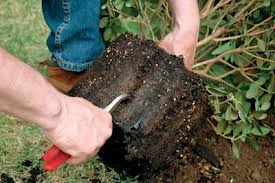
Planting container trees or shrubs is very similar to planting balled-and-burlapped trees, with a couple little extras. First, I recommend watering the plant before taking it out of the container. It will actually slide out a little better. Next before planting, break up or score the sides of the root ball to free up the roots. Following the instructions above (planting balled-and-burlapped), dig a hole and backfill with dirt. Be sure to water generously.
Finally, planting saplings is such a great way to involve your kids or is an obvious economical choice; eventually getting you the tree you want without breaking the bank. Saplings need to be planted rather quickly after purchasing or their roots will dry out. I recommend soaking the sapling root for 24 hours to get it really well hydrated. Then, before planting, snip off with clean scissors or garden shears, any broken roots or those that are considerably longer than the others. Dig a hole as wide as the roots when they are spread, then mound soil in the middle of the hole creating a perch for the sapling. Place the sapling on top of the perch and spread roots – the top of the tree trunk should be level with the ground. Backfill with the soil you excavated. Water generously and stake the tree if it’s in windy or vulnerable spot.
Good luck with planting this fall. Take the time to plant a few new trees, shrubs, or bulbs and you’ll be glad you did by next spring!
Please send all your landscaping and fall gardening questions to: email:PatchQuestions@GreenerSideLLC.com
Happy Fall Planting!
Aaron Gorski
Owner, The Greener Side Lawn & Landscaping LLC