Politics & Government
OP-ED: Fairfax County’s Housing 'Roadmap': Speed At The Community’s Expense
Citizens For Great Falls shares its concerns about Fairfax County's recently released Housing Task Force Action Plan.

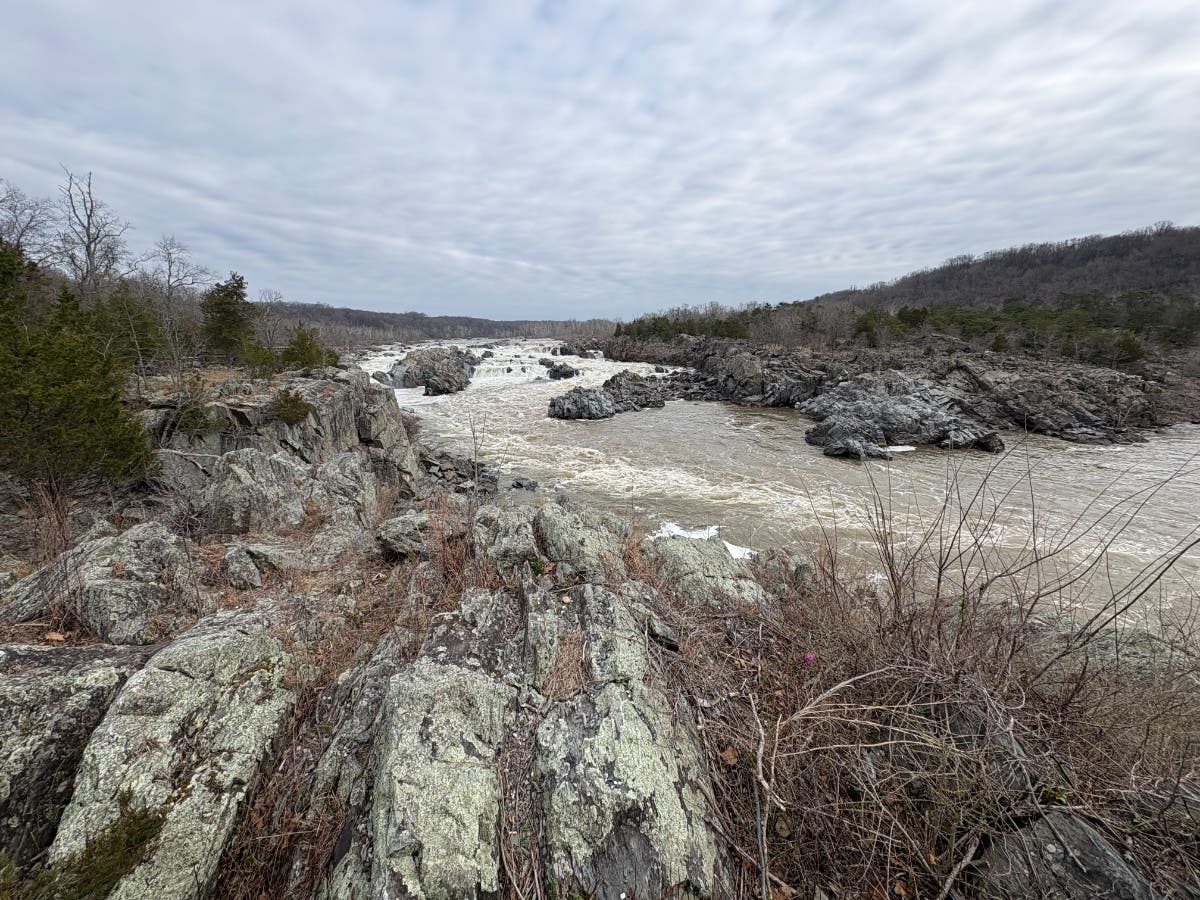
Jennifer Falcone, the secretary of Citizens for Great Falls, submitted this editorial outlining the group's concerns over the recently released Housing Task Force Action Plan Overview by Fairfax County.
GREAT FALLS, VA — Fairfax County’s Housing Task Force Action Plan, released May 12, is troubling not for what it proposes to build but for what it proposes to remove: the procedural safeguards that give residents a meaningful voice before land-use decisions become permanent.
Citizens For Great Falls has reviewed the plan carefully. Our concerns fall into four areas: the erosion of public hearing rights under the banner of “streamlining,” the near-total absence of infrastructure analysis, an ill-defined “Suburban Village Center” concept this organization opposed during Plan Forward, and an uncosted tax incentive program whose benefits flow as much to private developers as to residents.
Find out what's happening in Restonfor free with the latest updates from Patch.
STREAMLINING IS NOT NEUTRAL
The plan is candid about its goals. Developers surveyed by the task force said they wanted faster reviews, fewer discretionary hearings, and expanded “by-right” development pathways. The roadmap obliges on every count. What it does not discuss is what residents lose in the process.
Find out what's happening in Restonfor free with the latest updates from Patch.
The proposed Special Exception for affordable projects would allow density increases without a rezoning and without any finding of conformance with the Comprehensive Plan — removing the primary public forum in which neighbors contest a project on the record. A second initiative collapses the requirement that a Comprehensive Plan amendment precede a rezoning for nonconforming projects — eliminating one of the two public hearings that process guarantees. Taken together, these initiatives systematically reduce the number of required public hearings, limit grounds for objection, and restrict the factual record on which appeals can be based. That is not efficiency. It is a structural disadvantage imposed on residents in favor of applicants.
A HOUSING PLAN WITH NO INFRASTRUCTURE CHAPTER
The plan targets 40,000 new homes in nine years but contains no analysis of what those households would require of the county’s roads, schools, storm systems or environmental buffers.
On transportation, the plan’s only road-network initiative is a working group to reconcile staff comments — a process fix, not a capacity study. Schools are absent: no enrollment projections, no boundary-stress analysis, no capital funding plan for new seats. The plan’s own goal is to retain families with children. More families mean more children. Stormwater is equally ignored: compact housing villages and Village Center densification each add impervious surface and accelerate runoff into already-stressed streams. None of these is a minor omission.
THE SUBURBAN VILLAGE CENTER PROBLEM
The plan proposes to designate “Suburban Village Centers” in the Comprehensive Plan in a way that would allow certain higher-density rezonings without requiring separate, site-specific Plan amendments. The concept is defined as mixed-use focal points in suburban neighborhoods along arterial roadways appropriate for medium-density housing. That description fits nearly every commercial corridor in the county’s inner suburbs.
Citizens For Great Falls raised this concern during the Plan Forward process. Our objection was not to mixed-use development as such. It was to the use of area-wide designations as preauthorization devices — establishing density entitlements through a broad planning document rather than through the parcel-level scrutiny that allows neighbors to assess traffic, massing, parking and compatibility with adjacent single-family streets.
The plan provides no criteria for how Village Center boundaries will be drawn or with what community input. Once inside a designated boundary, the most powerful citizen argument against a rezoning — that it contradicts the county’s own long-range plan — is gone in advance. 2 Engagement is scheduled only after internal recommendations are formed: residents are consulted on conclusions already reached, not invited to help shape them.
A TAX BREAK WITHOUT A PRICE TAG
The plan proposes a property tax incentive program authorized under 2026 state legislation. On its face it targets nonprofits. In practice, virtually all affordable housing is built through partnerships in which a for-profit developer holds the majority financial interest while a nonprofit holds a controlling stake on paper — that standard structure qualifies. The plan sets no cap, no duration limit, no income targets, and no clawback if affordability covenants lapse. The fiscal analysis — what this actually costs county taxpayers — comes after the program is designed. Residents are being asked to approve a subsidy whose price tag has not yet been written.
WHAT WE ARE ASKING
Citizens For Great Falls supports responsible housing growth. We do not support a process that treats community oversight as an obstacle. We urge the Board of Supervisors to: require infrastructure analysis before advancing density amendments; restore the dual-process rezoning sequence; mandate public notice for Accessory Living Unit approvals; establish transparent Village Center boundary criteria with real community input; and publish the full cost, duration, and terms of the proposed tax incentive before any code revision is approved.
Fairfax County’s residents deserve a housing policy that is built with them, not around them.
Jennifer Falcone
Secretary, Citizens For Great Falls
Great Falls, VA.
Citizens For Great Falls is a community organization advocating for responsible land use, environmental protection and the preservation of the suburban and semi-rural character of Great Falls, Virginia.
Get more local news delivered straight to your inbox. Sign up for free Patch newsletters and alerts.