Politics & Government
NoVa Representatives Write to Transportation Sec. Layne on I-66 Widening
Raise concerns about lack of public input about road widening that would impact Vienna neighborhood.

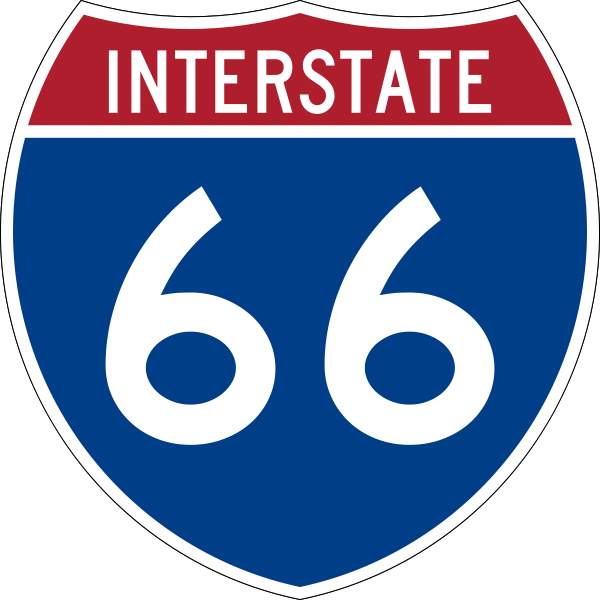
U.S. Representatives Gerald Connolly (D-11th), Donald Beyer (D-8th), Rob Wittman (R-1st) and Barbara Comstock (R-10th) on Thursday wrote to Virginia Secretary of Transportation Aubrey Layne to “express our concern with some aspects” of VDOT’s plans to widen I-66.
The four members write that “outreach and communication to homeowners and neighborhoods affected by the proposal has been too little and too late. Many homeowners in the corridor reportedly learned that VDOT planned to take their home and property when they showed up at a public meeting and studied the maps and planning documents themselves. This is unacceptable.”
As currently proposed, VDOT’s “Transform-66 Initiative” would completely demolish 32-35 homes located along I-66, and take away land from 223-228 properties, 6-8 park parcels, parcels of Stenwood Elementary, and depress property values of thousands of neighboring homeowners and businesses.
The hardest hit communities along the I-66 corridor are those located within the Dunn/Loring and Vienna, Virginia neighborhoods.
Find out what's happening in Viennafor free with the latest updates from Patch.
Here’s a copy of the letter:
April 16, 2015
Find out what's happening in Viennafor free with the latest updates from Patch.
The Honorable Aubrey L. Layne Jr.
Secretary of Transportation
Commonwealth of Virginia
Patrick Henry Building
1111 East Broad Street
Richmond, VA 23219
Dear Secretary Layne:
We write today to express our concern with some aspects of Virginia’s proposal to add tolled lanes and increase HOV-2 lanes to HOV-3 on Interstate Highway 66. While we wholeheartedly agree that I-66 is in dire need of improvement, the far-reaching implications of your proposal on commuters and neighborhoods, the rapid timetable proposed, and the lack of public input into the planning process are deeply troubling. Left unaddressed, these concerns would make it difficult for us to build support and consensus for this project.
We have an obligation to represent our constituents and are hopeful that we can work together to improve mobility in this important corridor. As you know, this proposal still has to clear a number of hurdles at the federal level, including NEPA review, the obligation of federal funds, certification that the conversion to tolled facilities will not “degrade” the existing facility, and potential federal loan guarantees. That is why we encourage the Commonwealth Transportation Board as well as the Virginia Department of Transportation (VDOT) to execute balanced decision making in this process and respectfully request that you keep us informed as these proposals move forward.
With regard to the proposed move to HOV-3 inside the beltway by 2017, we are very concerned by the accelerated timetable and are not convinced that other options to improve traffic flow, including stronger enforcement of current HOV violators, have been fully explored. Thousands of commuters in the I-66 corridor have planned their lives and commutes around HOV-2. By changing the date of conversion to 2017 from the previously-planned 2020, you will significantly impact the commuting patterns of our constituents and are giving them little time to adjust. VDOT’s lack of outreach and communication on the proposed move to HOV-3 is concerning. This is an issue that needs to be fully understood and debated publicly. Furthermore, VDOT itself notes that during peak hours 35% of eastbound cars and 50% of westbound cars are HOV violators. It seems that simply enforcing the existing HOV restrictions would significantly improve traffic flow inside the beltway.
Similarly, outreach and communication to homeowners and neighborhoods affected by the proposal has been too little and too late. Many homeowners in the corridor reportedly learned that VDOT planned to take their home and property when they showed up at a public meeting and studied the maps and planning documents themselves. This is unacceptable. We understand that VDOT is currently working to reduce impacts on neighboring properties and communities, and request that you keep us updated on the mitigation process.
We are also deeply concerned about the potential for this project to preclude future transit options in the I-66 corridor, including Metro or light rail. It would be shortsighted to allow this project to constrain our future choices. VDOT’s Alternative 2B would not leave sufficient room in the median for transit. That is unacceptable. While VDOT has made assurances that 2B can be constructed in a way that allows for future transit, it would significantly increase the cost of any future project.
Please understand that we are committed, on a bipartisan basis, to ensuring that our constituents’ voices are heard with respect to this project. VDOT must increase its efforts to effectively communicate with the public and with us as their federal representatives. We strongly urge that you work to address these concerns so that we can work together to reduce congestion and improve mobility in Northern Virginia.
Sincerely,
Gerald E. Connolly
Member of Congress
11th District
Robert J. Wittman
Member of Congress
1st District
Donald S. Beyer Jr.
Member of Congress
8th District
Barbara Comstock
Member of Congress
10th District
Cc: Office of Governor Terence R. McAuliffe
Get more local news delivered straight to your inbox. Sign up for free Patch newsletters and alerts.