Neighbor News
OPINION: Meals Tax Opponents Serve a Disinformation Buffet
A meals tax could help Fairfax County reduce its dependence on real estate taxes. Opponents are spreading disinformation.

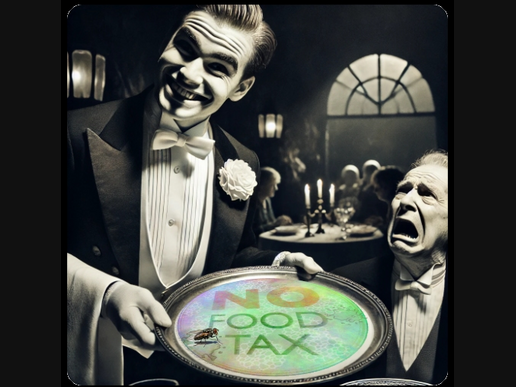
VIENNA, VA—Some Fairfax County restaurants are serving their entrées with a side of false and misleading claims after the Fairfax County Board of Supervisors asked the county executive for projections regarding a potential meals tax. Some local restaurateurs apparently want to preserve a tiny competitive edge over restaurants located in nearly every nearby jurisdiction in Northern Virginia—all of which, except Loudoun County, tax prepared meals. Restaurant patrons are being bombarded with fearmongering flyers paid for by Fairfax Families Against the Food Tax, a group largely funded by restaurants, suppliers, and other special interest groups during the 2016 dueling meals tax referendum campaigns.
These flyers falsely claim that all prepared and ready-to-eat foods and beverages sold in the county would be subject to a meals tax. But there are many meals tax exemptions already required by law. The occasional church or volunteer firefighter fundraiser, for example, would be meals tax free. Moreover, many ready-to-eat foods such as a pint of potato salad from the supermarket deli counter would not be subject to a meals tax (even if a hungry buyer grabbed a spoon to immediately dig in).
The flyers also claim, misleadingly, that food bills could be 12% higher for taxes (6% from the existing sales tax plus up to 6% for a meals tax). But 61% of overall food expenditures are spent on groceries, which would not be subject to a meals tax. For price sensitive households in the lowest income quintile, more than 70% of food expenditures would, on average, be exempt from a meals tax.
Find out what's happening in Viennafor free with the latest updates from Patch.
The flyers further claim a meals tax would cost county taxpayers up to $200 million every year. This is patently false. A meals tax could raise up to $198 million in revenues for the county, but 30–34% of those revenues ($59.4–67.3 million) would come from visitors to Fairfax County. This contribution from outside Fairfax County provides a crucial benefit to Fairfax County taxpayers. Tax revenues that come from non-residents reduce pressure to raise real estate taxes—an open secret known by leaders throughout Northern Virginia for decades.
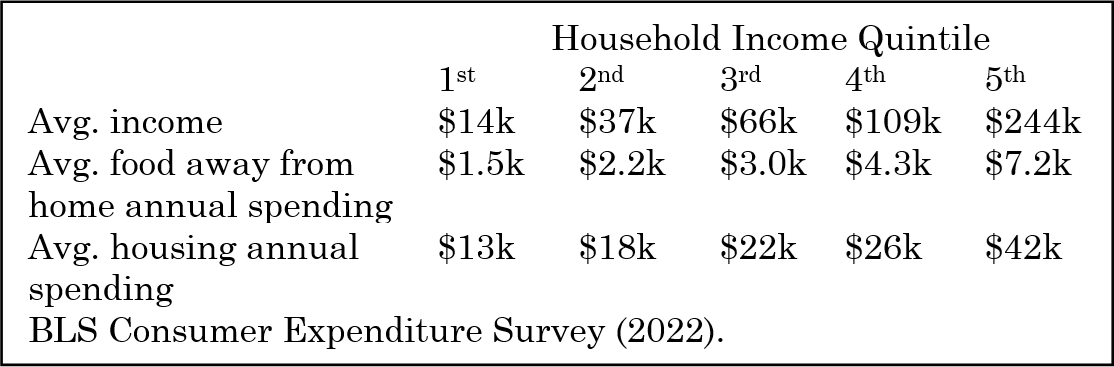
A meals tax would help, not harm lower income households the most. This is the exact opposite of what meals tax opponents claim.
Find out what's happening in Viennafor free with the latest updates from Patch.
Despite serious factual and analytical shortcoming in propaganda opposing a meals tax, some supervisors might still parrot false or misleading claims from organizations such as Fairfax Families against the Food Tax. Pandering to influential restaurateurs and anti-tax zealots can pay great political dividends, but it is not good leadership. Adopting a meals tax would be good for Fairfax County and its residents.
For example, adopting a meals tax would likely provide stronger, more stable growth tax revenue growth. Northern Virginia food away from home expenditures have historically grown about a percentage point faster than real estate assessments. Growth in food away from home expenditures is also poorly correlated with growth in real estate assessments. Thus, adopting even a small meals tax would make tax revenue growth more predictable.
Adopting a meals tax would also give the Board of Supervisors better options for managing the future of Fairfax County. Revenues for the next fiscal year budget, which is being squeezed by inflation and sickly growth in property values, could fall $382.23 million short. Thus, the Board will have to choose among bad options such as raising the real estate tax rate, cutting back on public services, freezing the salaries and benefits of county employees, or putting off infrastructure maintenance. A meals tax would not completely cover the projected shortfall, but it is the best option available for giving county leaders much-needed flexibility.
Meals tax opponents, having failed to rebut data-driven arguments for the meals tax, instead dish up foul-tasting propaganda. But given the benefits of a meals tax, the Board of Supervisors should send anti-meals tax propaganda—a disgusting dish of disinformation—back to the kitchen.