Community Corner
Super Blood Wolf Moon Eclipse: When, How To See It In NoVA, DC
The full wolf moon over northern VA and DC is special: A total lunar eclipse — known as a blood moon — occurs during a supermoon Jan. 20-21.


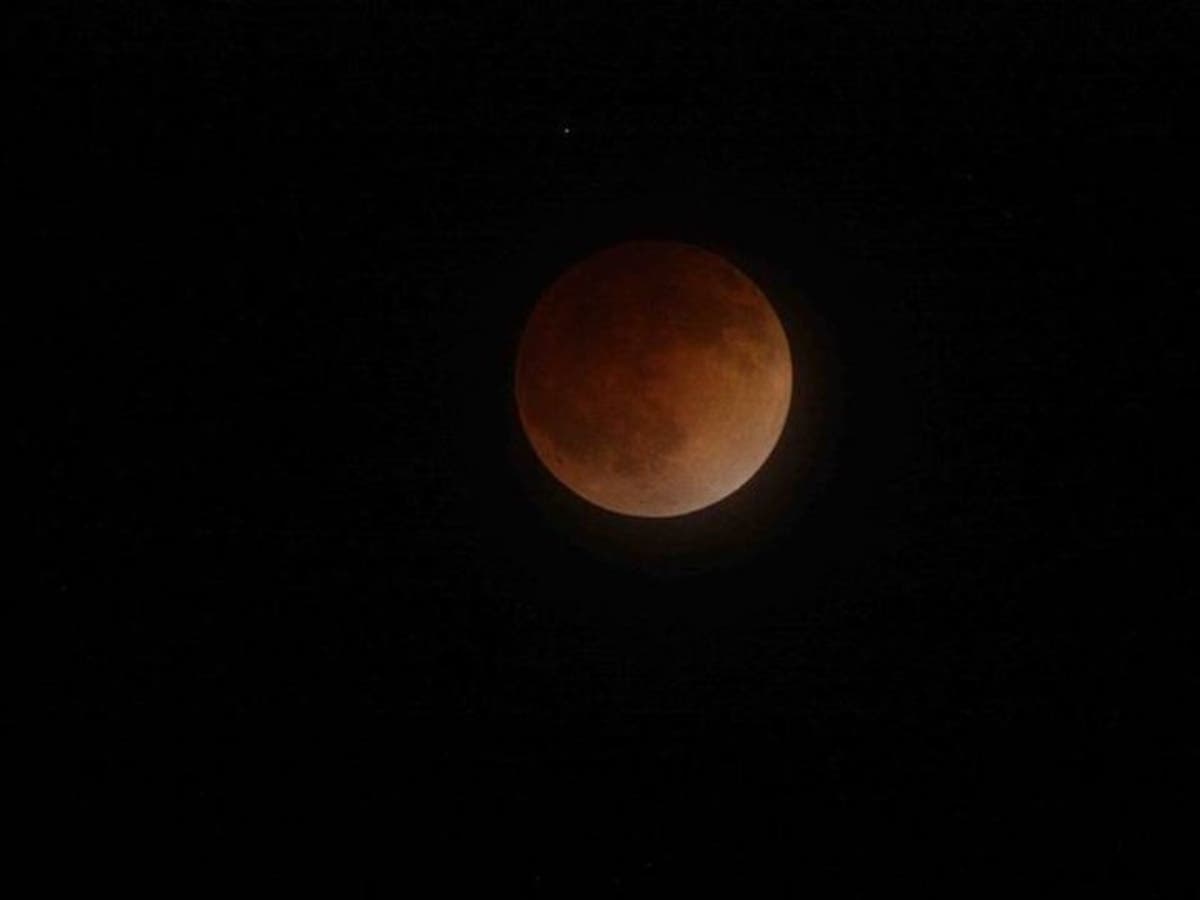
WASHINGTON, DC — A supermoon and total lunar eclipse will coincide Jan. 20-21 in a rare celestial occurrence that will be visible across North America. Whether you'll be able to see this event — also known for reasons we'll get into later as a "blood moon" and a "wolf moon" — in the District and northern Virginia is dependent on the weather, of course – and that's looking pretty good.
The National Weather Service is predicting snow and rain Thursday and Saturday nights, but by Sunday skies should be partly cloudy and give way to mostly clear for great viewing on Monday evening.
A total lunar eclipse, which only happens during a full moon, occurs when the Earth moves between the sun and the moon, blocking the sunlight normally reflected by the moon. The Earth's shadow falls on the entire moon and the orb takes on a dark red or copper color — hence the "blood moon" part of this celestial event — as it is illuminated by sunlight filtered and refracted by the Earth's atmosphere.
Find out what's happening in Viennafor free with the latest updates from Patch.
There's no need to take special precautions to protect your eyes to view the total lunar eclipse, as you would during a solar eclipse.
On Sunday night, Jan. 20, start watching the skies about 10:30 p.m. Eastern Standard Time as the Earth's shadow begins passing in front of the moon from the lower left. Total eclipse begins at about 11:41 p.m. Eastern Standard Time and continues for about an hour, after which the moon returns to its normal appearance.
Find out what's happening in Viennafor free with the latest updates from Patch.
Normal, though, is in the eye of the beholder in this case. Because it's a supermoon — a recently popularized term describing the phenomenon that occurs when a full moon coincides with the moon's closest approach to Earth, or perigee — it will appear larger than usual.
Lunar eclipses that occur during supermoons are rare, making this one extra special because it comes almost a year after the Jan. 31, 2018, super blood moon — also a blue moon, because it was the second full moon (and supermoon) of the month.
See Also: 2019 Guide To Meteor Showers, Total Lunar Eclipse And Supermoons
Having two full moon blood moons in back-to-back years is an oddity, NASA planetary scientist Rick Elphic told Time magazine.
"It's usually years between lunar eclipses that have supermoons in them," Elphic said. "We just happen to be in a seasonal cycle where last year there was one and then this year, there is one and I don't think there will be another supermoon eclipse for a while."
Early Native American tribes called the January full moon the "wolf moon" because it was the time of year when hungry wolves howled near their camps.
Some cultures refer to the first moon after Christmas as the "moon after yule."
(For more news like this, find your local Patch here. If you have an iPhone, click here to get the free Patch iPhone app; download the free Patch Android app here. And like Patch on Facebook!)
This story was reported by Beth Dalbey/Patch
Photo: NASA Ames Research Center / Brian Day
Get more local news delivered straight to your inbox. Sign up for free Patch newsletters and alerts.