Neighbor News
Medical Digital Infrared Thermal Imaging Redefines "Early" Detection
You have been asking the question … you're not alone. YES … there is a better way and it doesn't have to hurt!
Mammography continues to be scrutinized in relevant scientific and medical circles. “Should You Say No to a Mammogram?” (Oprah, Feb, 2015). Seriously … “Oprah”? If an icon of the “women’s voice” asks the question, it reaches critical mass.
A basic question we have to ask is “What’s up with 1.3 million women being misdiagnosed and mistreated; being told they have ‘cancer’ because their mammograms picked up ductal carcinoma insitu or DCIS?”
Most women did not read those ground-breaking, egregious study results (New England Journal of Medicine, 2012). Women’s health expert, Dr. Christine Northrup, tells us that DCIS, sometimes referred to as Stage 0, is NOT cancer and in the vast majority of cases will never progress to actual breast cancer. Mammography is not without risk, (Breasts: What Every Woman Needs to Know, 2014).
Find out what's happening in Sammamish-Issaquahfor free with the latest updates from Patch.
“We realized the benefits of mammography may not be as significant as we once thought.” says Dr. Eric Winer, Director of the Breast Oncology, Dana-Farber Cancer Institute (Oprah Mgz, Feb, 2015). I would add that until now, the quest for earliest detection to save our lives has somehow omitted facts about exposure to harmful ionizing radiation, breast trauma from compression, cancer “seeding” via biopsy, over-diagnosis, limitations in screening women with fibrocystic breasts, and unreliability in finding metastatic cancers. This leaves people searching for a safer, more effective method of routine screening for breast cancer (Plotkin, M., MD, Clinical Research/Review of Breast Thermography, 2014).
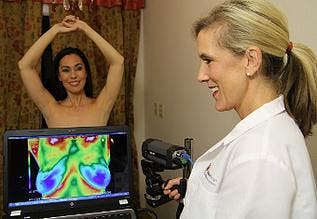
Medical Digital Infrared Thermal Imaging (DITI), or Thermography, does not use radiation or breast compression; it’s as simple as having your picture taken. The technology has been in use in medical diagnostics since the 1960’s. It was approved by the FDA as an adjunctive tool for the diagnosis of breast cancer (1982). High resolution infrared cameras and advanced IR integrated software sense the heat radiated from the skin that is correlated with pathology inside and digitally translate heat values into a colorful “topographic map” of the body. Board Certified Reading Physicians interpret the images to assess the current health of your breasts as well the influencing pathology from other regions of the body. Suspicious findings from both mammograms and thermograms require a biopsy to determine malignancy.
Find out what's happening in Sammamish-Issaquahfor free with the latest updates from Patch.
Thermography is not a replacement for mammography. Mammograms image a physical structure (tumor); you have to have breast cancer present before it can be imaged by mammography. Breast thermography images the vascular heat patterns of disease physiology that eventually form that tumor; 6-10 years before it develops big enough to be imaged by mammography. The physician can assess risk of future breast cancer before a tumor forms. This is the authentic healthcare prevention opportunity.
“Now DITI has the capability of making significant impact in medicine.”, (The American Jrnl of Surgery, 2008). Such is the case reported in “Advances in Integrative Cancer Medicine and Research: Using Digital Infrared Thermal Imaging ‘DITI’ Adjunctively in the Prevention and Treatment of Cancer”, (Cancer Strategies Journal, 2014).
Diana Duke is CEO, Founder of Advanced Healthcare Alliance in Issaquah. She is a Certified Clinic Thermographer.