Schools
Number of Greendale Grads Going On To College Declines
District looks for ways to better prepare graduating seniors for challenges that lie ahead of them.
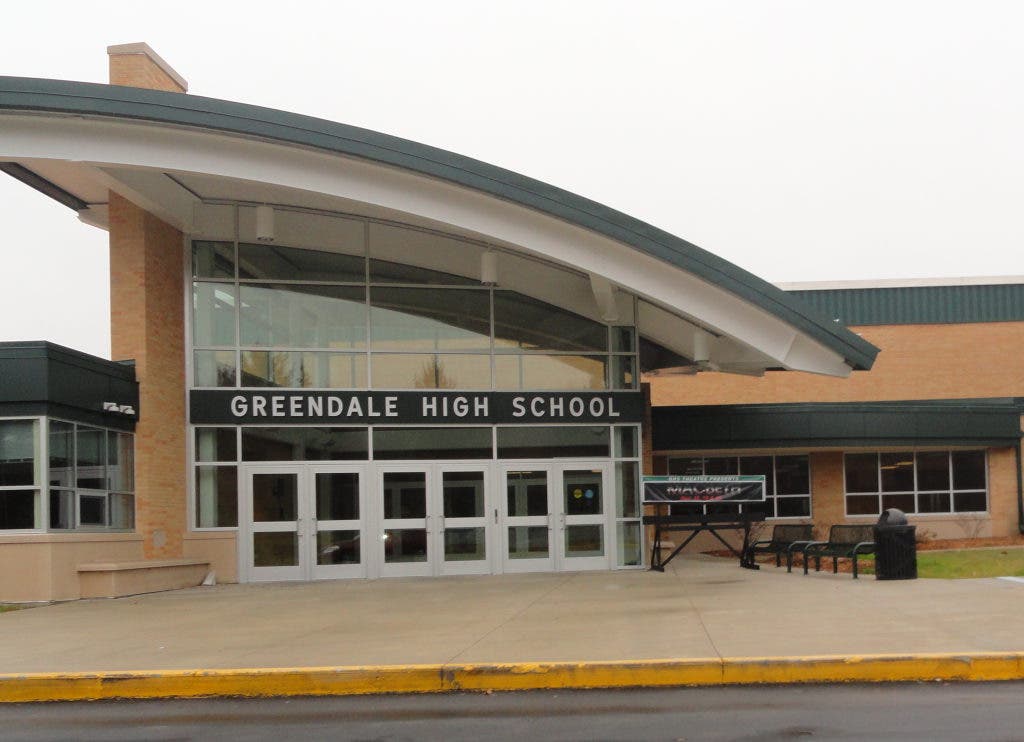
The rate at which graduates go on to post-secondary education is on the decline, according to a report presented to the school board on Monday.
The results are based on a report by StudentTracker, a reporting system that compares class data from 2007 to 2010. In the last four years, the percentage of GHS graduating seniors who went on to college declined from 96 percent to just under 88 percent. The report included both four-year and two-year colleges, as well as students who entered the military, apprenticeships or directly into the workforce.
The report, presented by high school principal Steve Lodes and Dean of Students Katie Petersen, indicates that more students may be choosing to go directly into the workforce due to the current economic climate. Lodes points out in the report however, that the majority of GHS students who do enroll in post-secondary education continue to stay in college as opposed to dropping out after the first or second year.
Find out what's happening in Greendalefor free with the latest updates from Patch.
"The success of a high school no longer hinges on how many students walk across the graduation stage each June," Lodes said. "Much more complex measures of college readiness and post-high school success paint a better, more cogent picture of success or areas of needed improvement."
Greendale superintendent William Hughes says the district's expectation is that every student has an action plan or pathway to the next step upon graduation. He believes it is necessary for districts and families to understand that next step is higher education, the armed forces or worker training.
Find out what's happening in Greendalefor free with the latest updates from Patch.
"It is no longer realistic for graduates or their family to expect that they are ready for work that has an income level that can support a family with a high school diploma," says Hughes.
Percentage of graduates that continue their studies at a post-secondary institution:
Scholarship amounts that students receive upon entering post-secondary education also decreased by over $438,000 from 2007 to 2010.
Scholarship amounts for recent graduating classes:
The report also demonstrated that less students are attending a four-year programs but the number of students attending two-year or less programs increased.
About 77 percent of students went on to a four-year degree program in 2007 and in 2010 that number declined to 64 percent.
In 2007 about 19 percent of student went on to a two-year or less programs and in 2010 that number increase to about 24 percent.
Students continuing to post-secondary studies attending two-year versus four year institutions:
Grad. Class 4-Year Programs % 4-year Programs (All Grads.) 2-year or Less Programs % 2-year Programs (All Grads.) 2007 167 Students 76.95% 42 Students 19.35% 2008 140 Students 72.53% 43 Students 22.27% 2009 148 Students 70.14% 42 Students 19.90% 2010 142 Students 64.25% 52 Students 23.52%In his report Lodes said, "Approaching one in four graduates immediately attend a two-year or technical college. This percentage has not fluctuated in a meaningful way over the past four years. Regardless of two or four-year school, each GHS graduate leaves with a career/transition plan."
Post-secondary institutions Greendale students frequently attend:
Class 2007Post-Grad # of Students UW-Milwaukee 48 Milwaukee Area Technical College (MATC)
33 UW-Madison 25 UW-Oshkosh 18 Alverno College 7 Class 2010 Post-Grad # of Students Milwaukee Area Technical College (MATC)
43 UW-Milwaukee 28 UW-Madison 26 UW-Oshkosh 13 UW-Whitewater 13
Lodes says that the most highly attended out-of-state schools in the past four years are University of Minnesota-Twin Cities with fifteen graduates attending, eight have gone to Winona State, four to University of Kansas, three to Brigham Young University, three to Drake University, and three to Notre Dame University.
Lodes and his team hope to use surveys given to high school seniors to improve their efforts towards preparing students for life after high school.
School board student representative and senior Carrie Staats says that it has been her experience that a good portion of her classmates don't really know how to navigate through financial aid and should receive more guidance on that aspect.
"Most people in my class have an idea of what kind of schools they can get into and handle academically," Staats said at the meeting. "A lot of them aren't going to as prestigious schools as they can handle because of financial restraints."
She thinks that the school and the guidance department should offer more meetings dedicated to helping students finding not only scholarships, but also teaching them how to navigate through financial aid, such as FAFSA, and finding private loans.
Lodes says there is one night in the year in which the guidance department discusses financial aid and scholarships, however, he also said that more nights might be needed to give everyone the opportunity attend at different hours.
Erin Green, director of business, said that offers one-on-one college counseling.
Staats believes that students choose to go to MATC and UW-Milwaukee to live at home to save money.