Crime & Safety
Defendant Takes Stand On Second Day Of Murder Trial For 2023 Tuscaloosa Shooting
Here's the latest from the Tuscaloosa County Courthouse on the second day of the murder trial of Reginal Peoples.


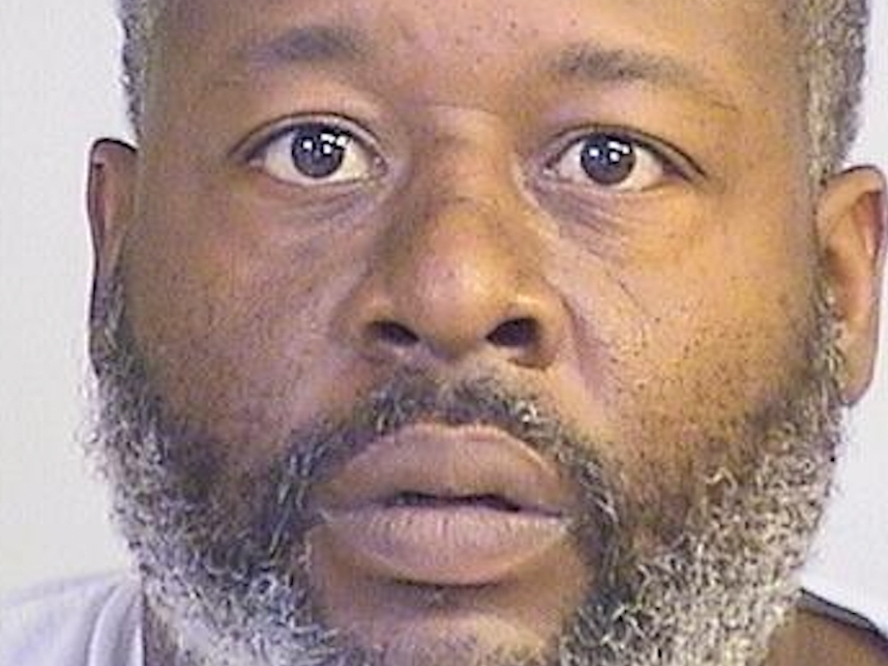
TUSCALOOSA, AL — A Tuscaloosa County jury heard more testimony Wednesday, including from the defendant, during the second day of trial for a Tuscaloosa man accused of shooting and killing another man in 2023.
Click here to subscribe to our free daily newsletter and breaking news alerts.
As Patch previously reported, multiple witnesses testified Tuesday as the state seeks a murder conviction for Reginal Dawayne Peoples after he shot 37-year-old Rufus Tyrone Carter IV on Queen City Avenue on March 30, 2023.
Find out what's happening in Tuscaloosafor free with the latest updates from Patch.
Prosecutors with the Tuscaloosa County District Attorney's Office opened the trial earlier in the week by alleging Peoples maliciously shot Carter multiple times and discarded the murder weapon before turning himself over to police.
Conversely, attorneys with the Tuscaloosa County Public Defenders Office urged jurors to carefully scrutinize the evidence and testimony presented indicating Peoples acted out of fear when Carter showed up at his home belligerent and looking for a fight.
Find out what's happening in Tuscaloosafor free with the latest updates from Patch.
Jurors on Wednesday heard from Tuscaloosa Violent Crimes Unit investigators Robert Newels and Archie Buford, with Newels testifying about processing the two crime scenes on Queen City Boulevard, along with Carter's Mercedes.
Newels noted projectile damage to the vehicle, which included one bullet hole through the back driver's side window, another through the driver's side door, and a third in the glovebox of the vehicle. Other physical defects also pointed out by Newels on the exterior of the car were indicative of gunfire.
Newels then testified about marking shell casings at the scene, which the prosecution has argued indicates the shooter was moving when he fired off 11 shots at Carter.
Patch reported on Tuesday that an autopsy showed Carter bled out after a bullet severed the femoral artery in his right leg.
Newels then discussed extensive efforts to recover Peoples' discarded handgun near the area of the Amtrak station off of Greensboro Avenue and its train tracks but said that hours of searching turned up empty.
During cross-examination by public defender Elise Tucker, Newels was presented with the possibility that ejected shell casings from the gun used in the shooting could've bounced off pavement or other surfaces to land in the spots where they were eventually recovered by investigators.
"It wasn't a 'spray and pray,'" Newels said in response, referring to instances where a shooter will wildly fire their weapon during a gunfight.
Carter's 21-year-old daughter was the next witness called to the stand by Assistant District Attorney Monica Rodgers.
Carter's daughter testified about her close relationship with her father and his involvement in her life, despite the fact she lived with her mother and Peoples — her stepfather.
"I'd never seen them have words with each other," she said of Carter and Peoples in the years leading up to the shooting.
Still, she said she wouldn't describe the two men's relationship as "good."
Instead, she reflected on one day where her father dropped her off at her mother's.
"[Carter] tried to speak to [Peoples] but he didn't speak out," she said.
After Buford testified and presented certain inconsistencies in the story Peoples told investigators in the immediate aftermath, the state rested and testimony was turned over to the defense, which called only one witness.
Patch previously reported that Peoples can only move around on his feet with the assistance of a walker and the accused father of nine sat in a black wheelchair at the defense table throughout the proceedings on Tuesday and Wednesday.
Public defender Morgan Peterson questioned Peoples about his condition and the circumstances that led up to the shooting.
Early on in his testimony, Peoples insisted he wasn't trying to kill Carter but did admit to shooting him.
He also said he did not know Carter's girlfriend and four-month-old baby boy were in the car when he started firing.
As for the condition that left him confined to a wheelchair in court this week, Peoples said he was in Louisville, Kentucky in 2010 when he was shot. He explained the bullet lodged in his spine and has since made it difficult for him to walk without assistance.
"It made me paranoid," he told the jury of the experience. "It made me real edgy and I fear for my life more because I almost died."
Peoples said this experience also resulted in a diagnosis of Post-Traumatic Stress Disorder (PTSD).
Peoples went on testify he'd known Carter since middle school but the two were never close friends.
However, their paths would cross again around 2020 — a couple of years after Peoples married the mother of Carter's daughter.
"I didn't have no problems with him but he had problems with me," he recalled.
Peoples then reflected on two separate instances where Carter seemed to express his contempt for Peoples.
The first seems innocent enough, with Peoples saying Carter showed up to his house one day and told him what he "better do and better not do," as it relates to Carter's daughter living with him.
Peoples said the other encounter, though, was about three years before the fatal shooting and saw Carter show up to his house when both of the men were alone. He testified that Carter pulled up beside him in his car drinking a Hurricane beer and with a gun visible in his lap.
"It just made me feel very uncomfortable," Peoples said. "Like he was trying to intimidate me."
His testimony then moved ahead to the night of the shooting and he remembered laying in bed watching "Dora The Explorer" with his two-year-old daughter when one of his other children came into the bedroom and told him somebody was at the front door asking for him.
Peoples said he grabbed his walker and made his way to the door, before throwing back a curtain and not seeing anyone.
He testified that when he opened the door, he saw Carter standing near Peoples' car in the driveway, while Carter's black Mercedes was parked along the street.
Reinforcing previous arguments by his defense team, Peoples said Carter became belligerent and kept calling him a "bitch-ass [N-word]"
It was at this point, Peoples said Carter came to the door, which prompted Peoples to put on shoes and a jacket to go outside.
As Carter argued with Peoples' wife, Peoples said he'd had enough of Carter's behavior and testified that he told them "y'all can have this shit, I'm fixing to go."
Peoples testified that as he tried to leave the porch while using his walker, Carter put his foot in front of the walker in an attempt to stop him.
"I said 'you best get the fuck out of the way," Peoples testified.
Peoples said he attempted to go backwards down the front steps with his walker before Carter got in front of him and said "I should beat your ass. ... I'll put one [a bullet] in you."
Peoples went on to say he became nervous and once he made it off the steps, Carter grabbed his walker as Peoples attempted to open his vehicle's driver's side door.
Another point of contention during his testimony came when Peoples said Carter "wiped" his walker with his shirt, allegedly to remove his fingerprints after grabbing it.
At any rate, Peoples said Carter walked to the opposite side of the car door and closed him in the door, forcing Peoples to fall down into the floorboard of the vehicle.
"Getting up wasn't an option," he told the jury. "Now, I'm on the ground and he got me. I'm spooked."
At this point, Peoples said he grabbed the handgun from under the front passenger seat of the vehicle and started shooting to protect himself.
Peoples said he held the gun in between the door and the A-pillar of the vehicle, before insisting he wasn't aiming but "shooting at him to get him to leave."
He also testified that he felt like Carter — who was about two and a half feet, at most, away from Peoples — was taking cover and getting ready to return fire.
After Carter ran in the other direction to his Mercedes and drove off, Peoples said he first saw Carter's girlfriend and baby boy. This prompted him to stop shooting, he recalled.
Peoples testified about telling the woman to go into the house with the baby before Carter came back shooting. He then said he went into the house, was "scolded" by his wife for about 5-10 minutes and then left to turn himself in at the Tuscaloosa Police Department.
He told the jury he decided to turn himself in because he knew he had struck Carter after noticing a large pool of blood in the street where Carter's car had been parked.
"I couldn't defend myself [after getting knocked down] and he already said he was going to 'put one in me,'" he testified. "But when he closed me in that door, it went from talking to physical."
Under cross-examination by Assistant District Attorney Ashley Ross, the prosecution first focused on the violent circumstances that led to Peoples having to use a wheelchair and walker to get around.
He also conceded that he told Investigator Buford he had been outside of a Louisville motorcycle club when he "made somebody mad and they came back and made good on it."
Testimony eventually turned to the gun used in the shooting and his conflicting statements about what he did with the weapon in the minutes after firing 11 rounds.
While Peoples first told investigators he'd thrown out the handgun on Greensboro Avenue near the Amtrak train station, he later changed his story to say he threw it out near Temerson Square in downtown Tuscaloosa.
He then testified he'd purchased the gun from somebody in Tuscaloosa's West End — a fact the prosecution said he initially lied about when speaking to investigators.
"I felt like if they find it, they find it," he said on the stand.
Peoples' testimony concluded with the defense asking if he knew Carter was unarmed at the time of the shooting and if he had told investigators he regretted shooting him.
He reiterated that he thought Carter had a gun and said "I promise you [I'm sorry.]"
Closing arguments are set to begin Thursday morning, following by jury deliberations.
Have a news tip or suggestion on how I can improve Tuscaloosa Patch? Maybe you're interested in having your business become one of the latest sponsors for Tuscaloosa Patch? Email all inquiries to me at ryan.phillips@patch.com
Get more local news delivered straight to your inbox. Sign up for free Patch newsletters and alerts.