Crime & Safety
Murder Trial Opens For Man Accused Of Killing Tuscaloosa Father In 2023 Shooting
Tuesday marked the beginning of a murder trial for a Tuscaloosa man accused of shooting and killing a man in 2023.


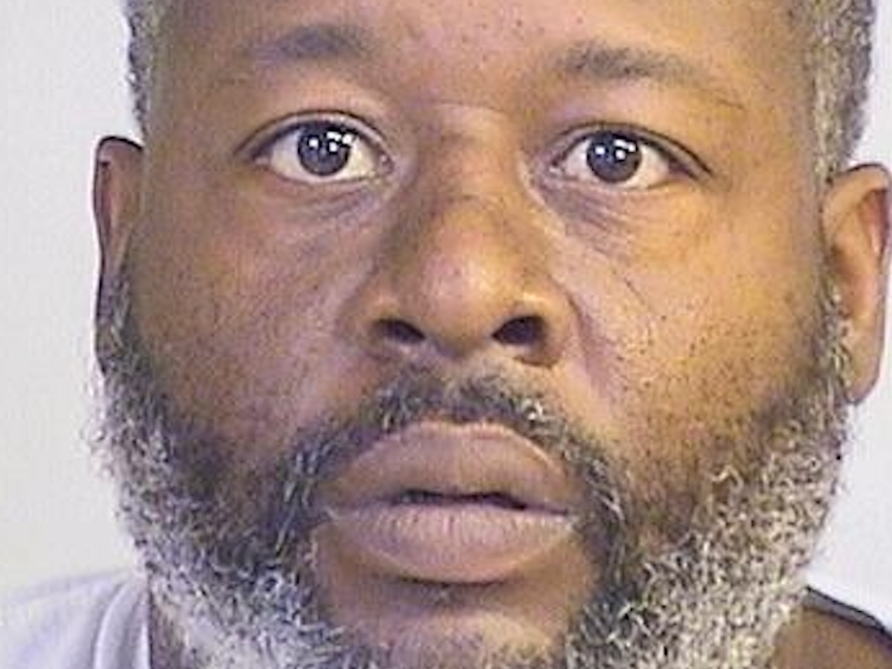
TUSCALOOSA, AL — A Tuscaloosa County jury heard from numerous witnesses Tuesday as the murder trial began for a man accused of shooting and killing another man in March 2023.
Click here to subscribe to our free daily newsletter and breaking news alerts.
As Patch previously reported, the shooting occurred on March 30, 2023, around 7:30 p.m., which prompted the Tuscaloosa Police Department to respond to reports of a shooting in the 1800 block of Queen City Avenue.
Find out what's happening in Tuscaloosafor free with the latest updates from Patch.
Once on scene, officers located a car wrecked two blocks away occupied by a man who had been shot multiple times.
Investigators said 37-year-old Rufus Tyrone Carter IV was transported to the hospital but died from his injuries.
Find out what's happening in Tuscaloosafor free with the latest updates from Patch.
About half an hour after the shooting, Reginal Dawayne Peoples, who was 36 at the time of the shooting, came to TPD's front desk and turned himself in, saying he had just shot someone.
The murder trial for Peoples began with jury selection Monday in Circuit Judge Daniel Pruet's courtroom, where the following jury was empaneled: Five Black women, four White women, three White men and two Black women.
As is normal procedure, two alternate jurors will be dismissed ahead of deliberations.
Tuscaloosa County Assistant District Attorney Ashely Ross provided the opening arguments for the state, where she said Peoples fatally shot Carter as he attempted to run away.
She also explained the dynamics of the relationships of those involved, saying that Peoples was in a relationship with an ex-girlfriend of Carter's. Ross then explained that Carter's daughter lived with Peoples and her mother.
Ross said after running some errands when he got off work, Carter drove his girlfriend and their baby to Peoples' home on Queen City Avenue, ostensibly so he could give money to his daughter for prom.
Evidence showed Carter arrived at the residence around 7:30 p.m. and Ross insisted that he went up and knocked on the front door.
Peoples, who reportedly uses a walker to get around, was seated in a wheelchair at the defense table for the duration of Tuesday's proceedings and did not speak to anyone in the courtroom other than his team of public defenders led by Joseph Van Heest.
Ross said Peoples initially went to the door and then made the decision that led to him being arrested for murder.
"[He] closes the door," she said. "He didn't go back and go to bed. He got dressed, because he was going to handle business."
She then said Peoples exited the house with the assistance of his walker, retrieved a handgun from his car in the driveway and fired a total of 11 shots, with several striking an unarmed Carter.
Ross pointed out the fatal injury occurred when one of the shots, which struck Carter in the right thigh, severed his femoral artery, resulting in him bleeding to death in just minutes.
She underscored her opening arguments by insisting Peoples shot Carter "in the back."
Her focus then turned to what Peoples did in the minutes following the shooting and before he showed up at TPD headquarters to turn himself in.
Indeed, she mentioned that 26 minutes passed between when the first shot was fired and when Peoples was voluntarily taken into custody.
"It took him 26 minutes to go two miles," Ross said, before telling the jury that the gun used to shoot Carter has never been recovered.
During its opening arguments, the defense team for Peoples claimed that fear was at the heart of why Peoples took action.
They also claimed Carter was the actual aggressor.
Defense attorneys for Peoples plan to argue throughout the trial that Carter had been drinking, was acting belligerent and had been previously seen carrying a firearm during a past visit to the house where the shooting eventually occurred.
Peoples said that after he descended his porch steps with his walker, Carter pushed him as he tried to get into his vehicle.
This allegedly caused Peoples to fall and he said he began to fear for his safety, so he grabbed his handgun and defended himself.
All told, the defense said the incident took about 30 seconds to develop.
WITNESSES TAKE THE STAND
Two of the first three witnesses called by the state to testify said that while they didn't see the shooting, they both called 911 for various reasons in the immediate aftermath.
The first witness on the stand said she heard gunshots and then a few minutes later heard what sounded like a car crash.
This would ultimately turn out to be Carter fleeing the gunfire and crashing his black Mercedes into a fence at a business a short drive from the initial scene.
The other witness who called 911 said he was at Crown Barbershop sitting in his truck and talking on the phone after getting a haircut when he heard the gunshots.
He also testified that he heard the first shot, before hearing seven more a few seconds later. A few moments after the second round of shots, he heard three more and then a final shot a couple of seconds later.
TPD patrol officer Corey Johnson was the first law enforcement official called to the stand and told the jury he initially responded around 7:40 p.m. after receiving a call about a traffic accident and "possible gunshots."
Once on scene at 17th Street and Queen City Avenue, he noticed Carter bleeding in the driver's seat and barely breathing.
The jury then saw Johnson's body camera footage, which showed the car up against a chain link fence while its back wheels continued to spin.
Tuscaloosa firefighters busted out one of the windows to gain entry into the Mercedes and Johnson also noted the back driver's side window had what appeared to be a bullet hole.
Johnson later made his way to the original scene of the shooting, where a blood trail and shell casings were discovered that gave investigators a better sense of how things developed.
Based on the shell casings being found in a grouping and then spread out, Johnson said this seemed to indicate that the shooter was moving when he was firing his weapon.
Another responding TPD officer was the next law enforcement official called to testify and told the jury how she made the initial contact with Carter's girlfriend and baby.
It was explained during later testimony that Carter had forced his girlfriend, holding the couple's child, out of the car when the shooting broke out and left them at the initial scene.
The officer said she observed blood on the woman and took the baby before walking them to her patrol vehicle. The woman then showed her where the shooting took place, which was in front of the house on Queen City Avenue.
Photos were shown to the jury from that scene, which showed a large pool on blood in the road and a discarded sandal belonging to Carter.
A trail of evidence markers was also depicted in photos and purported to show a blood trail leading from the front yard of the house to where Carter's black Mercedes had been parked in the street before the shooting.
Carter's girlfriend delivered arguably the most impactful testimony of the trial's first day, saying she had been with Carter for about "two or three years" at the time of his death.
She testified that when Carter got home from work the day of his death, he seemed agitated but asked her if she wanted to go to Dollar Tree before taking his daughter some money for her upcoming prom.
The couple and their four-month-old baby made the trip to Dollar Tree in Five Points before Carter drove them to a nearby barbershop so he could get a haircut.
After leaving the barbershop, Carter's girlfriend told the jury they drove to the house on Queen City Avenue where Carter's daughter lived with her mother and Peoples.
She said Carter got out of the Mercedes and she continued to sit in the car with the baby.
Carter supposedly tried to call his daughter but when he didn't get an answer, he went up and knocked on the front door.
Carter's girlfriend said she and the child were in the passenger seat of the car when the first shots were fired.
She testified she immediately began screaming that "I got a baby in the car, I got a baby in the car."
The mood of the prosecution's side of the courtroom then became emotional when she started to choke up recalling how she saw Carter running toward the car.
She went on to say he flung open the passenger side door and threw himself on top of his girlfriend and their baby. She said this was the reason both her and the child were covered in blood when she first made contact with police.
Carter's girlfriend recalled the shots ringing out and how the back driver's side window was struck. She then felt like she was grazed by a bullet or shell fragment on the back of her neck during the chaos.
After Carter "pushed" her and the baby out of the car, she said he ran around the front of the vehicle, jumped in the driver's seat and drove off.
She then told the jury how she was left without her cellphone, purse or diaper bag, while wearing only one shoe.
It was at this time she ran down Queen City Avenue in the direction Carter was traveling before she saw the police lights.
During cross-examination by the defense, Carter's girlfriend was asked if he had been drinking.
"He was drinking a little bit but wasn't drunk," she said.
Her interview with a Tuscaloosa Violent Crimes Unit investigator was also played for the jury, where she commented that Carter had drank about "half a bottle" of whiskey before the shooting.
The defense also pointed out that in the three years following the shooting, she never mentioned being grazed on the neck during the shooting until she was on the stand Tuesday.
Dr. Edward Reedy, chief medical examiner with the Alabama Department of Forensic Sciences, was the final witness called to the stand Tuesday and discussed the autopsy he conducted on Carter.
The jury was shown photos of Carter's remains during the autopsy and Reedy explained the extent of his wounds.
In one photo, a tourniquet was visible around Carter's right thigh, along with other photos showing gunshot wounds to Carter's face, bicep and left leg.
What is believed to be the fatal wound, according to the autopsy report, saw a 5.7 millimeter bullet hit Carter in the back of the right thigh and exited from the front.
Jurors were also shown graphic photos of a dissection of Carter's right thigh, with a blue rod running through the femoral artery to show it had been completely severed.
While Reedy was asked about the impact of alcohol on someone involved in a violent crime, he concluded his testimony by reiterating his observations that none of the entry wounds found on Carter were on the front of his body.
The prosecution is set to resume calling witnesses Wednesday morning in Judge Pruet's courtroom.
Have a news tip or suggestion on how I can improve Tuscaloosa Patch? Maybe you're interested in having your business become one of the latest sponsors for Tuscaloosa Patch? Email all inquiries to me at ryan.phillips@patch.com
Get more local news delivered straight to your inbox. Sign up for free Patch newsletters and alerts.