Crime & Safety
Jury Begins Deliberations In Tuscaloosa Hookah Bar Murder Trial
Here's the latest as we follow the murder trial of a former security guard accused of shooting and killing a man at a bar.


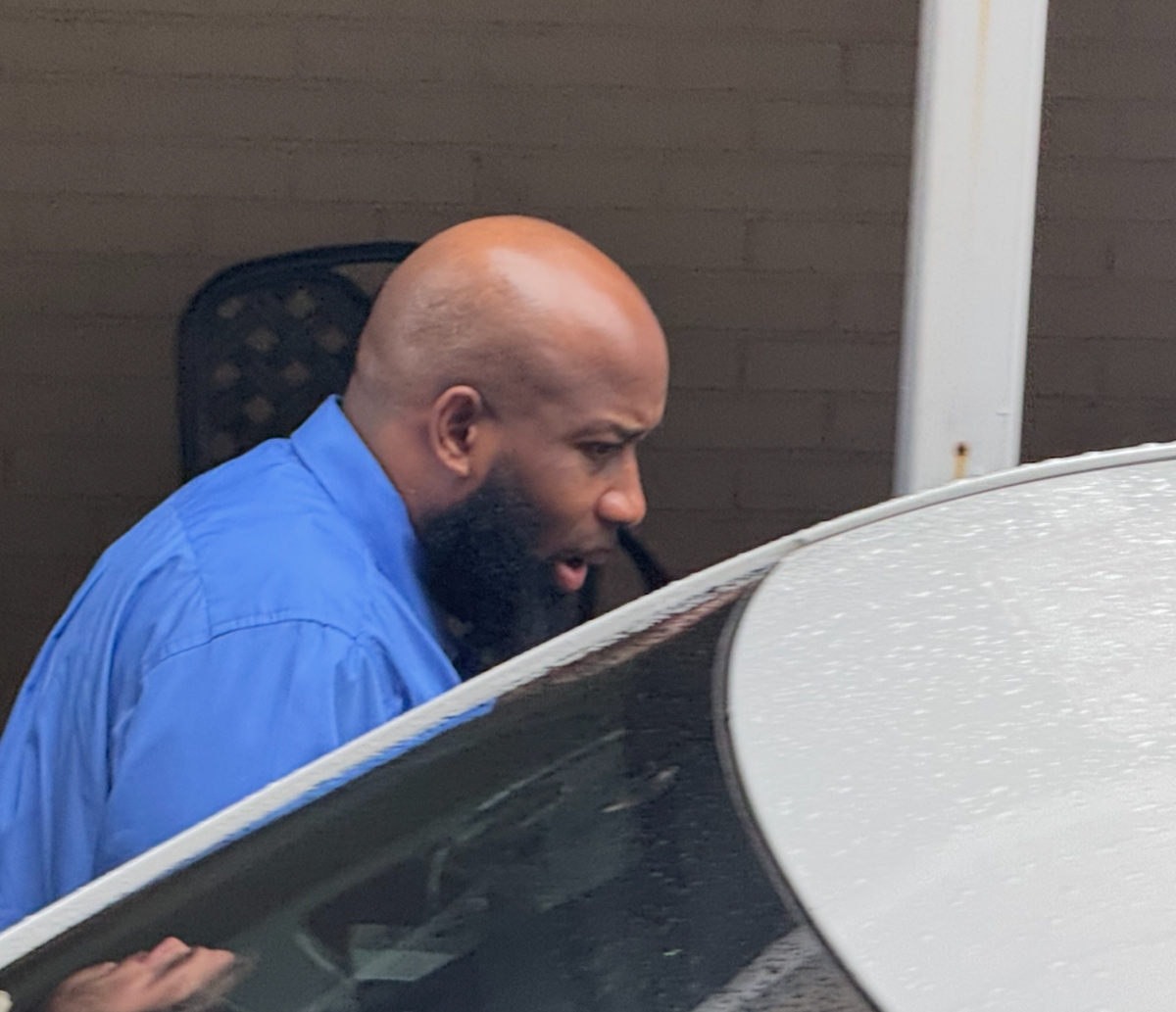
TUSCALOOSA, AL — A Tuscaloosa jury began deliberations Wednesday afternoon in the murder trial of a former bar security guard accused of shooting and killing a man at CRU Lounge in 2024.
Click here to subscribe to our free daily newsletter and breaking news alerts.
Patch reported Tuesday on the first day of trial as both sides laid out their cases, with prosecutors arguing that Aaron Dewayne Hill intentionally shot 28-year-old Rashid Little following a physical altercation inside the bar in the early morning hours of Jan. 21, 2024
Find out what's happening in Tuscaloosafor free with the latest updates from Patch.
Defense attorneys for Hill insist he was more of a victim of unfortunate circumstances than a cold-blooded killer.
The jury heard from six witnesses and saw a trove of video evidence Tuesday before the state continued calling witnesses on the second day of the trial.
Find out what's happening in Tuscaloosafor free with the latest updates from Patch.
The first witness called by prosecutors Wednesday was Adrienne Alexander of the Alabama Department of Forensic Sciences, who had been tasked with analyzing DNA swabs taken from blood found on the door handle of an entrance to CRU Lounge along with blood left on the sidewalk out front following the shooting.
Alexander testified that the DNA matched Little's.
Priscilla Rogers, a medical examiner with the Alabama Department of Forensic Sciences, followed Alexander on the stand, where she told the jury that she performed the autopsy on Little and determined that his cause of death was homicide.
Rogers also said the fatal shot that killed Little struck him in the heart, left lung and ribs. She testified the bullet did not leave an exit wound.
During cross examination by Tuscaloosa defense attorney Travis Juneau, Rogers testified that a blood test conducted on Little during the autopsy showed he was intoxicated at the time of his death — an aspect of the case that hasn't been disputed by prosecutors.
The most insightful testimony of the second trial day came when Northport Police officer and Tuscaloosa Violent Crimes Unit investigator Serena Green was called to the stand.
Green was the first VCU investigator on the scene at CRU Lounge following the shooting and assumed the lead investigator role on the case.
Once on scene, she was shown a picture of Hill and was informed by witnesses that he was the security guard who shot Little.
After retrieving cell phone video and getting consent from CRU Lounge to pull its security camera footage, Green and another investigator interviewed Hill at the Violent Crimes Unit office.
During the interview, Green took photos of Hill later admitted as evidence showing a wound on his head. Hill told investigators Little had struck him with a beer bottle during the initial altercation inside the bar that happened about 10 minutes before the fatal shot was fired at 1:01:44 a.m.
"The video shows Mr. Little dancing with his hands up and Hill grabs him from behind before hitting him," she testified.
Green also testified that Little told her he had heard three or four gunshots and claimed to have seen "some guys getting guns and coming back to the patio."
While there were no reports of any other shots fired at CRU Lounge that night, Green did say there had been an unrelated shooting at nearby Branscomb Apartments around the same time.
Green said Hill went on to tell investigators he was trying to stop Little from coming back into the bar after he had been kicked out. He then supposedly pulled his gun and claimed he was pushed or bumped, causing the Glock 19 handgun to discharge a single round into Little's chest.
Another video shown to jurors Wednesday also purported to show Hill exit from the back of the bar immediately after the shooting and jog to his dark SUV, get in and drive away.
Before this was captured on video, previous footage showed Hill hitting Little's friend — Jimmonica Williams — with a pistol during the fight inside the bar. Prosecutors used this footage to insist to the jury that Hill was armed and had his handgun out during the tense situation.
Video footage was also shown depicting security guard and Hill's girlfriend, Thyais Walker, holding both a handgun and a magazine for a pistol.
"Where are the keys," Hill can supposedly be heard asking his girlfriend on video in the immediate aftermath of the shooting.
As Patch reported Tuesday, other video evidence showed Walker with what appears to be Hill's handgun. Walker was accused of taking the gun to be hidden in a car on Hill's family's property in West Blocton and she was charged with being a felon in possession of a firearm following the shooting.
Under cross examination, Green testified that Hill insisted to investigators he "didn't mean to kill anybody" and he became emotional when thinking about his children after he was told he would be charged with murder.
Talk also turned back to Hill's injuries that were photographed by Green at the VCU office.
Juneau posed the possibility that Hill could have suffered a concussion and was acting irrationally due to head trauma after being struck with a bottle by Little.
Green also testified that Little had been removed from CRU Lounge once before for "standing on couches."
After the prosecution rested Wednesday morning, the defense moved for acquittal based on the evidence presented failing to establish any intent on the part of Hill.
Tuscaloosa County Circuit Judge Allen W. May, Jr. denied the motion, along with an additional motion to give jurors the opportunity to convict Hill of the lesser offense of manslaughter.
Hill's defense team called just one witness when given the opportunity — CRU Lounge co-owner Kevin Davis.
As Patch previously reported, CRU Lounge had its business license revoked less than a month after the fatal shooting.
Davis provided little insight to boost the defense's case and said he did not investigate Grizzly Security to see if its contracted security guards were certified.
Davis also said he heard the gunshot but never saw Little spit on anybody to prompt it — one of several aspects central to the defense's case that Hill was somehow provoked by Little or bumped by someone close by.
"I didn't get spit on," Davis testified. "I heard the gunshot and I went the other way."
Assistant District Attorney Leslie LaTurno delivered the closing arguments for the prosecution and reiterated that the evidence presented established the "intent" of Hill to shoot and kill Little after the fight inside the bar.
"We see him grab his gun, walk toward the door, then he points that gun at Rashid Little's chest and shoots," she told jurors. "Aaron Hill didn't stay. He didn't call 911. He didn't try to help. He left."
During his closing arguments, Juneau described his client as an unqualified man trying to do a difficult job with no real training, pointing out that Hill even had to borrow a gun to meet the requirements of being an "armed security guard."
"He was not prepared for the job," he said, before again raising the issue of poor employee screening by CRU Lounge and how the gun he used to shoot Little was never presented as evidence at trial.
What's more, he insisted that the Glock 19 handgun used by Hill did not have a secondary safety, thus making it possible that Hill had been bumped, flinched or otherwise, which caused him to accidentally discharge the weapon.
"[Hill] was the last piece of a terrible puzzle," Juneau said of his client. "The staff was careless, unbothered and nonchalant. It was a tragedy that this happened to Rashid but Aaron didn't mean it."
It was around this point during closing arguments that Hill could be seen crying at the defense table.
During the prosecution's opportunity to offer a rebuttal to Juneau's closing arguments, Assistant District Attorney Thomas Marshall reiterated the state's belief that Hill knew what he was doing when he pulled the trigger.
"He damn sure meant to do it," Marshall told the jury. "It wasn't a flinch. It was intentional."
The jury left the box around 2:50 p.m. to begin deliberations after two alternates were excused.
The 12-person jury now consists of seven White women, four White men and one Black woman.
The jury is set to resume deliberations at 9 a.m. Thursday.
Have a news tip or suggestion on how I can improve Tuscaloosa Patch? Maybe you're interested in having your business become one of the latest sponsors for Tuscaloosa Patch? Email all inquiries to me at ryan.phillips@patch.com
Get more local news delivered straight to your inbox. Sign up for free Patch newsletters and alerts.