Crime & Safety
CA Fires Latest: 1.32 Million Acres Burn, 1,700 Structures Gone
After 400 new lightning strikes hit overnight, more than 15,000 firefighters battled two dozen major fires Wednesday.


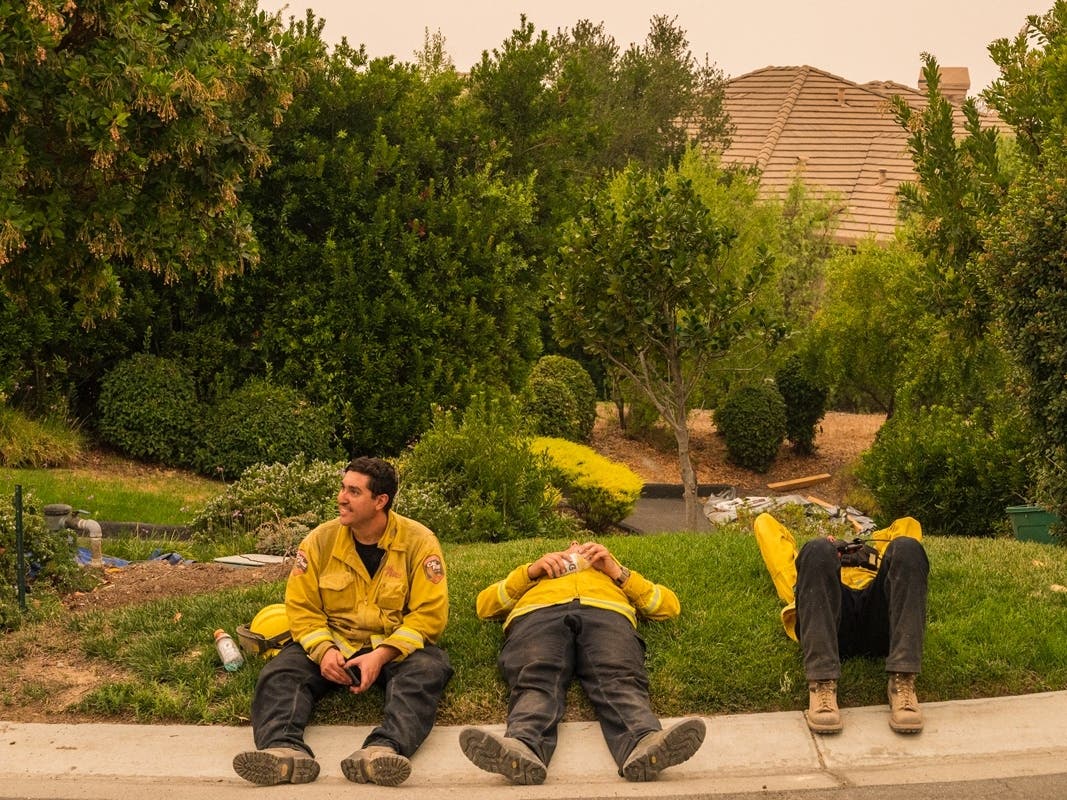


CALIFORNIA — As firefighters finally began to see progress in containing the two dozen major fires burning across the state, crews were already planning for more weather changes on the horizon that could hamper their efforts. More than 15,000 firefighters were on the front lines Wednesday.
In the past two weeks, a total of 14,000 lightning strikes have cartwheeled across the state and are still hitting the northern parts of the state, bringing 400 overnight and keeping crews on guard for new fires.
As a result these unusual summer thunderstorms, more than 700 new wildfires have started and 1.32 million acres have already burned this fire season.
Find out what's happening in Across Californiafor free with the latest updates from Patch.
Weather conditions continue to improve compared to last week as a blanketing marine layer has helped raise humidity and lower temperatures in some areas.
But with a robust marine layer comes strong onshore wind, especially in the afternoon. Gusty winds of 15-20 mph are expected in the next few days, which could pose a challenge for firefighters.
Find out what's happening in Across Californiafor free with the latest updates from Patch.
"Isolated thunderstorms are still possible in the upper portion of northern California and the Sierra Nevada Mountain Range," Cal Fire said in its Wednesday report. "The rest of California will experience a return to a warm and dry weather pattern."
The total acreage burned over the last few weeks make the fires collectively larger than the state of Delaware, Cal Fire said.
More than 1,700 structures have been destroyed, and 100,000 people have been displaced from their homes. Seven have died in the catastrophic blazes, which have overwhelmed firefighters in California.
The latest numbers on the Aug. Lightning Siege. More information at https://t.co/6s2QmGvwFi pic.twitter.com/coD0Yq11Ih
— CAL FIRE (@CAL_FIRE) August 26, 2020
Fire crews are shorthanded and overwhelmed this season, with only 15,000 firefighters on the frontlines this season.
In his Monday briefing, Gov. Gavin Newsom acknowledged this and said more aid would be arriving this week.
All but three of the Top 20 Largest #Wildfires have occurred since 2000, with 10 of these large and damaging wildfires occurring in the last decade. As fire weather continues to become more extreme, California is adjusting to fight these larger and more destructive wildfires. pic.twitter.com/GYPvqLxn88
— CAL FIRE (@CAL_FIRE) August 25, 2020
According to Newsom, 375 engines have been requested from out of state, with eight en route from Montana. He added that 91 engines arrived in the past few days from Arizona, Indiana, New Mexico, Texas, Oregon, Utah and Washington. Additional National Guard Support will also be arriving from four states.
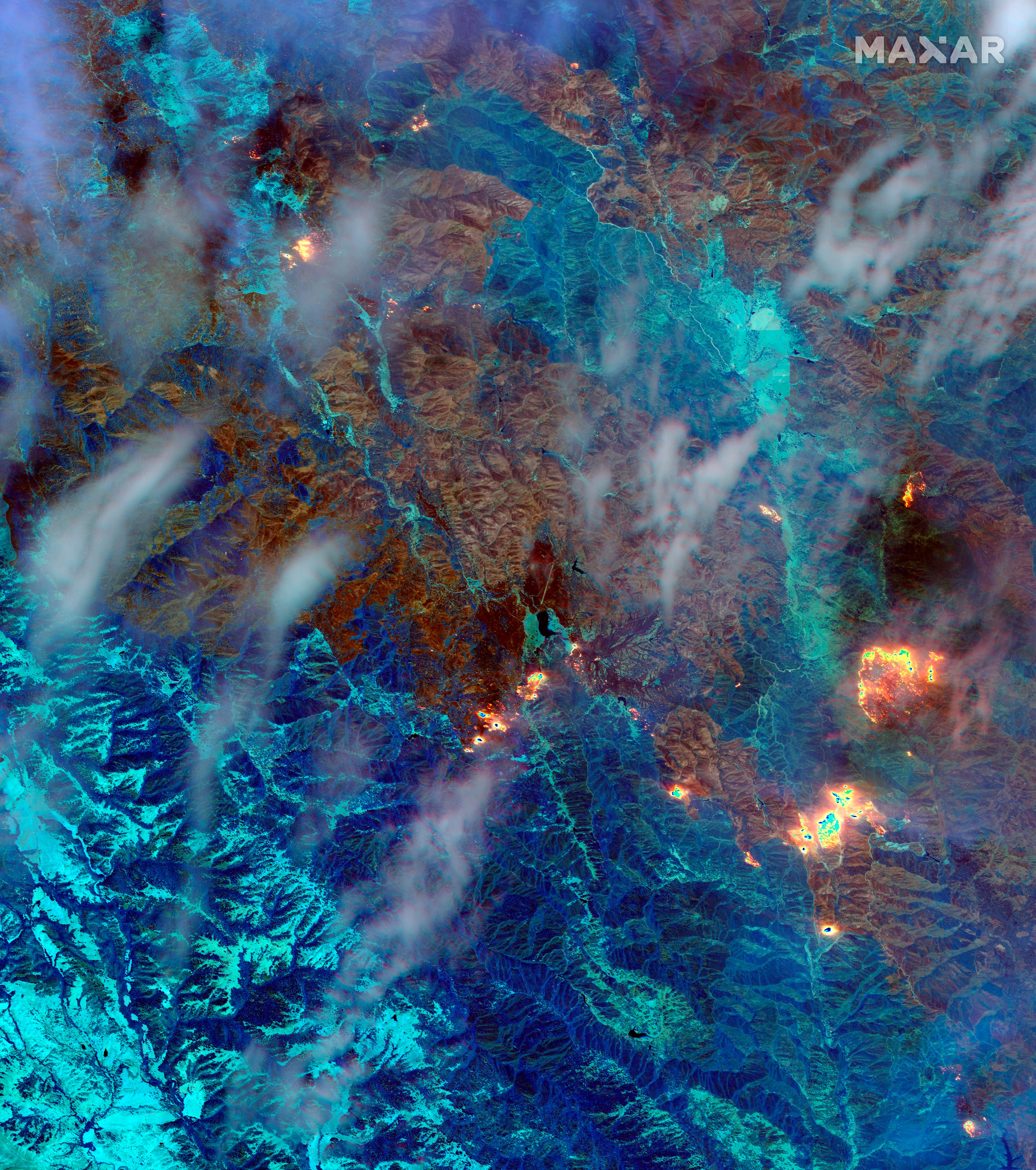
"We are in a different climate, and we are dealing with different climate conditions that are precipitating fires that we haven't seen in modern recorded history," Newsom said at his Monday afternoon briefing.
Compared with 2019, California has already significantly tipped the scales in total acres burned and number of wildfires this year, Cal Fire said Monday morning.
"An astonishing 2,700 more wildfires have occurred this year than last, with an additional 1.4 million acres burned during the same time period," the agency said Monday in a news release.
The SCU Complex Fire surpassed the the LNU Complex Fire overnight, which had gained 27 percent containment Tuesday morning. Having burned 363,772 acres at 10 percent containment, the SCU Fire has taken the mantle of second largest wildfire in California history.
Meanwhile, firefighters battling smaller fires such as the Salt, Hills, Jones, Elsmere and Post fires finally found success in the last 24 hours, nearly containing all of them.
The CZU fires had started to make some significant headway in suppressing the fires in the Santa Cruz mountains Monday, upping the containment to 17 percent. However, the fire had destroyed 330 buildings — twice the amount from Monday.
A 70-year-old man was found dead in Santa Cruz County on Sunday night, bringing the death toll to seven this fire season.
"This is a coastal fire ... in the forest with a lot of redwoods that have simply never seen forest fires because of the weather conditions," Newsom said of the CZU Fire.
As 289 new lightning strikes kept firefighters on edge Sunday night, crews continued to battle the lightning complex fires and hundreds of other blazes burning over 1 million acres Monday.
Although forecasted thunderstorms were not as severe as predicted, 10 smaller fires broke out Sunday, which Newsom said Monday was to be expected.
SEE ALSO: CA Wildfires Ignite Political Firestorm
The two largest fires, the LNU Lightning Complex and SCU Lightning Complex, are considered the second- and third-largest fires in state history. As of Monday, the LNU fires had scorched 350,030 acres with 22 percent containment, and the SCU fires had burned 347,196 acres with 10 percent containment.
With 2,211 evacuees in shelters, college dormitories and hotel rooms, there has been some anxiety surrounding COVID-19 and how to enforce social distancing in congregate shelters.
As Newsom visited several shelters in Northern California, he confirmed that temperature checks have been required as well as screening questions, strict mask-wearing guidelines and, in some facilities, tents set up to create barriers between households. Air purifiers are also being used in shelters and camps for fire crews.
However, he said the majority of evacuees are staying in non-congregate shelters such as the 31 hotels that have become available around Northern California and some college dormitories.
Although the National Weather Service called off the Red Flag Warning in the Bay Area, the warning is still in effect for much of Northern California as crews continue to be wary of more lightning strikes Monday.
The National Weather Service was forecasting hot, dry conditions, dry lightning and heavy wind gusts of up to 65 mph in Northern California this week; so far, the thunderstorms have been somewhat mild.
Evacuation orders and warning have been lifted in the following zones on the #RiverFire pic.twitter.com/qnsRyvi7Em
— CAL FIRE BEU (@CALFIREBEU) August 24, 2020
"This dry lightning will likely hamper efforts to contain the current fires and may spark new fires," Cal Fire said in a statewide news release Sunday.
Cal Fire predicts that lightning storms could persist in October and an above-normal fire potential could persist through October in Northern California.
Seven have died in the out-of-control fires, 115,000 have evacuated their homes, and more than 3,488 structures have been destroyed. The fires have hampered air quality up and down the state, prompting officials to issue evacuation warnings and air quality advisories.
More evacuation orders were issued in Alameda County at 3 a.m. Sunday, forcing thousands to flee from their homes and business fronts from the SCU Lightning Complex.
Newsom also secured more federal assistance from President Donald Trump on Saturday.
The Presidential Major Disaster Declaration is expected to help citizens in impacted counties by offering access to crisis counseling, housing and unemployment assistance as well as legal services. It will also provide federal assistance to help state, tribal and local governments fund fire agencies, recovery and other protective measures.
#LakeFire All evacuation orders for this incident will be lifted on August 25, 2020 at 10:00 a.m. Please drive safely as emergency vehicles may still be working in the area. There is no access from the south on Lake Hughes Road. @Angeles_NF pic.twitter.com/svUVKw5a4F
— L.A. County Fire Department (@LACoFDPIO) August 24, 2020
Have an emergency supply kit ready in the event of an evacuation:
Facemasks & sanitation supplies
3 days supply of non-perishables
3 gallons of water per person
Prescriptions
Clothing
Flashlights
Important documents
https://t.co/4IHPDeOfBA pic.twitter.com/wjxFdPQ0rb
— Office of the Governor of California (@CAgovernor) August 23, 2020
"Thank you to the President for your partnership and granting this urgent Major Disaster Declaration," Newsom said in a news release Saturday. "California is battling two of the largest fires in our history and has seen nearly 600 new fires in the last week caused by dry lightning strikes. These are unprecedented times and conditions, but California is strong — we will get through this."
According to Cal Fire, the military is also supporting the effort with several C-130 aircrafts equipped with fire fighting systems that double as air tankers.
These Surreal Photos Demonstrate The Severity Of CA's Wildfires
"The hots are getting hotter. The dries are getting drier. Climate change is real," Newsom said as he addressed the wildfires in a video recorded for the Democratic National Convention on Thursday night. "If you are in denial about climate change, come to California."
Here are some of the major fires that were burning in California as of Sunday night, according to Cal Fire and the U.S. Forest Service:
SCU Lightning Complex
- 365,772 acres and 25 percent contained as of 7:23 a.m. Aug. 26
- Start Date: Aug. 18
- 20 fires in the complex, several fires have merged including the Marsh fire.
- Canyon/Reservoir (merged) 668 acres and 15 percent contained as of Aug. 26
- Deer 3,104 acres and 100 percent contained as of Aug. 26
- Counties: Santa Clara, Alameda, Contra Costa, San Joaquin, Stanislaus
- Location: Multiple locations throughout Santa Clara, Alameda, Contra Costa, San Joaquin and Stanislaus counties
- Multiple evacuations ordered
- READ MORE: SCU Lightning Complex Fires: Containment Grows
- READ MORE: South Bay Shelter Opens For CZU, SCU Fire Evacuees
- READ MORE: More Evacuations And A Perfect Storm
LNU Lightning Complex Fire
- 357,046 acres with 27 percent containment as of 7:13 a.m. Aug. 26
- Hennessey Fire (Merged Fires — Gamble, Green, Aetna, Markley, Spanish, Morgan, Round): Hennessey Ridge Road in Napa County, California. The fire was 299,763 acres and 33 percent contained Aug. 26
- Walbridge Fire (merged with Stewarts): West of Healdsburg. The fire was 54,923 acres with 19 percent containment Aug. 26.
- Meyers Fire: North of Jenner. The fire was 2,360 acres and 97 percent contained as of Aug. 26.
- Start Date: Aug. 17
- Counties: Napa, Sonoma, Lake, Yolo, Solano
- READ MORE: LNU Lightning Complex: Growth Slows; Containment Improves
CZU August Lightning Fire
- 80,137 acres, 13 percent contained as of Aug. 26
- Start Date: Aug. 17
- Warnell Fire has now merged with CZU Lightning Fire
- Counties: San Mateo and Santa Cruz Counties
- Evacuations in place
- READ MORE: CZU Lightning Complex: 540 Buildings Gone; 80,000 Acres Burn
- READ MORE: Thieves Target California Firefighter — Then Came The Scammers
River Fire
- 48,424 acres, 48 percent contained as of 8:15 a.m. Aug. 26
- Start Date: Aug. 16
- County: Monterey
- Location: Pine Canyon and River Road, east of Salinas
- Evacuations in place
- Read More: Immediate Evacuations Issued For Carmel And River Fires
Carmel Fire
- 6,695 acres, 45 percent contained as of 8:07 a.m. Aug. 26
- Start date: Aug. 16
- County: Monterey
- Evacuations in place
- Location: Cachagua Road and Carmel Valley Road, south of Carmel
- Read More: Immediate Evacuations Issued For Carmel And River Fires
Moc Fire, Tuolumne County
- 2,800 acres, brush, 20 percent contained as of 7:51 a.m. Aug. 26
- Evacuations in place
Apple Fire
- 33,424 acres, 95 percent contained as of Aug. 18
- Start Date: July 31
- County: Riverside
- Location: Off of Oak Glen Road and Apple Tree Lane, north of Cherry Valley
- READ MORE: Apple Fire Burn Area Mapped, Spared From Flooding and Mudslides
BTU/TGU Lightning Complex Fire
- 48,424 acres and 48 percent contained as of 8:15 a.m. Aug. 26
- Start Date: Aug. 17
- Elkhorn 33,720 acres
- Ivory 13,000 acres
- Potters (5-4) 927 acres
- Counties: Butte, Tehama and Glenn counties
- Location: Southwest of Red Bank Road
Lake Fire
- 31,089 acres and 70 percent contained as of 7:24 p.m. Aug. 25
- Start Date: Aug. 12
- County: Los Angeles
- Location: Lake Hughes Road and Prospect Road, southwest Lake Hughes
North Complex Fire
- 49,910 acres, 6 percent contained as of 8: 13 a.m. Aug. 26
- Start Date: Aug. 18
- Sheep Fire: 28,903 acres and 3 percent contained as of 7:38 a.m. Aug. 26
- County: Plumas
- Location: Flemmings Sheep Camp
- Evacuations in place
Holser Fire
- 3,000 acres, 80 percent contained as of Aug. 25
- Start Date: Aug. 17
- County: Ventura
- Location: Holser Canyon Road and Piru Canyon Road, south of Lake Piru
- READ MORE: Holser Fire 95 Percent Contained: Ventura County Fire
Woodward Fire
- 2,739 acres, 5 percent contained as of Aug. 26
- Start Date: Aug. 18
- County: Marin
- Location: Point Reyes National Seashore
- Evacuations in
- READ MORE: Favorable Weather Helps Crews Battle Woodward Fire In Marin
Dolan Fire
- 20,397 acres, 15 percent contained as of 7 a.m. Aug. 26
- Start Date: Aug. 19
- County: Monterey
- Evacuations in place.
- READ MORE: Fire Crews Work Overnight To Contain Dolan Fire As It Spreads
- READ MORE:
- SEE ALSO: Man Accused Of Arson In Connection To Big Sur Dolan Fire
Jones Fire
- 705 acres, 85 percent contained as of 7:36 a.m. Aug. 26
- Start Date: Aug. 17
- County: Nevada
- Location: Jones Bar Road, Yuba River Drainage, northwest of Nevada City
- Evacuation in place
(As Cal Fire's website has been down intermittently, here are some alternate places to find the latest information on fires burning across California: The National Forest Service's Fire Map I Cal Fire's official Twitter account I Cal Fire's Official Facebook page)
State, federal, local, and military resources are on the front lines aggressively battling the dynamic wildfires across California. As they continue their efforts, you can do your part to plan, prepare, and stay aware. Learn more at https://t.co/sWZPp02O9t. pic.twitter.com/OattIdjyAl — CAL FIRE (@CAL_FIRE) August 21, 2020
Get more local news delivered straight to your inbox. Sign up for free Patch newsletters and alerts.