Health & Fitness
CA Norovirus Outbreaks Spike: What To Know About The Statewide Spread
Cases of norovirus are elevated in California, with 59 confirmed outbreaks since the start of the surveillance year, the CDPH said.


CALIFORNIA — The Golden State has been battling a brutal season for stomach bugs, and wastewater monitoring shows levels of norovirus remain stubbornly high, state health officials said this week.
Since the start of the 'stomach flu' season, which began in October, there have been 59 confirmed outbreaks of norovirus in the state, but officials at the California Department of Public Health believe that number is likely an underestimation. CDPH researchers said this is because the cause of gastrointestinal outbreaks is never confirmed in a laboratory.
Officials are advising residents to remain cautious to prevent the further spread of the virus.
Find out what's happening in Across Californiafor free with the latest updates from Patch.
Several of the outbreaks have been reported in long-term care facilities, and at least one outbreak led an elementary school in Southern California to shut down in order to prevent the rapid spread of the virus, the CDPH said.
Such measures were taken because the norovirus is easily spread.
Find out what's happening in Across Californiafor free with the latest updates from Patch.
The health department relies on wastewater monitoring to identify locations of reported norovirus outbreaks, which CDPH researchers said are starting to decline in Southern California but remain steady in areas of Northern California.
"Statewide, concentrations of norovirus in wastewater have steadily declined at most sites over the past few weeks. However, some areas in Northern California have not seen decreases as substantial as the overall downward trend statewide," the CDPH said.

Norovirus is highly contagious, according to the health department, and spreads primarily through direct and indirect contact with an infected person's feces or vomit. The virus causes sudden vomiting, diarrhea, nausea and abdominal pain.
Symptoms manifest between 12 to 48 hours after a person has come into contact with the virus and can last up to three days, the CDPH said. There is no treatment for norovirus specifically, but the health department advised people who are sick to stay hydrated to replace fluids lost from vomiting and diarrhea.
CDPH said norovirus could occur at any time during the year but typically peaks between November and April.
By the end of March, cases appeared to peak in California. That's when an outbreak at Washington Carver Elementary School in Long Beach forced a five-day school closure.
Carver's Principal Monica Manipon said during the school's closure, two rounds of deep cleaning were conducted — one by a third party and another by Long Beach Unified School District custodial services. Manipon said manipulatives such as blocks and other learning aids were included in the cleanings.
"The safety and well-being of our Carver Cougars continues to be my number one priority. I am confident that with the added measures, we will decrease the number of cases and, in turn, be able to lift all restrictions," Manipon said in a letter to parents.
Upon returning to school, additional safety measures and restrictions were put in place including wellness checks, closed playground structures and no co-mingling between classes.
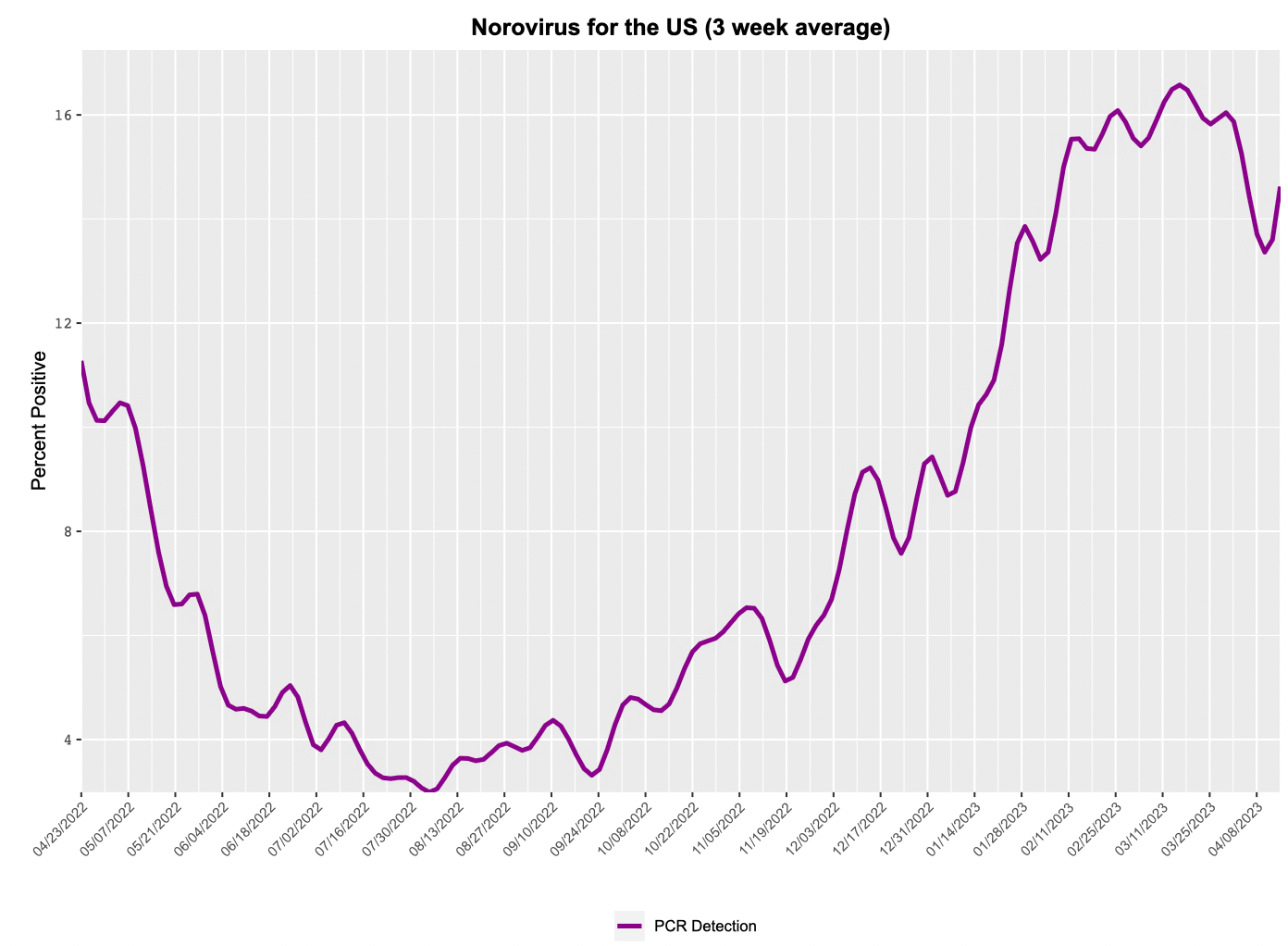
Nationwide, norovirus activity has been elevated since late January of this year according to the Centers for Disease Control and Prevention. Compared to the same time last year, reported cases are higher. The CDC having reported about 16 percent positive norovirus tests this year in contrast to last spring's 11 percent.
To prevent the spread of norovirus, the CDPH recommends residents:
- wash their hands using soap and water as hand sanitizers are not usually effective against norovirus;
- use safe food-handling techniques, such as thoroughly washing fruits and vegetables;
- stay home and isolate if they feel sick;
- abstain from preparing any food or care for others while sick with norovirus or any diarrheal illness;
- clean and disinfect possibly contaminated surfaces or objects with bleach as soon as possible.
The CDPH said all healthcare providers should report outbreaks of acute gastroenteritis, including suspected outbreaks of norovirus, the local health department.
Get more local news delivered straight to your inbox. Sign up for free Patch newsletters and alerts.