Victorville, CA|Local Classified|Announcement|

Why aching legs, swelling and varicose veins may be signs of Chronic Venous Insufficiency (CVI)
These are the causes and latest treatment options.
For millions of Americans, symptoms such as aching legs, swelling, heaviness, restless legs, or visible varicose veins are often dismissed as part of aging or standing too long.
Dr. Armin Foghi of Empire Vein & Vascular Specialists in Victorville says these symptoms may actually be signs of Chronic Venous Insufficiency (CVI), a progressive circulatory disorder that can worsen over time if left untreated.
Chronic Venous Insufficiency (CVI) affects an estimated 25 to 50 million Americans. Estimates indicate that up to 10% to 35% of the adult U.S. population experiences some form of venous disease, with nearly 6 million suffering from more advanced, severe stages of the condition. SOURCE: yalemedicine.org/conditions/chronic-venous-insufficiency
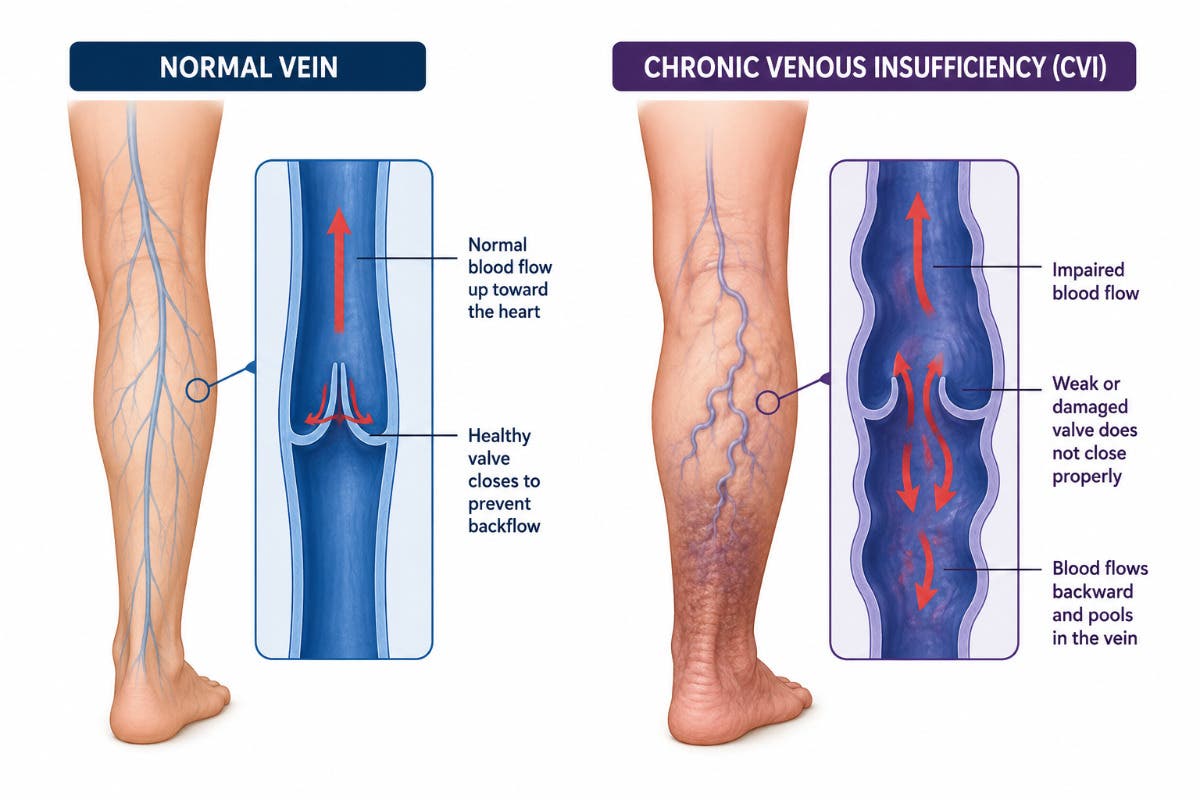
Chronic Venous Insufficiency occurs when the valves inside the leg veins become damaged or weakened, preventing blood from flowing efficiently back to the heart. Instead, blood pools in the lower legs, creating increased pressure inside the veins. Over time, this can lead to varicose veins, swelling, skin damage, pain, and even difficult-to-heal ulcers.
Causes Of CVI
Healthy veins contain one-way valves that help move blood upward against gravity. When those valves weaken or fail, blood can begin flowing backward and pooling inside the veins — a condition known as venous reflux. “When valves break down, blood becomes “backed up” in the veins, causing them to stretch and enlarge over time,” says Dr. Foghi.
Common Risk Factors
• Family history of vein disease
• Aging
• Obesity
• Pregnancy
• Smoking
• Sedentary lifestyle
• Prior blood clots (DVT)
• Standing or sitting for long periods• Occupations requiring prolonged standing, including nurses, teachers, retail workers, hairstylists, factory workers, and healthcare professionals.
• Lack of regular exercise
• Research has identified obesity and prolonged sedentary behavior as major contributors to worsening vein disease and reduced quality of life.
Common CVI Symptoms
• Aching or throbbing leg pain
• Leg heaviness or fatigue
• Swelling of the ankles or calves
• Varicose veins
• Burning or itching sensations
• Restless legs
• Nighttime leg cramps
• Skin discoloration around the ankles
• Tightness or pressure in the legs
• Skin irritation or rash
• Open sores or ulcers in advanced cases
• Symptoms often begin gradually and worsen over time; they may become severe enough to affect a person’s mobility throughout the day.
CVI Is More Than Just a Cosmetic Issue
Visible varicose veins may be an external sign of underlying vein reflux disease. While many people associate vein disease only with the cosmetic appearance of varicose veins, chronic venous insufficiency is a serious medical condition. Visible varicose veins may be an external sign of underlying vein reflux disease.
Treatment Options
Treatment depends on the severity of the disease and the underlying cause of venous reflux. In mild cases, conservative therapies may help relieve symptoms. More advanced cases may require minimally invasive vein procedures.
Modern vein treatments are far less invasive than traditional surgeries of the past. One of the most effective treatments is the VenaSeal™ Closure System, which uses a specialized medical adhesive to close diseased veins.
Dr. Foghi says that the VenaSeal™ procedure is:
• Usually completed in about 20 minutes
• Minimally invasive
• Requires only one local anesthetic injection
• Most patients can resume normal activities immediately afterward
• Associated with a reported 95% closure rate at five years
“VenaSeal™ is safe and designed to permanently seal diseased veins,” says Dr. Foghi
Reducing the Risk of CVI
Dr. Foghi says lifestyle changes can help reduce risk and slow disease progression:
• Walk regularly
• Maintain a healthy weight
• Elevate legs several times daily
• Avoid sitting or standing too long
• Stretch frequently during work
• Wear compression stockings if recommended
• Avoid smoking
• Stay active during long travel
• Follow a heart-healthy diet
Seek a medical evaluation early if symptoms persist or worsen.
When to See a Vein Specialist
Anyone experiencing ongoing leg pain, heaviness, swelling, visible varicose veins, skin discoloration, or non-healing sores should consider evaluation by a vascular or vein specialist.
Dr. Armin Foghi is a board-trained invasive cardiologist with leadership experience as chief of cardiology, who promoted and helped establish vein clinics in multiple states. He has served as an educator and clinical trainer for all vein-treatment modalities across multiple vein-disease centers of excellence.
Empire Vein & Vascular Specialists empirevein.com
15095 Amargosa Rd, Suite 101
Victorville, California 92394