Neighbor News
Why The Butt Can't Stop Here: California Cities Paralyzed from Tobacco Litter Mitigation
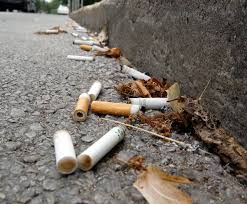
The United States was dead last when it came to the number of cigarette butts found on coastal beaches totaling an amazing 1,138,854 butts.
Why The Butt Can’t Stop Here:
California Cities Paralyzed from Tobacco Litter Mitigation
By: Alexandra Nelson, Alameda County Public Health Department, Tobacco Control Program
Find out what's happening in Alamedafor free with the latest updates from Patch.
Cigarette butts are toxic; they contain 165 toxic chemicals including lead, arsenic, ammonia, and hydrogen cyanide[1]. When butts make their way into the storm drains they end up in the Bay, our estuaries, reservoirs, and lakes leaching these toxic chemicals into fish, other aquatic life and eco systems. The United States was dead last when it came to the number of cigarette butts found on coastal beaches totaling an amazing 1,138,854 butts littered. Even worse, California was the leading butt litter state with a total of 294,099[2]. The Ocean Conservancy did international Coastal clean-ups all over the world in 2014, and the final report shows the alarming rate in which tobacco litter has become the most common form of toxic waste in our country. Even more alarming is that this data collected is only on coastal clean-ups, not inland or inner metropolitan cities. It is estimated that 4.3 trillion cigarette butts are littered around the world annually.
Find out what's happening in Alamedafor free with the latest updates from Patch.
In 2009, the City of San Francisco spent $25 million dollars annually on litter with 22.5% of the litter being butts. The City put forth a plan to charge a per pack mitigation fee (on cigarettes only) to cover the costs[3]. Today, San Francisco is the only city in California with a tobacco litter mitigation fee. So why can’t other cities and counties in California charge a litter mitigation fee or tax on tobacco products?
There are two answers to that question: Preemption and Proposition 26. Many tobacco products including cigarettes are subject to some preemptive laws on the federal level and the state level. This means that local municipalities may not pass some laws to regulate these products on their own, and that only the federal and state governments can. Then there’s Proposition 26, which passed after San Francisco’s litter mitigation fee. Prop 26 explains that no local municipalities may pass a “fee” on retailers or customers without the proposed “fee” going on a ballot and receiving a two thirds super majority vote to pass. Proposition 26 also made it so that any local municipality trying to charge a “fee” will now be defined as a “tax.” All tobacco “taxes” fall under state preemption laws in California, therefore, localities cannot impose them on their own. The tobacco industry contributed $2.25 million to the Proposition 26 campaign in 2010. So what can we do now?
1) Step-Up! If you are a smoker, extinguish your cigarettes completely and dispose of them in a proper receptacle. You can also use a pocket ashtray which can be found at tobacco retail stores or online from $2 to $14.
2) Speak-Up! If you know someone who smokes, you can share with them the effects of tobacco waste littering.
3) Clean-Up! Participate in a clean-up day with friends and family, or an organized group like Save the Bay (savesfbay.org/volunteer) or Ocean Conservancy (http://www.oceanconservancy.org/our-work/international-coastal-cleanup/).
[1] Citizens for Clean Open Spaces; Tobacco’s Impact on the Environment Fact Sheet; http://www.smokefreeoregon.com/
[2] Ocean Conservancy, International Coastal Clean-Up 2015 Report; www.oceanconservancy.org
[3] California Tobacco Control Program, Tobacco Product Waste Toolkit, 2013.
Xٓf