Traffic & Transit
BART Yellow Line Cuts Delayed But Worse May Be Ahead
BART delays the plan to start cutting service to the Yellow line, but warns of even deeper cuts without an injection of funding.


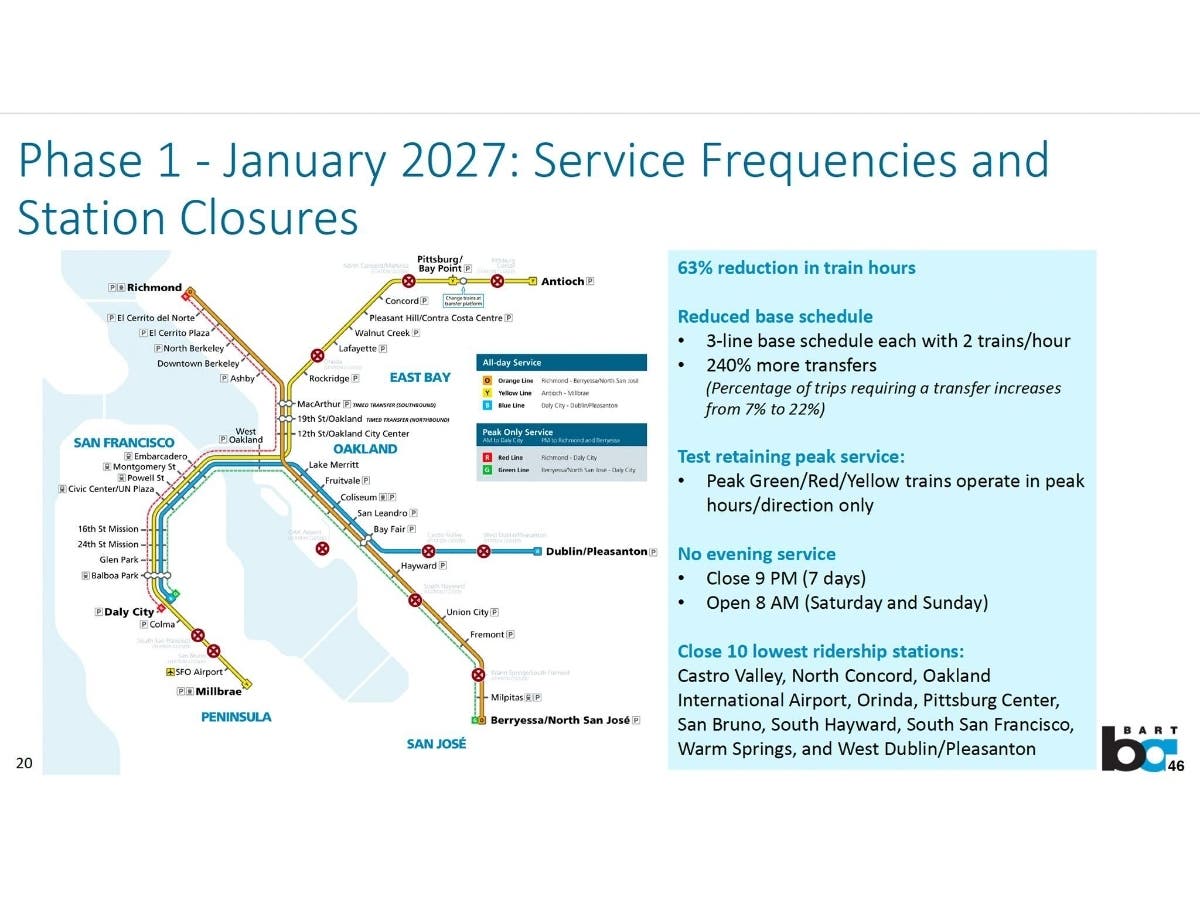
BAY AREA, CA — Plans to close up to 15 lower-ridership stations across the Bay Area have been delayed, a Bay Area Rapid Transit board member told local officials Tuesday, as the agency shifts focus to a regional tax measure to address a looming budget shortfall.
BART board member Mark Foley told the Pittsburg City Council he had “breaking news” that the agency is backing away from steep service cuts. But, he said, worse could be on the way for his district, which includes large parts of Contra Costa County.
BART Board President Melissa Hernandez said that the proposed station closures are "not just inequitable, but also unfair."
Find out what's happening in Concordfor free with the latest updates from Patch.
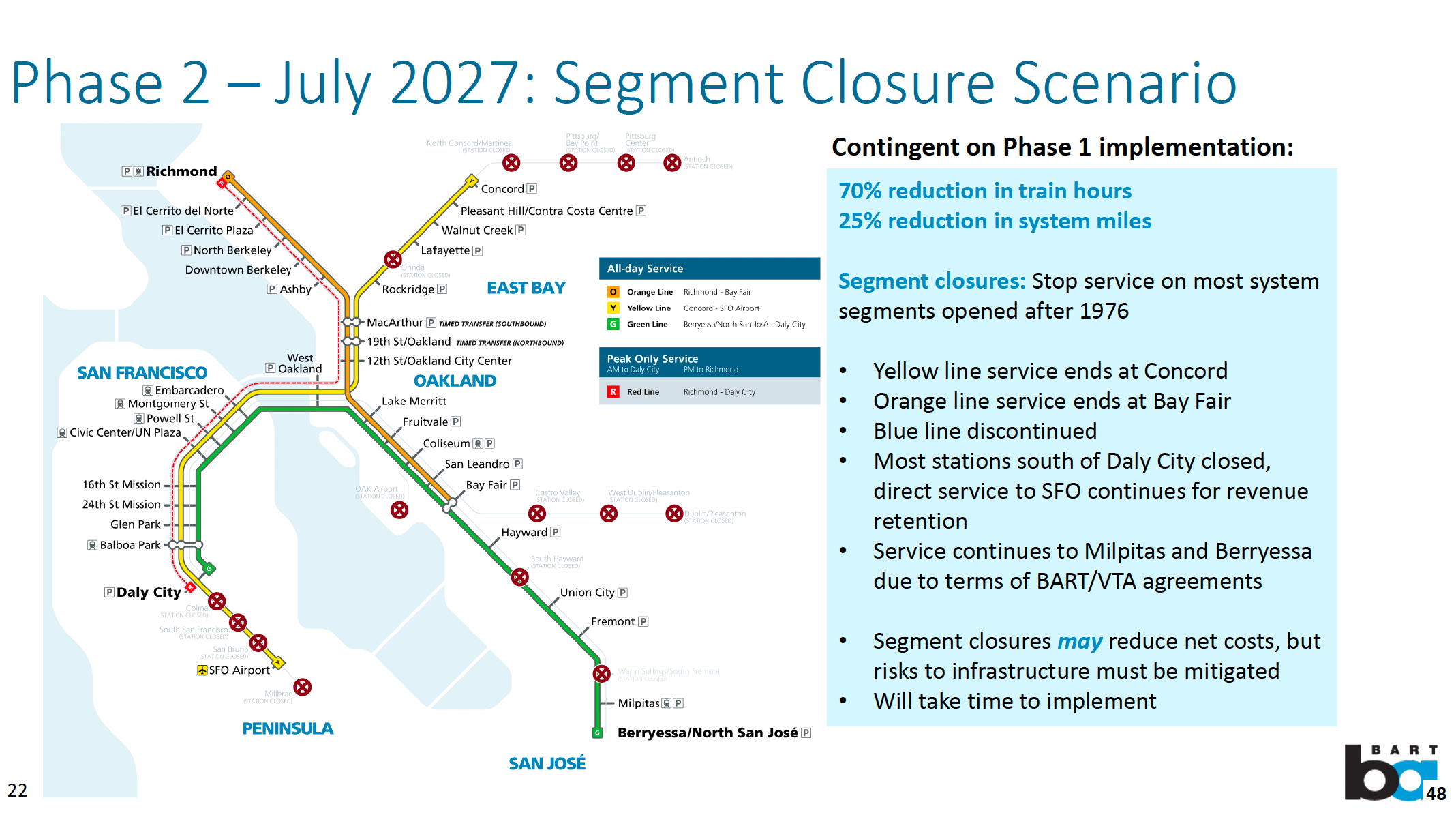
BART faces a projected $376 million budget deficit, prompting earlier proposals for sweeping reductions. Proposed "Phase 1" cuts in January 27 included slashing train hours by more than half, ending night service, and closing 10 stations including North Concord, Orinda, Oakland International Airport, and West Dublin/Pleasanton. Fares would increase by at least 30 percent, maintenance would be cut, and policing and support services would be reduced.
“The closures of the stations have been completely removed from this phase," Foley said during the meeting. While proposed station closures are “on hold for the time being,” Foley said, they are still on the table if BART cannot generate enough income before mid-2027 to prevent service cuts.
Find out what's happening in Concordfor free with the latest updates from Patch.
Without the extra revenue, Foley said,"Phase 2" beginning July 2027, would include increasing fares by 50 percent and closing up to 15 stations. The Yellow Line, the most used in the BART system, would end in Concord, cutting off service to Antioch, Pittsburg, Bay Point, and reducing service to lower-ridership stations in Orinda, Castro Valley, and Dublin. Concord would become the hub for commuters from Brentwood, Discovery Bay, and Oakley, who would have to find parking and then transfer to BART. "A new funding model is really what we need to look at," Foley said.
BART's strategy for securing that funding hinges on a regional sales tax called Connect Bay Area, which BART wants to see on the November 2026 ballot. The proposal includes a half-cent tax in Alameda, Contra Costa, San Mateo, and Santa Clara counties, and a one-cent rate in San Francisco County. The tax would fund transit operations for the Bay Area's four largest operators, including BART, Muni, Caltrain, and AC Transit.
Other agencies not included in the proposed tax would also be affected. For example, Tri Delta Transit, which serves Pittsburg, Antioch, Brentwood, and Oakley, would absorb passengers affected by the Contra Costa County BART station cuts, CEO Rashidi Barnes said during the Tuesday Pittsburg City Council meeting. "Their passengers are our passengers and vice versa," he said.
"In the end, we're all in this together," he said, while adding that Tri Delta would itself struggle to absorb the demands that BART station closings would create on other transit providers. Tri Delta could be forced to cut its service as a result of BART's, he said.
Get more local news delivered straight to your inbox. Sign up for free Patch newsletters and alerts.