Community Corner
Local Entrepreneur Keeps It Pure in the Kitchen
Pure Pantry founder Elizabeth Kaplan used her diagnosis of celiac disease as inspiration for gluten-free products for a kinder, gentler diet.
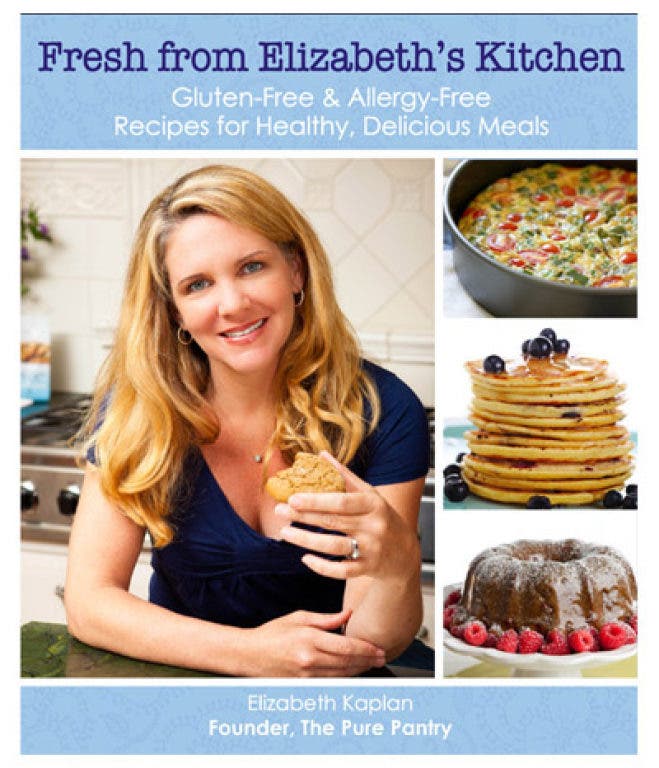


Elizabeth Kaplan is a savior to any kid suffering from food allergies.
I can testify personally to Kaplan’s genius. When we finally figured out my daughter, Quinn, was allergic to casein, Kaplan’s Pure Pantry line of pancake and cookie mixes helped me give Quinn her first sweet treats.
As a mom who watched other parents indulge their children with the odd cupcake, I could feel my soul soar when I found The Pure Pantry products at Healthy Creations on North El Camino Real.
Find out what's happening in Encinitasfor free with the latest updates from Patch.
Kaplan got the idea to launch The Pure Pantry after living gluten-free for years. For Kaplan, the diet isn’t the latest trend nor was it an attempt to lose weight.
Going without gluten was the key to her health.
Find out what's happening in Encinitasfor free with the latest updates from Patch.
Kaplan had been diagnosed with celiac disease—a condition that damages the lining of the small intestine by consuming gluten—right after she gave birth to her second child, Ryan. Until then, she had been very sick for three years, suffering from chronic fatigue.
“No one could figure out what was wrong with me,” she said. After seeing naturopathic doctor Bill Kellis at the Center for Advanced Medicine, she was told she had celiac disease.
“Having that diagnosis just changed my life,” she said. “I went gluten-free and I was myself again.”
While immersing herself in all things gluten-free, Kaplan studied at the Culinary Institute in San Francisco and did gluten-free coursework at the Natural Gourmet Institute in New York.
She learned how to incorporate amaranth, quinoa and buckwheat into everyday choices. “With everything I develop, I try to figure out how I can make it taste good,” she said.
She soon began bringing treats to friends during get-togethers. “People kept saying, ‘You’ve gotta make these for other people,’ ” she said.
Kaplan finally launched The Pure Pantry two years ago. She first worked on her concoctions by renting space at Healthy Creations for $25 an hour. She sold her products at Healthy Creations and at farmers markets. Within six months of adding a few more items to the product line, Kaplan got them into Whole Foods.
The Pure Pantry is now sold in more than 600 stores, including Jimbo’s and Sprouts, from California to Colorado.
Although the business has just two full-time employees—Kaplan and her mom, Georgianna Regnier—that’s likely to change soon. “We’re getting too busy,” said Kaplan, who also works with a handful of independent contractors.
For the first time, The Pure Pantry attended this year’s Natural Products Expo West in Anaheim, CA.
“That was amazing,” she said. According to Kaplan, they made 500 of everything they sell—cookies, cupcakes, muffins—and ran out of each product.
Kaplan is kept busy promoting her new cookbook, Fresh From Elizabeth’s Kitchen, as well as making appearances on QVC on the East Coast. She also continues to offer lectures at Whole Foods in Santa Barbara and Jimbo’s Naturally 4S Ranch to educate customers on how to go gluten-free. “People just don’t know what to do,” she said.
Eating healthy wasn’t much of a change for Kaplan, who grew up in Topanga, CA, a town in which the only grocery store was a natural one. Kaplan’s family also utilized the family garden and vineyard for much of their meals.
“We ate out of our garden all year round,” she said. “My parents were just ahead of the time.”
When she and her brother wanted sweets, Kaplan said her mom would tell them, “If you want cookies, you have to make them.”
Even so, Kaplan said her mom doesn’t boast of being the impetus behind The Pure Pantry. “She only takes credit for giving me license to create,” said Kaplan.
Today, the Kaplan household continues the tradition of clean eating.
A gluten-free diet means no wheat, barley or rye. Kaplan eats a lot of fresh vegetables, fruits, whole grains, organic lean beef, fish and chicken. “We make everything at home. We never go out,” she said.
Indeed, when Kaplan said they never go out, she means it. Not one of her three children has ever eaten at McDonald’s.
When Kaplan’s daughter, Isabel, won an award in kindergarten, she asked that the prize—a trip to McDonald’s—be adjusted for her diet. “She told her teacher, ‘I don’t eat at McDonald’s. Can we eat somewhere else?’ ” said Kaplan with a laugh.
Kaplan’s children all have food allergies. Her youngest, Dolan, is allergic to dairy and gluten; middle child Ryan is allergic to nuts, wheat, beans and legumes; and her oldest, Isabel, also has a gluten allergy as well as a sensitivity to milk.
While Kaplan said diagnoses of food allergies have improved—parents are recognizing the symptoms sooner—she attributes much of the increased allergic reactions to bad diets. “Food supply is so full of junk,” she said.
“I think diet is the key to all health,” Kaplan said. “Food is your medicine. Eating the right things can really change a lot of aspects.”
The “GFCF diet,” which translates into “gluten-free, casein-free,” has been shown to help children with autism and ADHD, according to Kaplan.
“A lot of kids with autism, all they want is pasta and milk,” she said. But Kaplan adds that their bodies turn those foods into a type of opiate that drugs them, leaving them wanting more.
Kaplan said she isn’t surprised to see more children with food allergies these days. “So many foods have dyes, dairy, gluten and [genetically modified organisms],” she said. “Little kids can’t handle that.”
And as for adults, Kaplan said, “Your body just doesn’t know what to do with it.”