Politics & Government
Development options touted as clean and economical
Final presentation on Central Healdsburg project in a series of four at City Hall held Feb. 1; presentation centered on sustainability ranges from harnessing the elements to connecting with the SMART train
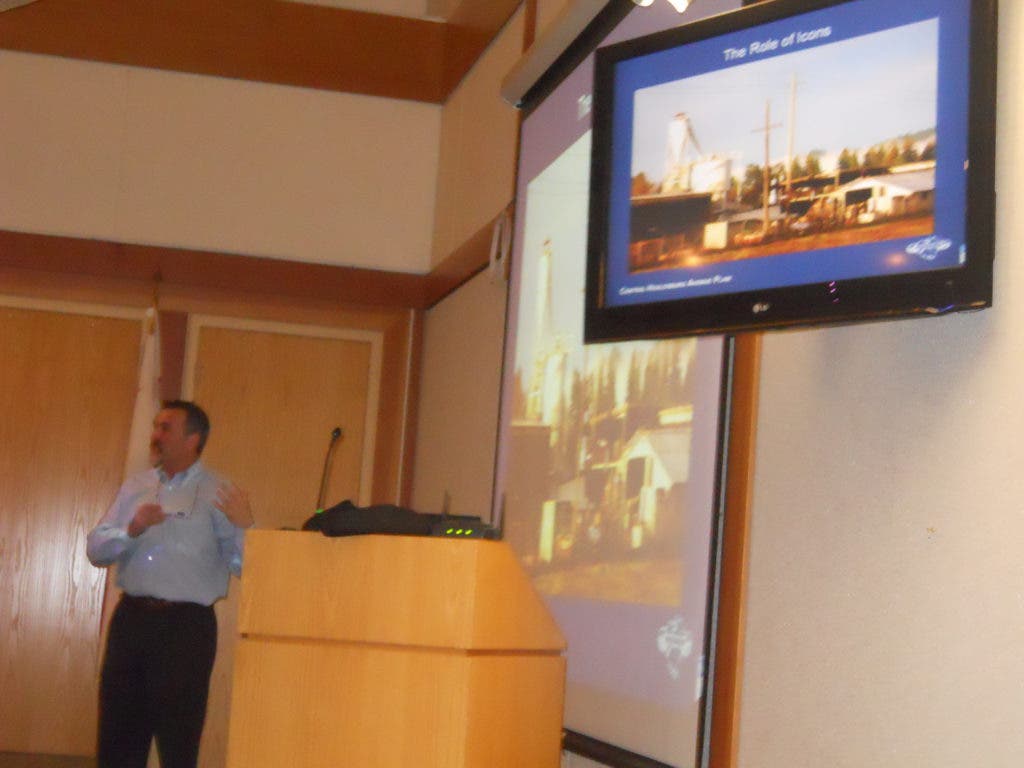

A Feb. 1 presentation on sustainable development offered various ways that Healdsburg's culture, resources and aesthetic might best be leveraged in designing the Central Healdsburg Avenue Special Study Area Project.
The Tuesday night meeting of citizens, city officials and project consultants was the final in a series of four gatherings at City Hall intended to educate the public about the options for building and to solicit feedback.
Presenter Jim Reid, Founder of San Francisco-based sustainable building consultancy UrbanGreen, repeatedly stressed the importance of finding environmental and aesthetic themes that would pervade the whole of the construction project – and dovetail with Healdsburg's existing layout.
Find out what's happening in Healdsburgfor free with the latest updates from Patch.
“I want to talk about how the plan relates to sustainability for the whole layout, not just for one building,” Reid said.
Reid touched on a number of options that he said would combine environmental friendliness with monetary savings. Some suggestions involved basic strategies for harnessing the elements – sun, wind and water – that he said were simple and cost-effective substitutes for industrial utilities.
Find out what's happening in Healdsburgfor free with the latest updates from Patch.
For example, Reid said buildings that face the sun during peak daylight hours typically consume 10 to 15 percent less energy. Also, strategically spaced clearings in a development area can convert afternoon breezes into a natural air conditioning system, he said.
“The town has a great cooling breeze that comes through … How you harness that and allow breezes to come through can cool the public realm, reduce heat, and clear out pollutants and dust in the air,” he said. “And that's something you do across the whole project, on an industrial level. You can't do it with just one building.”
Reid also discussed different ways to capture and recycle different flows of water. For example, he said making the ground more porous can help direct greater quantities of rainwater to underground aquifers; also, treated waste-water and run-off from properly placed storm drains can be redirected to feed neighborhood gardens.
Reid said new development should mesh with the town's social character as well. He touted the use of “third places,” a name he gave to social hubs that are neither homes nor businesses (although he said the existence of commercial outfits within such buildings is an option), but gathering spots for lounging and chatting over coffee and snacks. Reid said individual neighborhoods might also include community buildings that can serve as everything from hangouts to settings for neighborhood meetings, to day cares.
Finally, Reid spent considerable time discussing ways to leverage the SMART train service (when it does finally make its way up to Healdsburg). He said the development area should include pathways (perhaps shaded by rows of beautifying trees) that connect to the train depot, adding that combining with other modes of alternative transportation -- such as car and bike sharing projects -- could significantly reduce car traffic and encourage visits from out-of-towners who lack a vehicle.
“The basic idea is to decouple the ownership of a car from transportation,” Reid said. “Think about how great it would be if you rode the train up here and there were kiosks where people could rent bikes to ride around. People could come here and have a great time in Healdsburg without ever having a car.”
During a question and answer portion at the end of Reid's presentation, several questions centered on how the many theoretical options presented would be distilled into a concrete plan for building.
“Is there a device you have to connect this discussion to actual development?” asked Healdsburg resident Bill Wheeler.
Reid responded that another set of community meetings, scheduled to take place in March, will involve the presentation of specific alternatives for building. He added that the first four community meetings have centered on educating the public about responsible development, so that citizens and town officials can better consider the suitability of different options and provide relevant feedback.
Reid also stressed that the project should be viewed as “a journey, not a destination” – that it would be implemented in phases, and that a process of trial-and-error would help inform the overarching plan.
“All of this is not going to get parachuted in at once,” Reid said.
Reid appeared to be stumped on a question about the possible , in response to which he merely laughed. Town officials had once hoped to help finance construction of the project with but Mayor Tom Chambers has said that Governor Jerry Brown's plan to seize future redevelopment funds for the state will likely mean that private developers will have to provide those funds.