Politics & Government
Growth Management Panel Mulls Revisions to Ordinance
12-year-old Healdsburg Growth Management Ordinance might add more housing allotments.


Possible revisions to Healdsburg's -- also called "Measure M" -- had airings at Wednesday night's meeting.
Presentations came at a meeting of the in June to explore possible changes to Measure M.
The committee postponed a decision on moving further on any of the proposals until the next meeting at 6 p.m. Aug. 22 at Healdsburg City Hall.
Find out what's happening in Healdsburgfor free with the latest updates from Patch.
Even if the committee and the City Council votes to move ahead with a proposal, there will not be time to put the ordinance revision on the November ballot, officials said Wednesday. In fact, the vote could have to wait until 2014, the next general election, because the city would not want to spend $30,000 to hold a special election on the issue during 2013.
the principal author of Measure M, and Mark Green of Green Future Consulting Services and former executive director of Sonoma County Conservation Action, presented one of the possible revision proposals at Wednesday's meeting.
Find out what's happening in Healdsburgfor free with the latest updates from Patch.
It called for the annual residential unit allocation to increase to 35, or a total of 105 in a three-year period, or 210 in a six-year period. That is up from the current GMO allocations of 30 residential units per year, or no more than 90 in a three-year period.
Affordable, below-market rate units are exempt from the formula currently.
Winston and Green's plan also suggested the so-called Gateway redevelopment area in the south part of town -- sometimes called the -- to have a cap of 331 residential units.
"This allows for additional flexibility for the city to consider larger projects," Winston observed in his presentation, "but it also respects the will of the voters in their desire to retain Healdsburg's small town character."
Committee members had a mixed reaction. Some said they though a five-unit increase per year was not enough.
Committee member Jerry Eddinger, a Healdsburg Planning Commissioner, said that while "the GMO was a good thing - it got us thinking," a five-unit-per-year increase might not have the necessary flexibility.
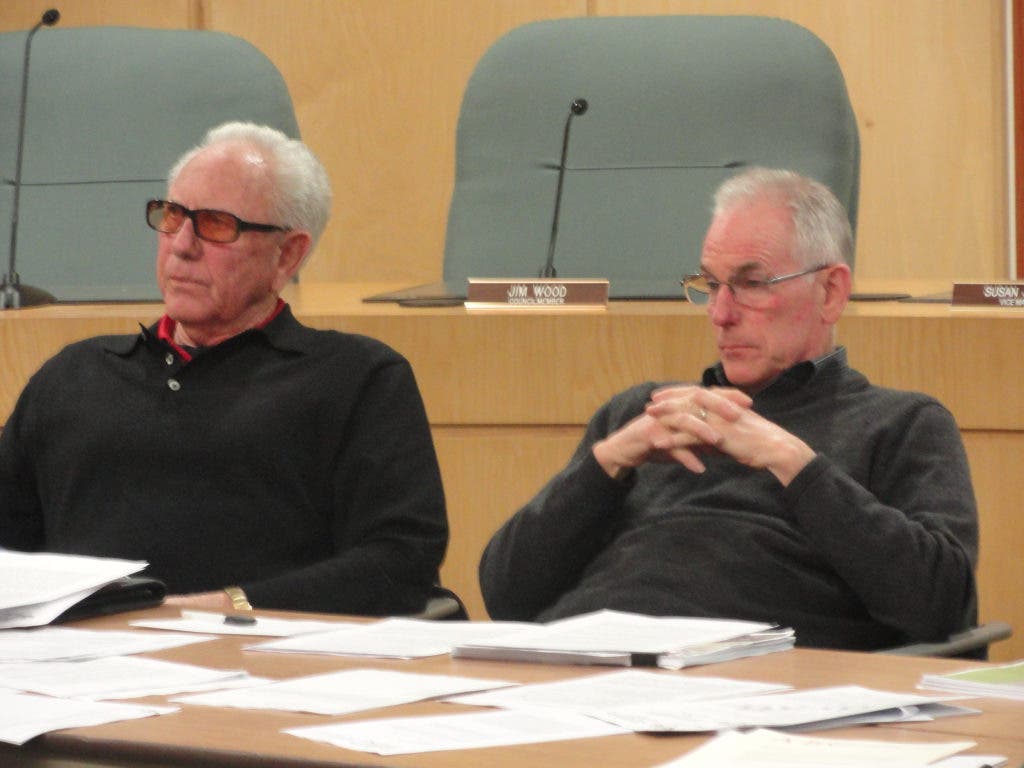
Commitee member Jim Wood, a Healdsburg City Councilman, said he wanted to also address a larger issue than just units within the Gateway section, or
Wood said raised the issue of how to deal with not just the study area, but also how to integrate that with , an approved but unbuilt luxury home development in the north end of town. He also said he felt a need to coordinate any development with transit, and the
Audience members said they were concerned about impact any new development would have on schools, city budgets, and the financial viability of any project.
Would, for example, a new project be something a bank would lend on, regardless of ordinances or planning conditions? Planning Commissioner Jeff Civian, who was in attendance, stressed the need to consider infrastructure limitations.
He also expressed concern that a "use it or lose it" provision for allocations might result in additional pressure for growth outside the city limits.
Audience member Phil Harlan said later he wanted proof that any extra unit allocations are necessary. He said the city did not use all of the 30 per year it had available during the housing boom years.
Why, he asked, would more be necessary now, when the economy is still shaky?
"What's driving this [push for more residential units]?" Harlan said in an interview after the meeting. "Does someone have a secret plan or hidden agenda to come in and build a lot of units? If so, I want to know about it in advance."
Other than the fear that Saggio Hills developers could start construction one day and immediately grab its available unit allocations and leave nothing for other developers, Harlan said he was not aware of what could be coming in that would need a large numbers of units.
Committee Chairman Tom Chambers summarized the alternatives as:
--City-wide change to the GMO
--Gateway-area change only.
--Two separate allocations for the Gateway area and for the rest of the city.
The takes in the land from Healdsbug Avenue, east past Front Street, and south to Presidential Estates. site is one of the largest sites within this area.