Politics & Government
Potholes in Parkland Farms. Will They Ever Get Fixed?
Writer's note: This column is for you to ask your questions. Click on the comment section after the article to ask about anything in Healdsburg.
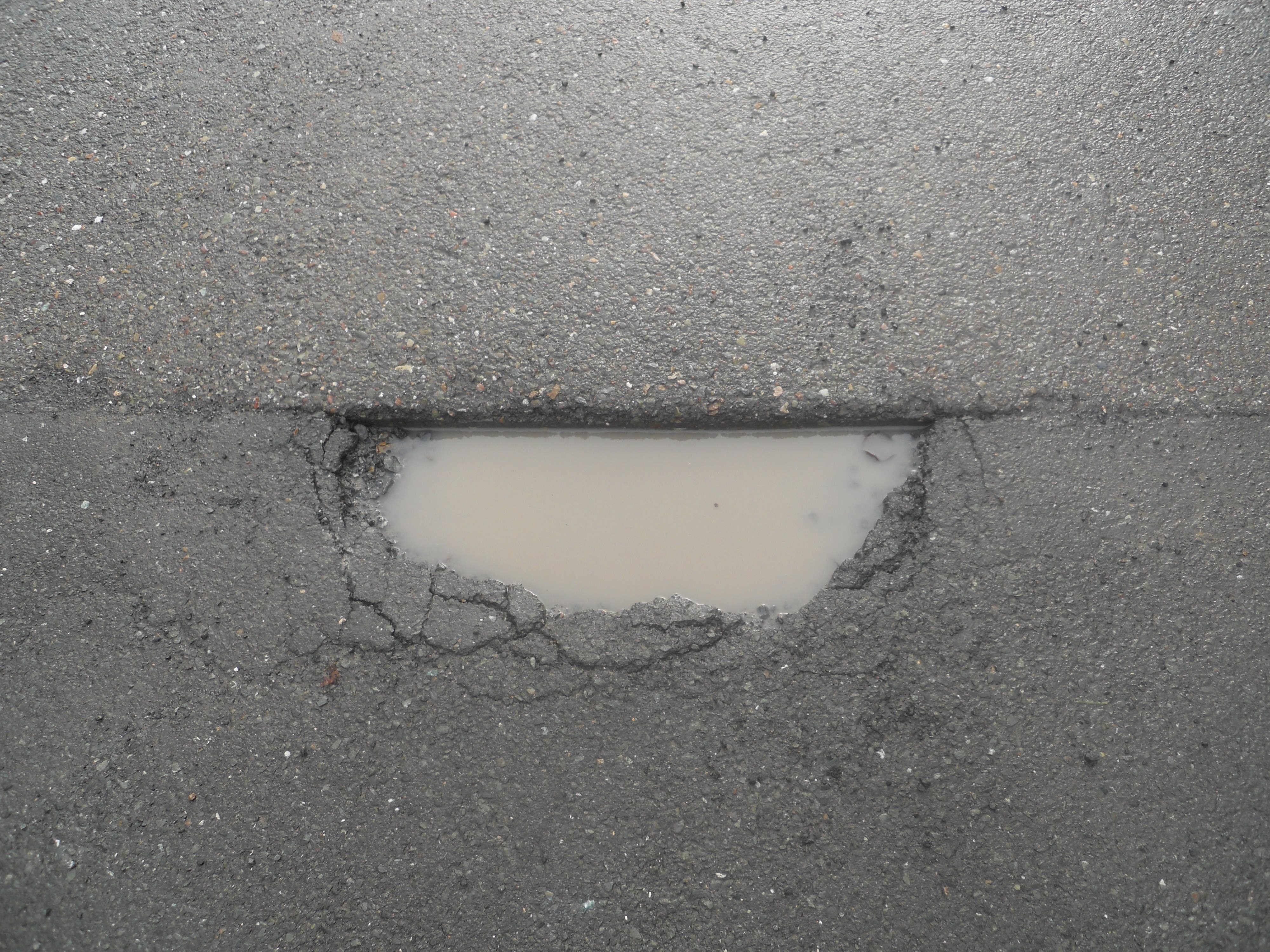


Parkland Farms is one of last subdivisions allowed in Healdsburg, until the pending issue of approval for Saggio Hills. Currently, Parkland Farms is the northernmost housing development and like many others, it has headaches.
But this particular subdivision has had several builders, and more than its share of problems.
The development was fairly new in 2001 -- which is just when, according to residents, the underground water pipes broke.
Find out what's happening in Healdsburgfor free with the latest updates from Patch.
"We were told that the material used when building the pipes was sub-par, and had to be replaced," said Larry Cary, who lives in Parkland Farms.
Tom Krehbiel, vice president of HCV Partners, who built some of the larger homes in Parkland Estates, said the soil content was the reason the pipes broke in the first place.
Find out what's happening in Healdsburgfor free with the latest updates from Patch.
"The water table is very high in the flatter portions of the subdivision, and the soil is exceptionally corrosive," Krehbiel said. "The soil actually corroded the water laterals (pipes), and the city required the builders to replace them."
He said HCV feels lucky that they did not have to make large-scale repairs.
"Fortunately for our company, we are in the higher elevations, and only had one lateral repair to do," Krehbiel added. "But in the lower portions, every street was affected."
Krehbiel went on to say that there may be problems with who actually owns the streets.
"As far as I know, the city owns the streets now, but ownership may be unclear if the city has legal issues with the original builder, whose name I cannot recall right now," Krehbiel said.
Unfortunately, as you can see from the photos, once the pipes were repaired, the street-wide asphalt -- which covered the repairs -- recessed every 100 feet or so into potholes, some shallow and some deep.
I measured potholes on several of the streets, and some were as deep as two inches. Many have raised bumps; all of the repairs are uneven throughout the flatter portions of the development.
Neighbors have been complaining to the city for years.
"I've lived here since 2000, and in 2001, the pipes started breaking slowly, then eventually spread throughout many streets in the development," said Richard Sheppard.
"We keep asking about the street-wide potholes and when they will be repaired, but no one seems to have an answer."
Sheppard's comments are representative of everyone's frustrations and questions about getting the potholes repaired.
"Further repairs put asphalt up onto the sidewalks too," he said. "In the summertime, the asphalt is so soft, you can push it down with your foot."
The fact of the matter is that driving on potholes is not only dangerous, but very costly to motorists. Continued driving over potholes makes matters much worse.
According to John Nielsen, director of AAA's Approved Auto Repair Network, potholes can do serious damage to automobiles.
"The appearance of potholes brings the potential of damage to vehicle suspension components," said Nielsen on the Car Junky website.
"Hitting even one especially severe pothole could alter the alignment of a wheel and cause uneven tire wear," Nielsen said. "Uneven tire wear means the tire will need to be replaced sooner than necessary."
He went on to discuss the dangers after cars drive over potholes.
"A broken shock or strut from a pothole encounter could alter the steering and handling of a vehicle and create dangers when driving at high speeds or in tight corners," Nielsen said. "Broken suspension components should be remedied immediately."
Potholes cost drivers an average of $402 a year in car repairs, vehicle deterioration and depreciation, more frequent maintenance and added fuel consumption, according to a report by TRIP, The Road Information Program, a national information transportation organization
As to the issue of who owns the streets in Parkland Farms and who is responsible for repairing them, Marjie Pettus, and Mike Kirn, , said in e-mails last week that they are looking into this issue more.
As of this writing, the city offices are closed for the holidays. But before they left, Pettus and Kirn said that they and Scott Rodolph, senior engineer, will research the problem when they return.
"I do not have the information you seek, but am happy to look into the matter and get back to you," Pettus said.
"All of this happened before I started with the city and it will take a while to research and I'll get back to you as soon as I can," Kirn added.
Residents in Parkland Farms said they have to be vigilant to avoid the potholes.
"I have to adjust my driving to veer around a large pothole on our street, and it's dangerous," Diane Schwab said.
"Near the stop sign at the end of Spur Ridge Lane, I need to drive into the oncoming traffic lane to avoid damaging my tires," Schwab added. "I really wish the pothole would get fixed for everyone's safety."
Schwab went on to tell about her friend's experience with potholes.
"My friend ... hit a pothole in front of a local school and got a flat tire from it," she said. "She called the city to complain."
According to Schwab, the city told her friend to put in a claim for damage, and the city reimbursed her for the damage to her very tire on her Lexus.
Another resident, a former fire captain, agreed that there is a problem.
"I believe the street-wide potholes and smaller potholes are a safety issue, for both cars and people," said Miguel Pena, a 27-year veteran and retired captain of the .
"We have to swerve to avoid these potholes and there are lots of children playing on these streets," he said. "If not fixed, this problem is only going to get worse."
Another resident said she is plagued with both a street recess and raised bump right near her driveway.
"I have one of these repairs right as I back out of my driveway," Kim Kasulky said. "In the summertime, I see how soft this asphalt gets, and I really worry about driving over it."
Kasulky said she wonders if the asphalt could collapse and do further damage to the pipes underneath it.
As I drove all around the development, I noticed there were no signs warning drivers about the potholes; this certainly compounds the safety issues.
We await the city's response on whether they own the streets in Parkland Farms and if so, how soon these street-wide potholes will be fixed. Stay tuned.