Community Corner
Animal Care in Lake Forest Part 6 (A new Grand Jury Report)
The Grand Jury releases a second scathing report about the County shelter.

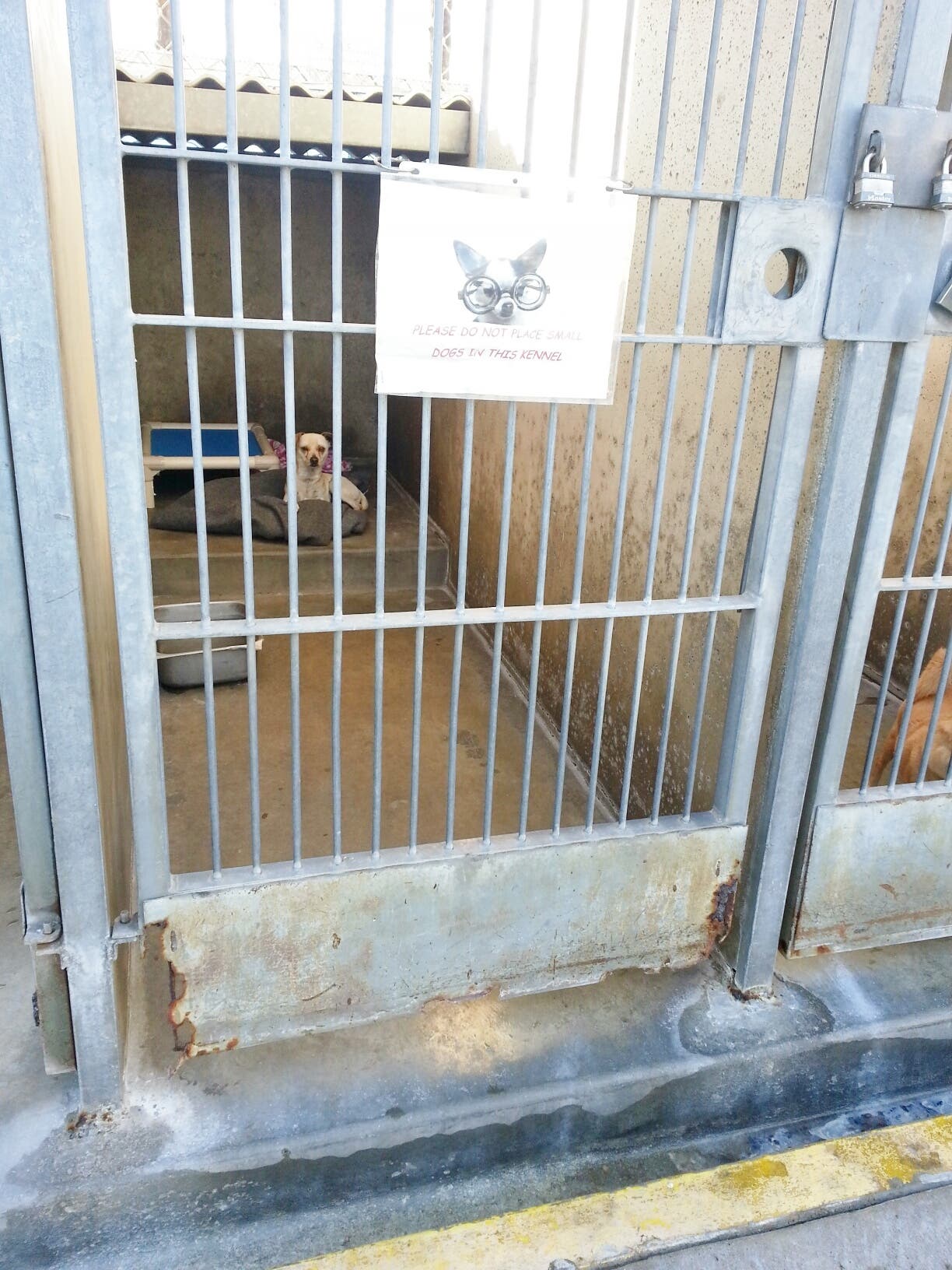
As if the recent Grand Jury report on the County’s animal care services didn’t paint a bleak enough picture, the Grand Jury just released an unprecedented second report in as many months.
Click here to review my articles about the first Grand Jury Report.
Click here to read the second Grand Jury report.
Find out what's happening in Lake Forestfor free with the latest updates from Patch.
Click here to review a recent editorial on the latest Grand Jury report.
To review briefly, Lake Forest contracts with the County for our animal care services which are operated out of a single massive and dilapidated shelter in the City of Orange. Approximately 500 animals a year go through the system and we pay about $600,000 a year for this service.
Find out what's happening in Lake Forestfor free with the latest updates from Patch.
In their first report the Grand Jury criticized the County for the poor conditions of the shelter, their failure to build a new shelter, and their insistence on maintaining a single massive shelter instead of two or three regional shelters – the model used by almost every other County of any size. In this new report, the Grand Jury gets much more specific.
Here are some excerpts from the latest Grand Jury report –
REASONS FOR THE STUDY
“The 2014-2015 OCGJ received written and verbal complaints from current and former employees, including veterinarians, and from various humane organizations. Many of these alleged problems were the same as those discussed in the 1999-2000, 2003-2004, and 2007-2008 OCGJ reports: organizational malfunctions relative to poor morale, unfair hiring and promotion practices; and, mistreatment and mishandling of the animals. As a result of these complaints and allegations, the 2014-2015 OCGJ launched an investigation to determine whether the various claims were valid and whether prior OCGJ recommendations had been implemented.”
FINDINGS
Based on its investigation titled, “If Animals Could Talk About the Orange County Animal Shelter,” the 2014-2015 Orange County Grand Jury has arrived at ten principal findings, as follows:
F.1 There are serious morale issues among Animal Shelter staff, many of which can be attributed to poor management practices and lack of effective leadership.
F.2. The trap, neuter, and return practice is reportedly delaying the spaying, neutering, and treatment of domestic dogs and cats awaiting adoption and is evidence that the domestic animals have been assigned a lower priority for surgery than the spaying, neutering, and micro-chipping of the feral cats.
F.3. Feral cats have been allowed to roam freely in and around the Animal Shelter and have been fed by Animal Shelter staff, possibly contributing to human and animal exposure to zoonotic diseases.
F.4. Animal Control Officers do not have effective equipment or appropriate procedural options to deal with unique, emergency circumstances that may require special procedures such as tranquilizing and euthanizing in the field.
F.5. OC Animal Care is currently operating with a shortage of personnel, including Animal Control Officers (ACOs), thereby making it much more difficult for them to respond to calls in a timely manner throughout such a large county, especially since there is only one shelter to serve all of Orange County.
F.6. There is little evidence that the Feral Free Program has been successful in reducing the feral cat population, which could be a contributing factor to the spread of zoonotic diseases.
F.7. Kennels are hosed down with dogs still present in the kennels, resulting in the dogs getting soaked and becoming more susceptible to disease
F.8. Kennel attendants were observed leaving the large water hoses running when not being used for cleaning purposes, thereby wasting large quantities of water.
F.9. There is limited airflow and no air conditioning in the cat trailers. The conditions in these trailers increase the vulnerability to disease.
F.10. There is a rodent problem, creating additional risk of humans and animals contracting zoonotic diseases.
RECOMMENDATIONS
R.1. Consider a change of leadership within the Orange County Community Resources Department and arrange for mandatory leadership training for all managers and supervisors that includes a curriculum of leadership skills, people skills, and diversity (F.1.).
R.2. Discontinue the practice of giving feral cats priority for surgery over the domestic dogs and cats awaiting adoption (F.2.).
R.3. Discontinue feeding feral cats and allowing feral cats to roam freely in and around the Animal Shelter (F.3.).
R.4. Develop proper protocols for Animal Control Officers to follow when confronted with unique circumstances in the field that require tranquilizing or euthanizing animals and take all measures necessary to ensure that the Animal Control Officers can be given the proper equipment and training in that regard (F.4.).
R.5. Establish a more aggressive approach in hiring qualified personnel on a timely basis, especially with the position of Animal Control Officer (F.5.).
R.6. Conduct an evaluation of the Feral Free Program to determine its effectiveness in the reduction of zoonotic diseases. (F.6.).
R.7. Utilize the “move-one-down” method for cleaning kennels to avoid soaking the animals. (F.7.).
R.8. Place nozzles on all water hoses and direct kennel attendants to turn off the water when not being used. (F.8.).
R.9. Improve the ventilation system in all cat trailers for the health and survival of the cats (F.9.).
R.10 Promptly control the rodent population in order to reduce the possibility of spreading diseases to human beings and animals (F.10.).
Tomorrow I will discuss the next steps.
ABOUT THE AUTHOR
Dr. Jim Gardner is on the City Council for Lake Forest. You can check him out on LinkedIn and/or Facebook and you can share your thoughts about the City at Lake Forest Town Square on Facebook. His comments are not meant to reflect official City Policy.
Dr. Gardner has office hours every Tuesday from 3 pm to 5 pm at the City Hall. In addition, he holds a mini town meeting every month. The next meeting will be on August 15 at 2 pm at the El Toro Public Library.
FB@R