Politics & Government
OC Animal Control - DOA and Distance
What is the relationship between DOA rate and distance to the OC Shelter?

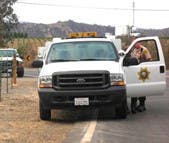
Scott Voigts and I have been working with the Lake Forest City staff trying to develop an RFP that the City could use in order to move away from the Orange County shelter. Readers of my columns need no reminder about the horrors of the County shelter, but in case you’re new to this issue, here is a summary of 5 Grand Jury investigations, an internal audit, and documented evidence from animal activists –
- · The County produces false information that exaggerates their licensing compliance and under-states their euthanasia rates.
- · The County is noted for being under-staffed and under-trained and for violating some basic humane care standards
- · The County has been criticized for lack of leadership and poor management.
- · The County has numerous lawsuits against it.
- · The County kills nearly 40% of the live animals who are admitted, compared to local shelters who euthanize less than 10%.
There is nothing new here. The County Supervisors are well aware of these facts and yet they continue to talk about building a $35,000,000 monolith and charging the cities for it even though they are aware that none of these problems will be solved by switching an old shelter for a new one, with the same Management, same employees, and same oversight by the same Supervisors.
In the course of our investigations, we came upon the fact that a large number of animals are placed in a County animal control truck and then shipped back to the shelter in Orange, where they arrive dead. In 2014 this was about 25% of all animals in Lake Forest, but in 2013 it was even higher – 35%. This suggested to Scott and I that the long wait and travel from Lake Forest to the County shelter may have contributed to the high Dead on Arrival (DOA) rate.
Find out what's happening in Lake Forestfor free with the latest updates from Patch.
“But how many are already dead and how many would die regardless of how long the trip is?” became the obvious question. Some of these animals are so injured when they are picked up, it’s conceivable they were going to die regardless of how long it took to get to the shelter. But for how many was the trip itself a contributor to their death?
I reasoned that we could partially determine this by doing a study of all the cities served by the County, determining their distance to the Shelter, and computing their DOA rate. If there was a systematic relationship between miles traveled and DOA rate, then the trip itself could be considered a contributing factor to their death.
Find out what's happening in Lake Forestfor free with the latest updates from Patch.
If true, this grim fact argues strongly for having local shelters. It would help demonstrate that the County Supervisor’s plan for a single monolith, regardless of where it was situated, was a death trap for those cities at the farthest extreme from the shelter. Indeed, no other County our size in California (perhaps even elsewhere) has a single shelter.
Here are some disturbing facts from a research study I conducted a few years ago –
· Orange County provided the poorest level of coverage: one shelter serving the needs of more than 2,000,000 people. The next poorest provider was the City of Los Angeles, where each shelter served an average of more than 600,000 people. Riverside had the best coverage, providing a county shelter on average for 162,639 people.
· Examining the number of cities served by each shelter, the Orange County shelter served 22 cities (now it is 18, soon to be 16 or less), while the closest comparison is Los Angeles County where each county served an average of 8 cities. San Bernardino served an average of 3.5 cities. San Diego and Riverside county shelters serve approximately 2 cities per shelter.
· Orange County, which is by far the smallest county geographically (less than a quarter the size of San Diego and Los Angeles counties), nonetheless had the second largest average miles from city center to closest shelter, the second longest average time to travel, and also has the second longest overall mileage and the longest overall travel time. Only some San Bernardino county shelters were less accessible than Orange County, yet San Bernardino has more than 20,000 square miles to cover while Orange County has less than 1,000 square miles.
Yet despite these numbers, the Orange County Supervisors stick to their plans for a single shelter.
I went to the County website and found comprehensive data for only one year – 2013. I compared the percent of animals arriving DOA with the distance from the shelter.
Tomorrow we’ll discuss the results
ABOUT THE AUTHOR
Dr. Jim Gardner is on the City Council for Lake Forest. You can check him out on LinkedIn and/or Facebook and you can share your thoughts about the City at Lake Forest Town Square on Facebook. His comments are not meant to reflect official City Policy.
Dr. Gardner has office hours every Tuesday from 4 pm to 6 pm at the City Hall. In addition, he holds a Town Hall meeting every quarter. The next meeting will be on August 13 at 2 pm at the Foothill Ranch Public Library