Arts & Entertainment
Fighting A Kinder, Gentler War In the Suburban Garden
Keeping your yard beautiful and well-tended doesn't always have to mean bringing in the heavy weapons.


I think it's unfortunate that both the attitudes and the arsenal of industrial agriculture have wormed their way into our residential gardens. See a weed, reach for the Round-up. See a bug, call Clark's. Digging to do? Grab a laborer outside Home Depot. It doesn't have to be that way.
The human scale of our gardens means they can be places, not where we try to subdue nature, but where we learn how nature works and how we can work alongside. But that does require us to be there and pay close attention. We have to see the garden and touch it, get seduced by scents and poked by thorns. We have to come indoors with burrs in our socks and lady bugs in our hair. Maybe then we'll start seeing weeds and pests less as enemies and more as emissaries from the wild reminding us that we're not really in control.
Control may not be possible or even desirable but we do have to manage those intrusive weeds. It's helpful to remember that they can play a beneficial role in the garden. There are sustainable gardening systems in Central America in which wild plants are encouraged to cross with domesticated plants in hopes of creating new well-adapted local varieties. While that kind of intense weediness would probably not be welcome in a suburban landscape, letting a few weeds naturalize here and there or in a corner of the yard can have its advantages.
Find out what's happening in Lamorindafor free with the latest updates from Patch.
Deep-rooted weeds can capture minerals in the sub-soil and bring them to the surface. Compost those weeds and you harvest those minerals. Weeds with taproots like dandelion and curly dock can break up tough soils. Some, like vetch, capture nitrogen from the atmosphere. Other more delicate weeds such as chickweed simply cover and protect the soil. Many wild plants, especially native varieties, offer food and protection for birds and beneficial insects. And some, like chickweed, purslane, wild mustard, and Himalayan blackberry, are edible, even tasty.
So before entering into respectful battle with weeds, I get to know them by consulting a weed ID website such as this one from UC Davis. This helps me distinguish between weeds that are genuine threats and those that are just unsightly. It's especially important to identify what are called noxious weeds, unusually aggressive types that are doing real harm to domestic and native plants by overrunning them, out-competing for light and nutrients, and taking over habitats.
Find out what's happening in Lamorindafor free with the latest updates from Patch.
Information about California's noxious weeds can be found here. I rarely see these in our local gardens but when I do, unless they're flowering or spreading by underground runners, I toss them directly into the compost bin so their hidden virtues won't be lost.
Once I've gotten to know the weeds in the garden, and singled out the threatening ones, I can go mano a mano with them. Error-prone creature as I am, it seems my mistakes are often compounded by my tools. I prefer to weed by hand to avoid accidentally eliminating harmless bystanders. I find that I make more mistakes with a hand hoe, many more with a standing hoe, and I can do some serious damage with a rototiller. Many weed seeds sprout in disturbed soil and I find hand weeding is the least likely stimulate them. And it keeps me literally in touch with the soil.
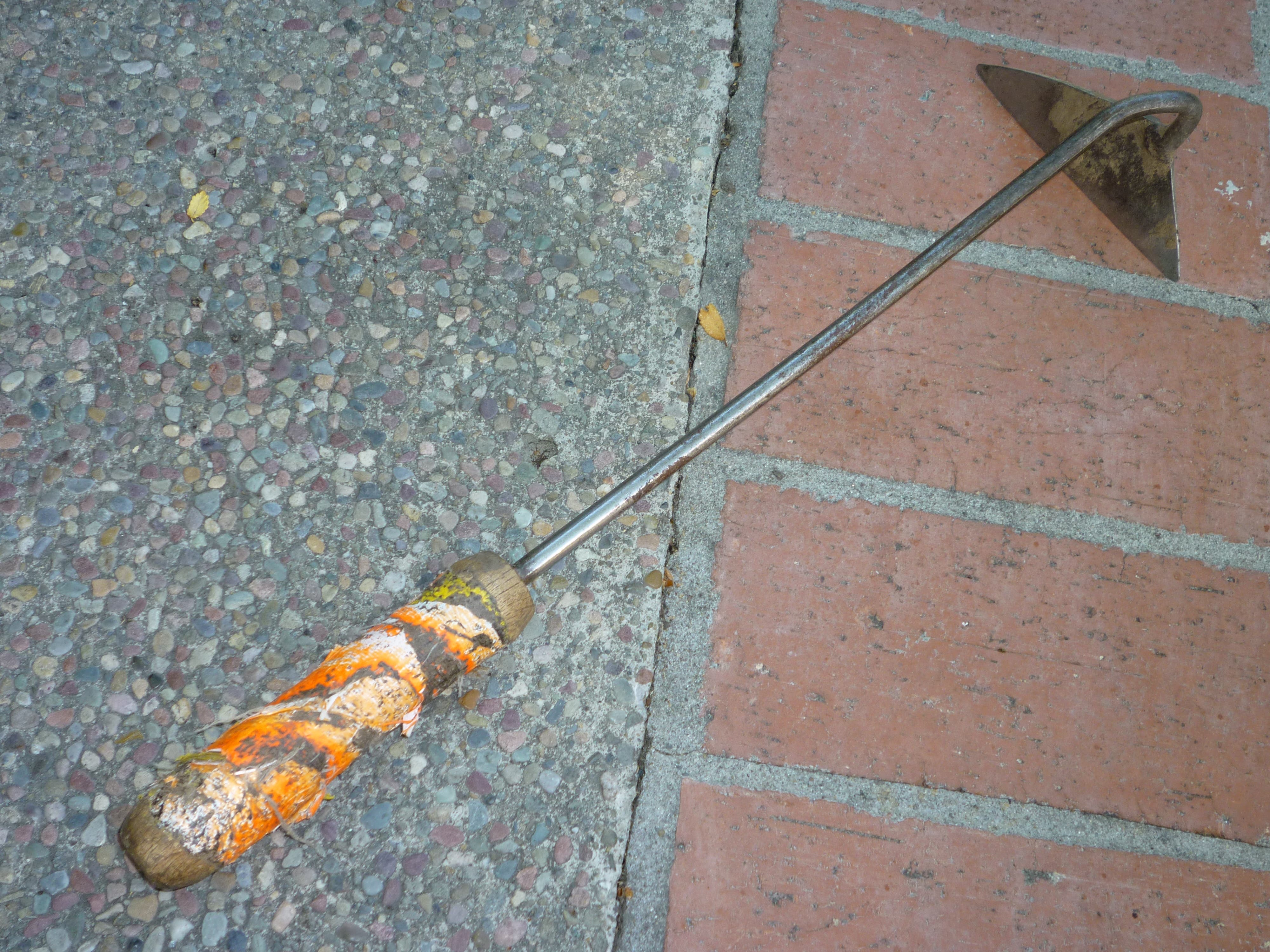
When time is short and I have to use a hand hoe, my weapon of choice is an 18" Dutch hand hoe, also known as a Japanese Nejiri Gama. It's accurate, can reach places my hand can't, and cuts weeds off just below the soil surface leaving the roots to decompose. And it's an effective tool to remove creeping invasive weeds like Bermuda grass, wild blackberry, and ivy.
Joe's Gardening Tip: Better still than digital extraction is prevention. Laying down newspaper or thin cardboard and covering it with 3 or 4 inches of fine mulch will exclude light and prevent most weed seeds from germinating. Pulling weeds before they flower will keep them from spreading unwanted seeds around.
I know it may be an idea whose time has not yet come to let some weeds run free in our coiffed and manicured landscapes. The first thing I notice when I walk into a garden are the weeds and I want to get down on my calloused knees and pull them. But I resist the impulse. I want to leave some room for wildness. I once heard Alice Waters say she's gotten to the point where she doesn't trust a fruit or vegetable that doesn't show some insect damage. Likewise, a garden with some wild plants may look less tidy, but it's probably a healthier place to be. So when we go out into the garden, in the words of Thoreau, to make the soil speak beans or begonias, don't worry if it speaks a few weeds as well.