Neighbor News
The Duterte Reckoning: Why the Philippines Must Convict Sara Duterte and Why Baste Matters
and Why Baste Matters in this system of impunity

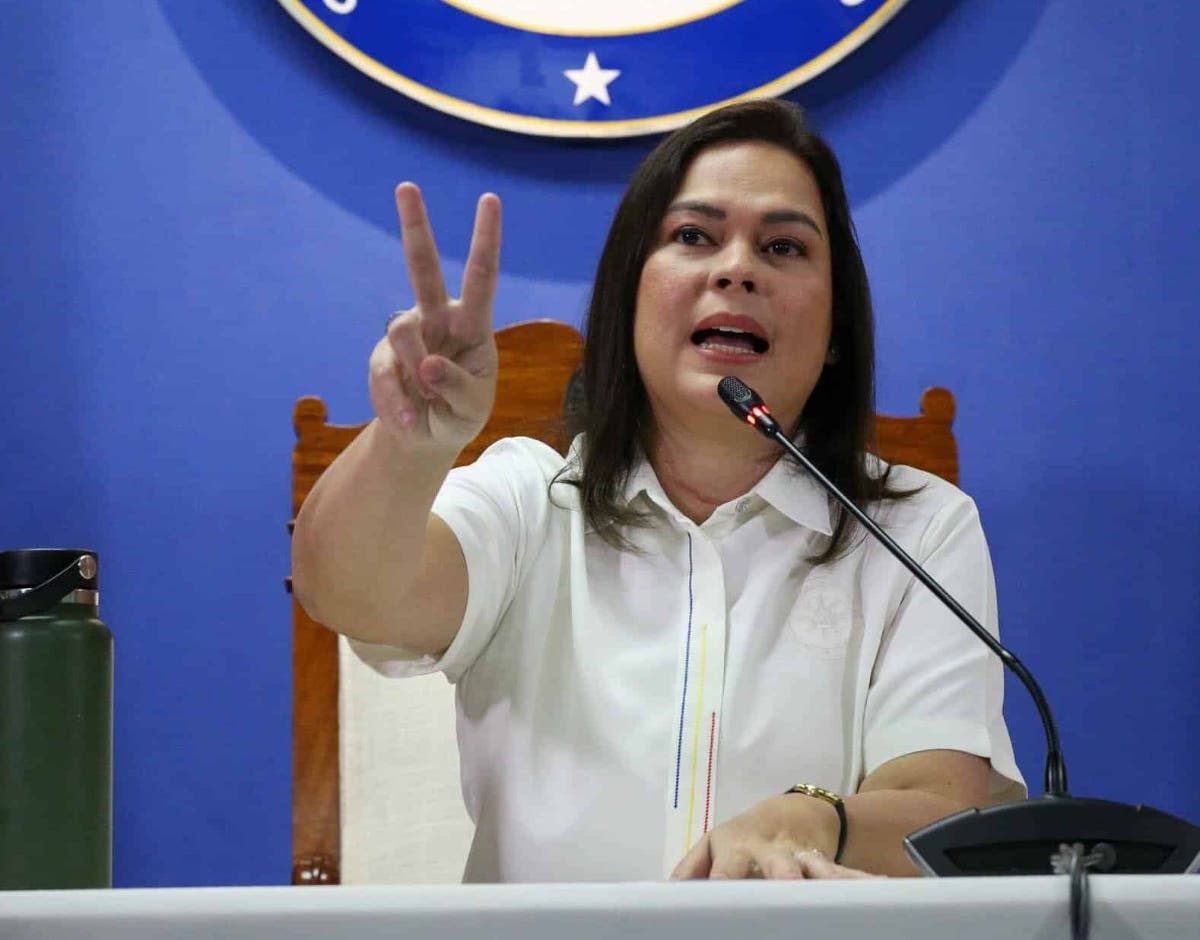
On July 6, 2026, the Philippine Senate convened as an impeachment court for the first time in the nation's history to try a sitting vice president. Sara Duterte-Carpio, the 48-year-old daughter of former president Rodrigo Duterte, now faces four articles of impeachment: misuse of 612.5 million pesos in confidential funds, unexplained wealth, constitutional violations, and betrayal of public trust. A conviction requires a two-thirds vote of the Senate, which would not only remove her from office but permanently disqualify her from running for president in 2028. Yet this trial is about far more than one politician's career. It is the defining test of whether the Philippines can break free from the dark legacy of the Duterte years—or whether it will repeat the nightmare of state-sponsored violence, mass terror, and systemic corruption that engulfed the nation from 2016 to 2022.
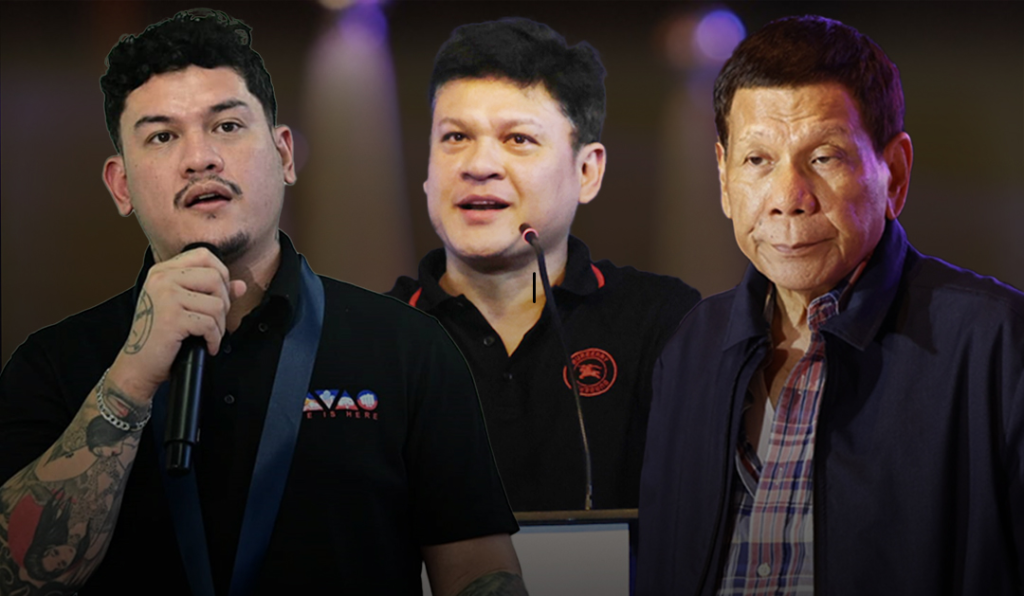
But there is another Duterte whose name has surfaced repeatedly in the impeachment proceedings: Davao City Mayor Sebastian "Baste" Duterte, Sara's younger brother. His inclusion is not incidental. The NBI has made clear that the threats emanating from the Duterte family are not isolated incidents but a coordinated pattern—a "kinetic force" that may incite unrest. As NBI Director Melvin Matibag testified, "We can see here that the threat of the Vice President had an effect, it is a kinetic force wherein the people that heard the threat are copying it, particularly since they are from the same family". The Duterte family is not just a political dynasty; it is a machine of violence, and Baste is very much part of the machinery.
From Davao Death Squad to National Catastrophe
Find out what's happening in Los Angelesfor free with the latest updates from Patch.
The Duterte political project did not emerge overnight. It was perfected over decades in Davao City, where Rodrigo Duterte built his political brand on the "Davao Death Squad" (DDS), a shadowy vigilante network that targeted alleged criminals. By wielding a monopoly over violence and capitalizing on public fear, Mayor Duterte transformed extrajudicial killing into a tool of governance. When he ascended to the presidency in 2016, this local experiment was weaponized nationwide as the "War on Drugs." Duterte ordered law enforcement to "kill, kill, kill," effectively granting police and state-aligned vigilantes a license to execute citizens without due process.
The results were catastrophic. Human rights organizations estimate that between 12,000 and 30,000 Filipinos were killed during the drug war. Police routinely claimed victims "fought back" (*nanglaban*) to justify executions, planting cheap pistols and packets of methamphetamine to close the investigative loop. The definition of "target" rapidly expanded beyond drug suspects to include political rivals, human rights lawyers, journalists, and community activists. Anyone opposing the administration was "red-tagged" as a communist insurgent or placed on unverified drug watchlists—which functioned as de facto death sentences. As Amnesty International declared at the time, "It is not safe to be poor in President Duterte's Philippines."
Find out what's happening in Los Angelesfor free with the latest updates from Patch.
The Hague and the Long Arm of Justice
The international community has not forgotten. In March 2025, Rodrigo Duterte was arrested by the International Criminal Court on a warrant for crimes against humanity. On April 23, 2026, the ICC Pre-Trial Chamber confirmed all charges and committed him to trial. The tribunal is investigating crimes committed not only during Duterte's presidency but also during his tenure as Davao City mayor from 2011 to 2016. The ICC prosecution has established that the killings were carried out by a "National Network" comprising law enforcement personnel, non-police assets, and hitmen operating under state direction. The ICC has also named Senator Ronald "Bato" Dela Rosa, Duterte's former police chief, as a defendant in the case.
Yet accountability in The Hague is not enough. The Philippines withdrew from the ICC in 2019 under Duterte's presidency, and President Ferdinand Marcos Jr. continues to insist that the ICC has no jurisdiction. More troubling still, Human Rights Watch reports that extrajudicial killings have quietly persisted under Marcos's administration. Project Dahas, a University of the Philippines monitoring initiative, has documented over 1,273 drug-related killings since Marcos took office in June 2022. As HRW researcher Lian Buan warned, "Since Duterte opened his bloody 'drug war' a decade ago, Filipinos are still being killed despite President Marcos' promise" of a more humane approach. The mechanisms of violence remain in place, waiting to be reactivated.
Sara Duterte: Heiress to a Violent Legacy
Sara Duterte is not merely her father's daughter; she is an active participant in the same political culture of intimidation and impunity. The articles of impeachment against her include not only corruption and misuse of funds but also grave threats against President Marcos, First Lady Liza Araneta-Marcos, and former House Speaker Martin Romualdez. In a November 2024 Facebook livestream, she declared that she had hired an assassin to kill them if anything happened to her. NBI Director Matibag testified during the impeachment trial that such threats constitute a "kinetic force" that may incite unrest, as those who hear them are inspired to replicate the violence. "The threat is serious, active, and continuing," Matibag warned, adding that any threat to the president's security is a threat to national security itself.
But Sara is not acting alone. The NBI has been investigating what it describes as a "pattern of violence"—and her brother Baste is very much part of that pattern.
Baste Duterte: The Other Heir
On April 12, 2026, at the launch of the Reform Alliance for Good Governance (RAGE) Coalition, Davao City Mayor Sebastian "Baste" Duterte told attendees: "We only want one head, the head of Bongbong Marcos". The statement was not an isolated outburst. It echoed almost verbatim his sister's October 2024 declaration that she wanted to "cut his head". When Senator-judge Panfilo Lacson asked Matibag why the NBI had investigated Vice President Duterte but not her brother, the NBI director revealed that Baste's statement was in fact the "trigger point" that prompted the creation of a special task force to investigate the threats against Marcos.
Matibag testified that the NBI is now considering filing criminal charges against Baste for grave threat and inciting to sedition. More significantly, the NBI is also looking into a possible conspiracy between the Duterte siblings to carry out these threats. "It is noteworthy that we can see the threats against our President coming from the same family. And both of them refer to the President's head," Matibag told the impeachment court. He added, "That is why we also considered whether there was an accomplice or a conspiracy behind this incident".
The implications are staggering. This is not merely a case of two siblings making incendiary remarks. This is a family that has normalized the language of assassination as a political tool. As Matibag explained, the threats have a "kinetic force"—they inspire others to replicate them. Baste's video alone has been viewed by more than 600,000 people. The Duterte family's public pronouncements are not just rhetoric; they are a form of political violence that extends far beyond words.
A Family, a Machine, a Threat
The inclusion of Baste Duterte in the impeachment narrative changes the calculus entirely. It transforms the case against Sara from an individual prosecution into an indictment of an entire political dynasty. The Duterte family's trajectory has become the ultimate global case study of vigilantism evolving into state-sponsored political violence, mass terror, and systemic corruption. What began as a localized "tough-on-crime" campaign in Davao ultimately triggered a massive human rights crisis, permanently altering the nation's political landscape and institutional accountability.
Baste is not a peripheral figure. As mayor of Davao City—the very city where his father perfected the death squad model—he is the custodian of the family's original power base. He is the heir to the DDS legacy. And his statements, made in public rallies and viewed by hundreds of thousands, demonstrate that the family's culture of violence is not confined to the past. It is active, continuing, and escalating.
A Nation at a Crossroads
The impeachment trial, scheduled to span 92 trial days, is being watched closely by a nation still traumatized by the drug war. Polls show Sara Duterte remains popular—a Pulse Asia survey in March gave her a 55% approval rating. But popularity is not the same as fitness for office. The Philippine people must decide whether they want to entrust the highest office in the land to someone who has threatened assassination, misused public funds, and whose family legacy is defined by extrajudicial killing.
The fear that haunts the Philippines is the fear of repetition. If Sara Duterte escapes conviction, she will be the frontrunner to succeed Marcos in 2028. And if she becomes president, what then? Will the "Davao Death Squad" model be resurrected on a national scale once more? Will the drug war resume with renewed ferocity? Will the same playbook of red-tagging, extrajudicial killings, and weaponized accusations return—this time with Baste as her enforcer?
These are not speculative fears. The infrastructure of violence remains intact. The police and vigilante networks that carried out the killings have never been held accountable. The orders that enabled the slaughter have never been rescinded. The culture of impunity that allowed Rodrigo Duterte to murder thousands with impunity persists because his allies still hold power—and because his children are poised to inherit it. Convicting Sara Duterte is not just about punishing one individual; it is about dismantling the machinery of violence that the Duterte family built and maintained for decades. And that means recognizing that Baste is not an innocent bystander but a co-conspirator in the family's campaign of terror.
The Ultimate Test of Accountability
The impeachment trial is also a test of whether the Philippines can finally confront its own dark history. As one prosecutor declared on the trial's opening day, the impeachment is a fight for accountability. The International Coalition for Human Rights in the Philippines has applauded the impeachment, warning against "all maneuvers of the Duterte clan and its allies to obstruct justice." The world is watching to see whether the Philippines will choose justice over impunity, the rule of law over the rule of violence.
The Duterte era was a warning to the world about what happens when populist strongmen weaponize the state against their own people. The Sara Duterte impeachment is an opportunity to show that democracies can correct their course—that accountability is possible, even for the most powerful families. The Senate must convict. Not for revenge. Not for politics. But because the Philippines cannot afford to repeat the mistakes of 2016 to 2022. Because the 12,000 to 30,000 dead deserve more than silence. Because the future of Philippine democracy depends on proving that no one is above the law—not even a Duterte.
And because Baste Duterte's name in the impeachment record is a reminder that this is not about one person. It is about a family, a system, and a legacy of violence that must finally be brought to an end.
With the impeachment trial concluded, the legal peril for the Duterte family is far from over. The global spotlight has now shifted decisively to The Hague, where the International Criminal Court (ICC) is building its case against Rodrigo Duterte for crimes against humanity. While the former president is the primary defendant, the ICC's investigation casts a long shadow over his children, Sara and Baste. The evidence and testimony emerging from the impeachment trial, combined with existing ICC records, suggest that both siblings could be implicated as persons of interest in the international tribunal's ongoing investigation.
Sara Duterte: A Documented Link to the Drug War
Unlike her brother, Sara Duterte's connection to the ICC investigation is already a matter of public record, supported by sworn testimony and her own admissions.
"The Lascañas Affidavit:" The most direct link is the 186-page affidavit submitted to the ICC by Arturo Lascañas, a self-confessed leader of the original Davao Death Squad (DDS). During Sara's impeachment trial, NBI Director Melvin Matibag testified that the bureau evaluated this affidavit, which directly mentions Vice President Sara Duterte's supposed hand in Oplan Tokhang. Lascañas alleged that Sara was not merely aware of the operations but was one of the "architects of Oplan Tokhang". He further claimed that operations were "cleared and approved" by then-Mayor Sara Duterte and her father. This affidavit is expected to be used by the ICC's Office of the Prosecutor in its case against Rodrigo Duterte, making Sara an integral part of the narrative the prosecution is building.
**Sara's Own Admission:** Compounding this is Sara Duterte's own public statement. In April 2025, she revealed that she believes she is on the ICC's arrest list, alongside Senators Bato Dela Rosa and Bong Go. While Malacañang stated it had no information on this alleged inclusion, Sara's acknowledgment signals her awareness that the ICC's investigation extends beyond her father.
**The ICC's Temporal Jurisdiction:** The ICC's investigation covers alleged crimes committed on Philippine territory between November 1, 2011, and March 16, 2019. This period *includes* Sara Duterte’s tenure as Davao City mayor from 2010 to 2013 and again from 2016 to 2022. This timeframe is crucial, as it places her directly within the scope of the ICC's probe during the very years Lascañas alleges she was complicit in the extrajudicial killings.
Baste Duterte: The Other Heir in the Crosshairs
While the evidence against Baste Duterte is less documented than against his sister, several factors make him a potential person of interest.
**The "Pattern of Violence":** During Sara's impeachment trial, the NBI established a "pattern of violence" on the part of the Duterte siblings. NBI Director Matibag testified that both Sara and Baste's utterances were treated as threats to national security, noting they came from the same family and both referred to the President's head. The NBI even considered whether there was a conspiracy between the siblings. This demonstrated a coordinated family approach to using intimidation as a political tool, a pattern that the ICC could interpret as part of a broader culture of impunity and violence.
**The Davao Connection:** As the current mayor of Davao City, Baste is the custodian of the family's original power base—the very city where the "Davao Death Squad" model was perfected. While there is no public ICC document explicitly naming him, his position and the family's history place him within the ecosystem the ICC is investigating. He has been an outspoken critic of the ICC proceedings against his father and has even filed legal actions against Philippine officials over his father's arrest. His actions demonstrate a deep personal and political investment in the family's legal battles.
**The Expanding Scope of the Investigation:** The ICC investigation is not static. It has already expanded to include Senator Ronald "Bato" Dela Rosa, who is now in hiding. The prosecution has also identified other alleged co-perpetrators. This demonstrates that the ICC is actively building a case against a "National Network" of perpetrators. Given Baste's role as mayor of Davao and his public alignment with his father's legacy, it is not far-fetched to imagine the ICC's prosecutors expanding their focus to include him, especially if evidence emerges of his involvement in or knowledge of the operations in Davao.
Conclusion: A Dynasty on Trial
The impeachment of Sara Duterte may be over in the Philippines, but the legal reckoning for the Duterte family is only beginning. The ICC's case against Rodrigo Duterte is, in many ways, a case against the system of violence he built and his children inherited. Sara Duterte's documented connection to Oplan Tokhang and her own admission of being on an ICC arrest list place her in direct legal peril. Baste Duterte, as the mayor of Davao and a key figure in the family's political machine, remains a potential target as the ICC's investigation continues to unfold.
The world is watching to see if the pursuit of justice in The Hague will hold the entire Duterte political dynasty accountable for the crimes committed under its watch. The shadow of The Hague now looms not just over the patriarch, but over the entire family that enabled his reign of terror.