Neighbor News
New Clinical Research Examines How Baby Bottle Venting May Affect Crying During Feeding
Thyseed brings its bottom-vent infant feeding system to the U.S. with the opening of a new Los Angeles headquarters
LOS ANGELES, Calif. — Parents regularly encounter baby bottles promising to reduce gas, colic and feeding discomfort, but a recently published randomized clinical trial suggests that the way a bottle is vented may deserve closer attention.
Thyseed, a maternal and infant products brand specializing in feeding design, has opened its U.S. headquarters in Los Angeles as it introduces its patented bottom-vent bottle system to American families, retailers and infant-feeding professionals.
The expansion follows the publication of a multicenter randomized clinical trial in JAMA Network Open that compared bottom-vented bottles with conventional teat-vented bottles among more than 1,000 infants.
Find out what's happening in Los Angelesfor free with the latest updates from Patch.
Researchers found that infants using bottom-vented bottles had a 21% lower relative risk of crying during or after feeding compared with those using teat-vented bottles.
The trial did not find a statistically significant reduction in the overall prevalence of mild gastrointestinal discomfort among all infants ages 0–90 days. However, an exploratory subgroup analysis found a lower risk of mild gastrointestinal discomfort among infants ages 61–90 days using bottom-vented bottles. The researchers emphasized that the subgroup finding requires further confirmation.
Find out what's happening in Los Angelesfor free with the latest updates from Patch.
“Parents deserve clear information about what feeding products are designed to do and what the research actually shows,” said Dorian Lawson, CEO of Thyseed USA. “We believe the most responsible way to enter the U.S. market is by being transparent about both the promising findings and the limitations. The research gives families and feeding professionals a more meaningful basis for discussing bottle design than marketing language alone.”
Why Vent Placement Matters
Most bottles require air to enter as a baby removes milk. In conventional teat-vented bottles, air enters near the nipple and may pass through the milk, creating visible bubbles.
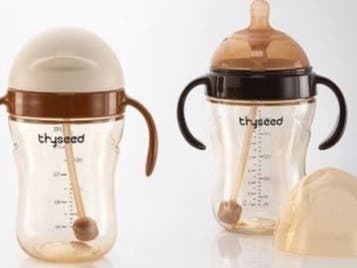
Thyseed’s patented system introduces air through a valve at the bottom of the bottle. This keeps the incoming air separate from the milk while helping regulate pressure and maintain a steadier flow during feeding.
The researchers identified several possible explanations for the reduction in feeding-related crying, including more stable milk flow, reduced pressure fluctuations and less milk aeration. Further research is needed to determine precisely which mechanisms contribute to the observed difference.
“Parents frequently describe trying bottle after bottle without understanding why their baby responds differently to each one,” Lawson said. “Nipple softness and shape matter, but vent placement, pressure and milk flow can also change the feeding experience.”
Study Included More Than 1,000 Infants
The randomized clinical trial enrolled 1,055 infants ages 0–90 days at five maternal and child healthcare hospitals. Participants used either bottom-vented or teat-vented bottles for at least three daily feeds over 14 days.
At the end of the study:
- Crying during or after feeding was reported in 32.2% of infants using bottom-vented bottles, compared with 40.8% using teat-vented bottles.
- Bottom venting did not significantly reduce overall mild gastrointestinal discomfort across the complete 0–90-day study population.
- An exploratory analysis among infants ages 61–90 days found a lower prevalence of mild gastrointestinal discomfort with bottom-vented bottles.
- Researchers stated that the age-specific finding should be interpreted cautiously and confirmed through additional studies.
The study was supported by the Peking University Medicine and Thyseed Maternal and Infant Product R&D Joint Laboratory Program and an unrestricted grant from Thyseed. Thyseed also supplied the bottles used in the trial. According to the publication’s disclosure, the funder had no role in the study’s design or conduct, collection or analysis of data, manuscript preparation or approval, or the decision to submit the findings for publication.
Designed to Support a More Natural Feed
In addition to its bottom-vent valve, the Thyseed Glass Natural Feeding Anti-Colic Baby Bottle features an ultra-soft, breastfeeding-inspired silicone nipple with multiple milk openings.
The multi-hole design is intended to distribute milk across several points of flow rather than through one central opening. Milk is released as the baby actively sucks, while multiple available nipple flow rates accommodate changing feeding needs as the baby grows.
The bottle is available in:
- A 5-ounce size intended for newborns through approximately 3 months
- An 8-ounce size intended for babies approximately 3–6 months
- Six interchangeable nipple flow rates
The bottle body is made from heat-resistant high-borosilicate glass. Nipples and base valves use food-grade liquid silicone, and the system has four primary parts: the bottle, nipple, nipple ring and base valve.
Its wide-neck design avoids narrow internal ventilation tubes and hard-to-reach channels, allowing each surface to remain accessible during cleaning.
Los Angeles Becomes Center of U.S. Expansion
Thyseed’s new Los Angeles headquarters will support the company’s American retail growth, healthcare and lactation-professional outreach, customer community, media relations and future partnerships.
The company plans to use Los Angeles as the starting point for local parent education, expert-led events, product demonstrations and collaborations with professionals who support families during pregnancy, postpartum recovery and infant feeding.
“Los Angeles gives us access to a diverse parenting community, respected healthcare professionals, innovative retailers and a culture that embraces thoughtful product design,” Lawson said. “We want our U.S. headquarters to become more than an administrative office. We want it to be the center of an active community supporting parents through the earliest stages of family life.”
Internationally Recognized Product Design
Thyseed’s newborn bottle has received international design recognition, including the Red Dot Design Award in Germany, Good Design Australia and Good Design Korea.
The company says its broader product portfolio is supported by more than 100 design and utility patents and includes glass, PPSU and silicone feeding products designed around safety, function and ease of use.
About Thyseed
Thyseed is a maternal and infant products brand dedicated to making feeding simpler and more comfortable for families. The company combines premium materials, independent safety testing and evidence-informed design to develop baby bottles and feeding products for modern families.
Thyseed’s patented bottom-vent system introduces air through the base of the bottle, keeping incoming air separate from milk while supporting stable pressure during feeding. Its newborn bottle has earned international recognition, including the Red Dot Design Award in Germany, Good Design Australia and Good Design Korea.
Thyseed recently opened its U.S. headquarters in Los Angeles to support its continued expansion across the American market.