Arts & Entertainment
What To Watch This July 4: 'Minions & Monsters,' 'Young Washington,' 'Enola Holmes 3,' 'Silo,' 'X-Men '97'
Trey Parker, Millie Bobby Brown, David Oyelowo, Rebecca Ferguson, and Cal Dodd lead a week of shifting worlds and rising tensions.



LOS ANGELES, CA — This weekend’s “what to watch” picks span eras, mysteries and upheaval, beginning with “Minions & Monsters,” where a 1920s Hollywood gives the Minions’ familiar chaos a fresh contour.
Looking for a July 4 movie? “Young Washington” follows a young man negotiating the early outlines of the identity history will later impose on him.
Those craving sleuthing films can check out “Enola Holmes 3,” where the titular detective’s wedding is upended when her brother Sherlock suddenly vanishes.
Find out what's happening in Los Angelesfor free with the latest updates from Patch.
Meanwhile, “Silo” Season 3 pushes its characters deeper into a world where inherited rules collide with emerging truths.
Finally, “X‑Men ’97” Season 2 revisits the mutants at another moment of upheaval.
Find out what's happening in Los Angelesfor free with the latest updates from Patch.
Ready to dive in? Scroll down for the full lineup, with deeper explorations below that unpack performances, themes and craft in greater detail.
Related:
- Other Titles To Watch: 'Toy Story 5,' 'The Death Of Robin Hood,' 'Rose Of Nevada,' And 'Sugar' Season 2
- Other Titles To Watch: 'Supergirl,' 'The Invite,' 'Jackass,' New 'The Bear' And 'House of the Dragon'
What To Watch This Weekend
“Minions & Monsters”
Trey Parker, Allison Janney, Christoph Waltz; directed by Pierre Coffin and Patrick Delage

“Minions & Monsters” arrives as the seventh entry in Illumination’s “Despicable Me” universe and the third “Minions” prequel, a brisk 90 minute detour into 1920s Hollywood that leans into both cinephile nostalgia and the franchise’s familiar slapstick chaos. Tonally, the new chapter oscillates between surprising precision and familiar excess.
Pierre Coffin, directing with Patrick Delage, builds the story around a museum tour retelling of how James (Trey Parker), Henry (Allison Janney) and Ed (Christoph Waltz) set out to make a monster picture and inadvertently summon a real one instead. The framing device gives the film a structural clarity the series often sidesteps, and the early stretch moves with a renewed stellar confidence.
Coffin and Brian Lynch’s script, meanwhile, leans more into film history play and period specific visual wit, giving the minions' slapstick a sharper, more deliberate contour.
The period setting lets the film play against early studio mythology, and the voice ensemble — Jesse Eisenberg (Dr. Fennel) and Jeff Bridges (the Narrator) rounding out the cast — adds tonal range without pulling focus from the minions’ anarchic core.
But that clarity holds only as long as the film remains anchored within its Hollywood frame. Once the monsters take over, the momentum recedes, flattening the ambition the first half promises.
In the end, while the tone occasionally wobbles, “Minions & Monsters” is the first Minions film in years that gestures toward something more wildly imaginative and genuinely refreshing — a chapter that understands the Minions’ elastic slapstick appeal and the way their chaos sharpens when it’s set against a defined world.
“Young Washington”
William Franklyn‑Miller, Ben Kingsley, Mary‑Louise Parker; directed by Jon Erwin
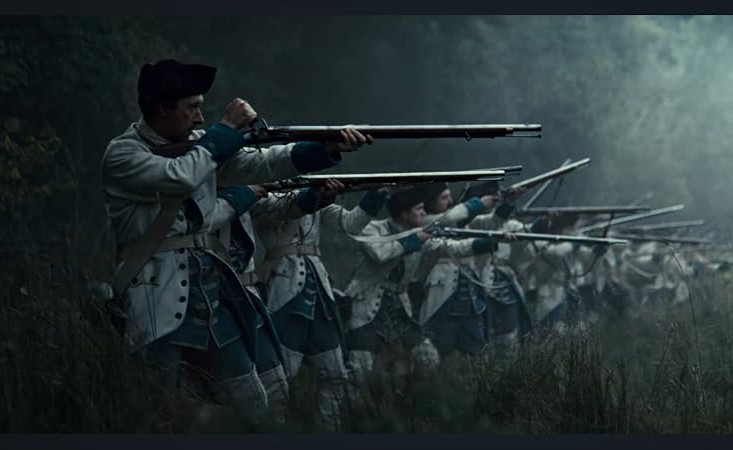
Jon Erwin’s “Young Washington” approaches its subject by chipping away the marble and focusing on the young officer shaped by the French and Indian War.
The film follows George Washington (William Franklyn Miller) through the uneasy terrain of frontier diplomacy and military missteps, tracing the pressures that begin to define his emerging command. Set across fog‑heavy forests, contested outposts and makeshift encampments, the story builds around the instability of a colonial world where alliances fracture as quickly as they form.
Erwin guides the material with a measured, classical hand, letting tension rise from the political and military currents surrounding Washington rather than from patriotic mythmaking.
Franklyn Miller plays the future president with restrained focus, emphasizing the uncertainty and ambition of a young officer still learning the limits of his authority. Ben Kingsley’s Robert Dinwiddie pushes Washington toward conflict with bureaucratic urgency, while Andy Serkis’s General Braddock embodies the rigid command structure he must navigate.
Kelsey Grammer and Mary‑Louise Parker, meanwhile, add texture to the film’s personal and regional ties, grounding Washington’s early life in the social networks that shaped him.
The film settles into a portrait of leadership under pressure — a chapter built on shifting loyalties, battlefield uncertainty and the choices that begin to mold the man history will later claim. But once that arc is established, the film rarely pushes beyond it, leaving its impressive craft occasionally at odds with a thematic range that feels more inert than evolving.
“Enola Holmes 3”
Millie Bobby Brown, Henry Cavill, Louis Partridge; directed by Philip Barantini

Set entirely in Malta, Netflix's “Enola Holmes 3” positions itself as a sun‑struck chapter built around a destination wedding that shifts quickly into something more complicated.
Enola (Millie Bobby Brown) and Tewkesbury (Louis Partridge) arrive on the island for their ceremony, only to learn from Dr. Watson (Himesh Patel) that Sherlock (Henry Cavill) has disappeared.
The film promises a blend of mystery, action, and romantic tension, shaped by Malta’s geography and the political backdrop of its colonial history.
With Philip Barantini directing and Jack Thorne returning as writer, the film presents a steadier, performance‑driven approach.
Brown delivers a more grounded version of Enola. Helena Bonham Carter imbues Eudoria with familiar bursts of unruly energy, while Sharon Duncan Brewster gives Moriarty a sharper, more politically attuned edge, pushing the investigation toward wider social and wartime currents.
Across its cliffside landscapes and wedding‑day interruptions, “Enola Holmes 3” promises a chapter that leans into maturity rather than reinvention — a story built on shifting expectations, family complications, and the choices that shape the future Enola is trying to define.
“X‑Men ’97” Season 2
Ray Chase, Jennifer Hale; created by Beau DeMayo; directed by Jake Castorena
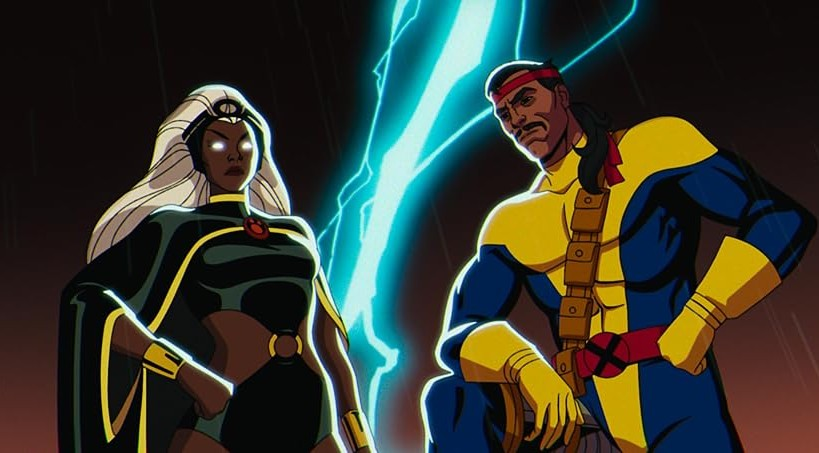
Disney+’s animated series “X‑Men ’97,” a revival of the landmark 1990s “X‑Men: The Animated Series,” opens its second season in a state of diaspora — the X‑Men scattered across timelines, displaced from the futures they once imagined and the present they fought to protect. What follows is a quest for stability, the X‑Men forced to rebuild themselves across a fractured world.
Cyclops (Ray Chase) becomes the season’s moral fulcrum — not a leader in any traditional sense, but the custodian of the dream, the belief that mutants and humans can coexist — not through dominance or assimilation, but through mutual recognition. By contrast, Jean Grey (Jennifer Hale) serves as his emotional counterweight, navigating identity, grief and the psychic burden of futures that refuse to settle.
Director Jake Castorena advances these arcs with firm, deliberate control, shaping them with an eye toward continuity and letting the fallout of Season 1 dictate how the heroes move through their altered landscape. But the scale of this ambition occasionally outpaces its grasp, even as Cyclops and Jean provide the emotional precision that keeps the season anchored. Still, the second season of “X‑Men ’97” feels driven by clear purpose, shaped by contemporary storytelling that feels fully lived‑in.
“Silo” Season 3
Rebecca Ferguson, Common, Harriet Walter, Jessica Henwick, Ashley Zukerman; created by Graham Yost
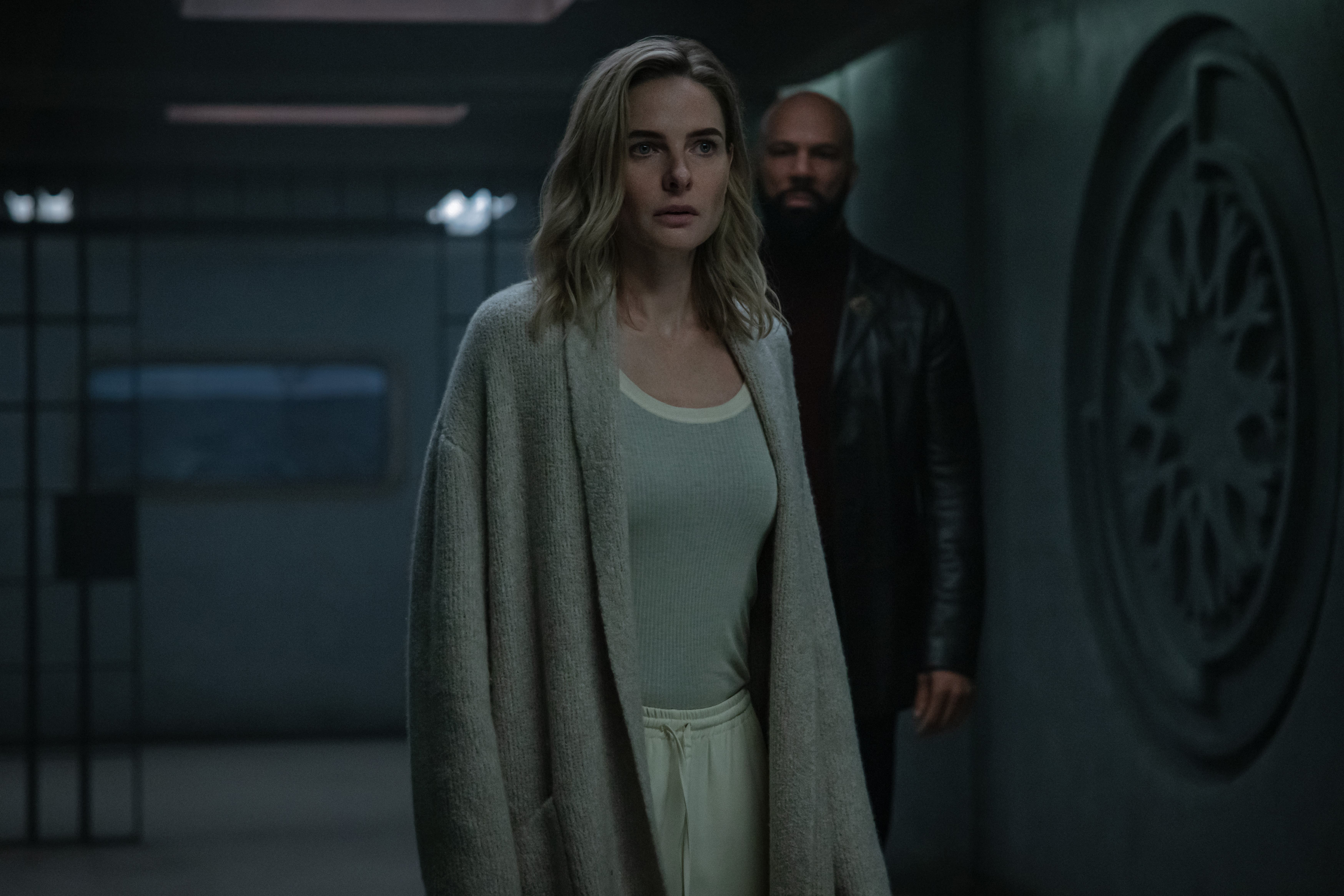
“Silo,” an Apple TV+ sci-fi dystopian drama, returns with its boldest shift yet, driving the story through a dual‑timeline structure that pushes the series far beyond the silo’s concrete confines.
Within that broadened scope, Season 3 follows Juliette (Rebecca Ferguson) as she presses deeper into the harsh realities of the outside world, while a parallel origin timeline reveals how the silo system took shape.
Ferguson anchors the series with a performance that blends resolve and vulnerability, her Juliette carrying the season’s emotional stakes in the face of memory loss and new threats as the world beyond the silo comes into focus. New cast members Jessica Henwick and Ashley Zukerman deepen the origin timeline, while returning actors Rashida Jones, David Oyelowo, Common and Harriet Walter sharpen the season’s political and moral undercurrents.
Though the pressure‑cooker tension that defined the earlier seasons inevitably softens here, Season 3 ultimately stands as the series’ strongest chapter yet, ushering in a highly anticipated fourth season expected to roll out in 2027.
SEE ALSO:
Get more local news delivered straight to your inbox. Sign up for free Patch newsletters and alerts.