Politics & Government
Ballona Wetlands Restoration: Parts Four and Five
A Five-Part Series Explaining the Ballona EIR Matter in Plain English - Our Long Road Trip Ending: Litigation and the Big Dig!

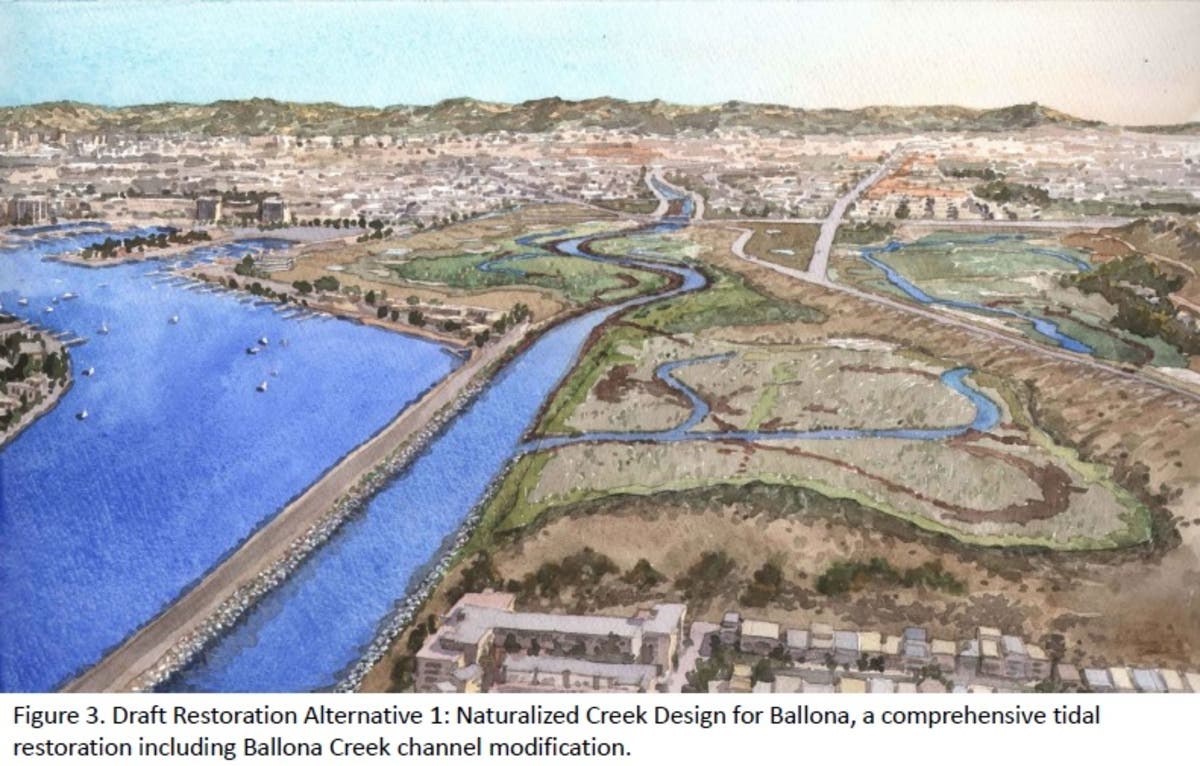
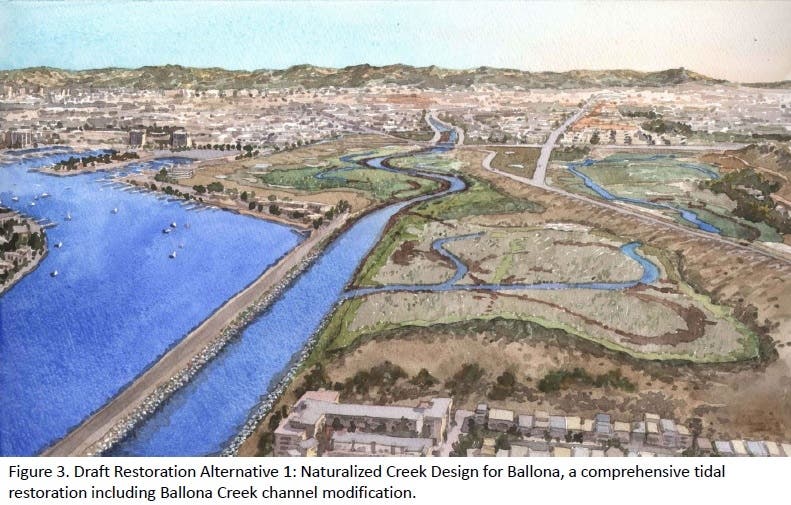
Recall from Parts One, Two and Three, that we long ago established a purpose and need - regional goals - for the Ballona Wetlands Ecological Reserve: that Ballona shall be restored and that an abundance of high quality, productive wetland and upland habitats shall be created, enhanced or preserved, accessible by regulated public access. Our Department of Fish and Wildlife examined twelve possible ways to reach that goal, and their Draft EIR narrows that down to three finalist plans.
The best plan - Alternative No. 1 - maximizes Full Tidal wetland habitat at Ballona and restores plants and wildlife that graced the area a century ago (Figure 3). This long, ambitious road trip requires that our means to travel must be large scale mechanized excavation and grading to remove millions of tons of dirt dumped on top of historical wetland back when Marina Del Rey was built.
Tidal wetlands can only exist - you guessed it - near the ocean tides. Freshwater wetlands and upland habitat can exist anywhere fresh water occurs or can be provided. So, it makes the most sense to restore tidal wetlands where they once existed, and not replace them with other habitats that are already abundant elsewhere. L.A. County's coastal area has lost 97% of its former tidal wetlands to past development, so Alternative 1 will go a long way toward recovering some of that loss.
Find out what's happening in Marina Del Reyfor free with the latest updates from Patch.
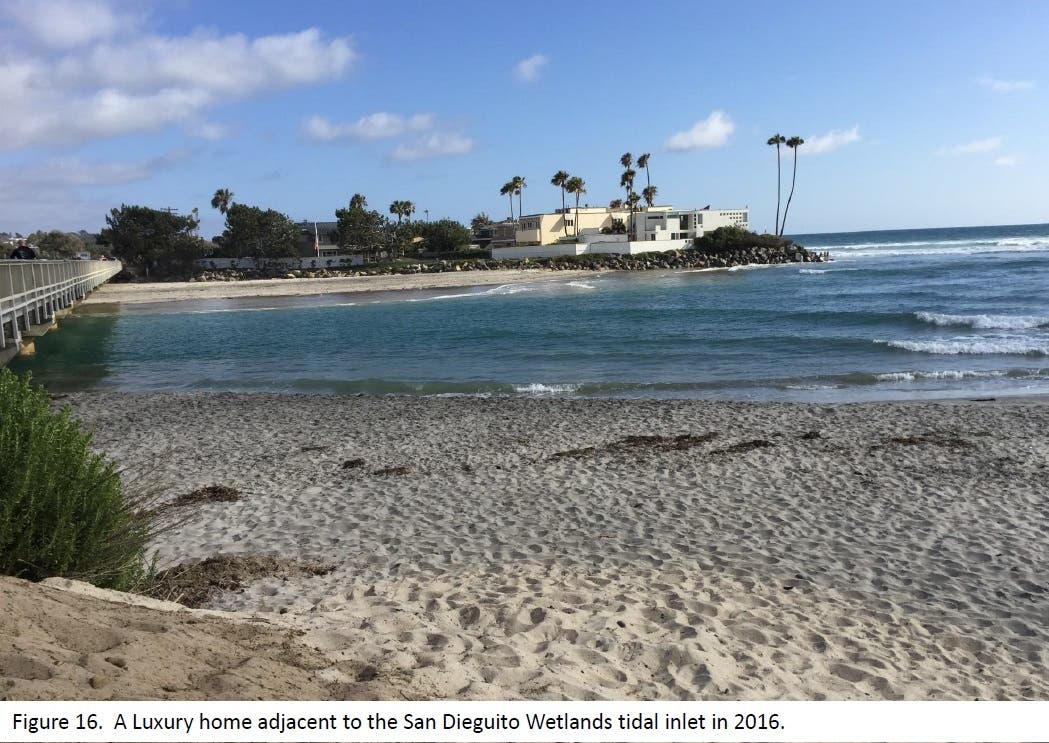
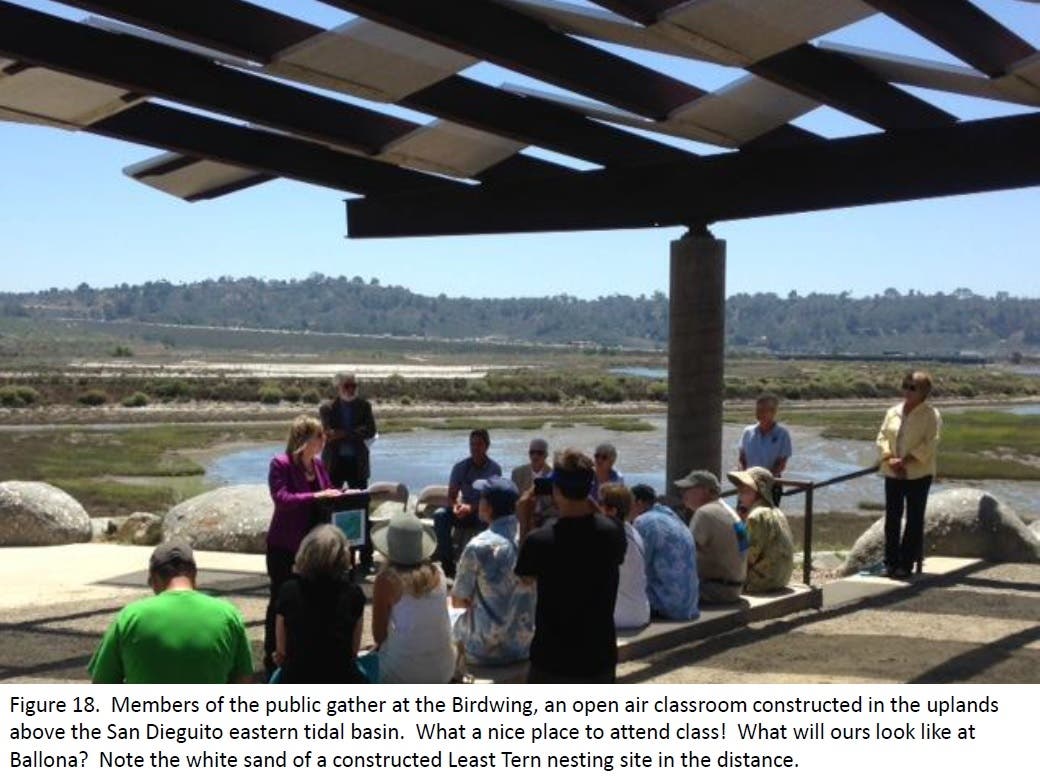
The large-scale mechanized excavation and grading required to make Alternative 1 a reality has some people concerned. Fortunately, we are well-informed by scores of coastal wetland restoration projects that have preceded Ballona (Malibu Lagoon the most recent and nearest). We also have the excellent model of San Dieguito, near Del Mar, which in nearly every respect faced the same challenges that a Ballona Full Tidal Restoration faces today. So, we know exactly how to do the job, minimize and mitigate all potential environmental impacts, and produce a beautiful, productive open space habitat out of hundreds of acres of weed-infested, infilled and degraded lands. Some people still won't be satisfied, and they will use the courts to air their grievances.
Part Four: Our Third Branch of Government
Find out what's happening in Marina Del Reyfor free with the latest updates from Patch.
Remember from grade school civics class how the courts are our third branch of government? Legislative, Executive and Judicial. The Founders put the courts there for good reason. They are not just a last resort, and should not be viewed that way.
I have never known a major, modern development project, be it natural habitat creation like Ballona, San Dieguito or Malibu, or a shopping mall, advance from an approved EIR to construction without having to navigate a lawsuit. It’s just become part of the process, and we should all acknowledge this, accept it, and plan for its inevitability.
We all get frustrated by frivolous lawsuits that have no chance of succeeding, other than to cause delays and increase costs. Judges decide if a case has merits, and we should look forward to the Ballona Full Tidal Project successfully navigating CEQA case law, which is very complicated. Yes, it slows down the project and costs money, but at least when we are finished we know we have turned over every stone. Someone will always be unhappy about the outcome, but that’s always the case in our democracy.
When the Department of Fish and Wildlife finally approves the final Ballona Restoration EIR (the FEIR), someone will file suit to stop it. Usually, the grounds for litigating an EIR is that the document failed to sufficiently analyze the environmental impacts of the proposed project, or/and the analysis did not include a reasonable number of feasible alternative plans.
As I continue to read the DEIR now and reflect on all of the studies and public input underpinning and preceding it, I believe a court would ultimately find that the EIR meets and exceeds our legal requirements. The ultimate decision will be made by a Superior Court judge. When that court upholds the EIR, opponents can still appeal to the California Court of Appeals, and then also to the California Supreme Court. Litigation for projects of this type, including San Dieguito, usually ends at the Court of Appeals level, but not always.
I would expect litigation and appeal of the Ballona EIR to last 2-3 years (though I hope it takes less time). So, if the EIR is approved by Fish and Wildlife in 2018, it may be 2021 before the EIR is truly and finally approved. While it is possible that opponents could reach a settlement and shorten this duration, one can’t reliably predict this would happen. In any case, let’s look forward to a spirited defense of the final EIR in the courts and a rapid conclusion of the appeal process. Don’t fret about the litigation - it’s just part of our due diligence.
Part Five: Permitting, Mitigation and Construction! At Last! The Big Dig!
A widespread misconception is that a Final EIR gives permission for a project to be built. That is FALSE. An EIR is merely a scientific, technical analysis of all the potential impacts that might occur IF a project is built, or one of its alternatives, and how to eliminate or minimize those impacts with subsequent permit conditions. Once the Ballona FEIR is approved, it is then up to several permitting agencies, including the California Coastal Commission, to issue the actual PERMITS that authorize the construction of the Ballona Wetlands Restoration.
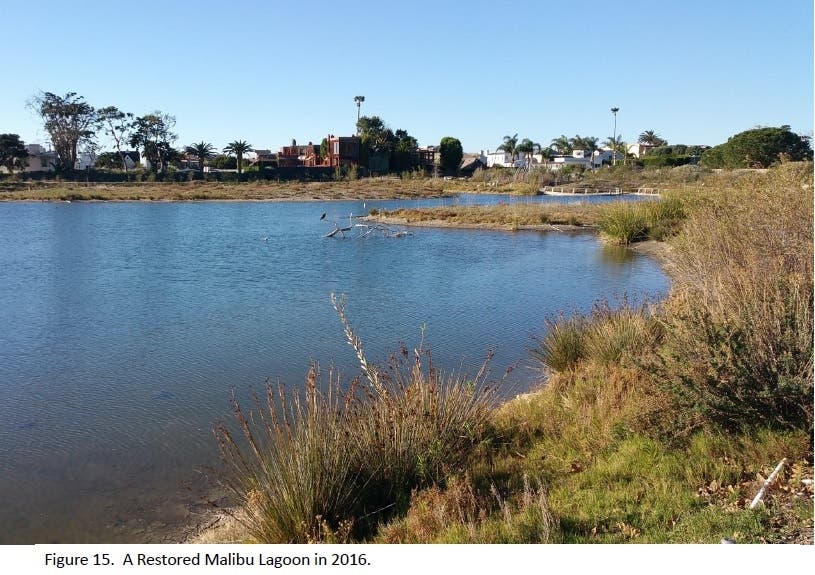
When the EIR is finally approved and litigation and appeal are exhausted, the project may then move forward to acquire the various agency permits authorizing construction. These agency permits may also be litigated to delay the project further, and the opponents of a comprehensive tidal restoration at Ballona are well-known for appealing Coastal Commission permits. These characters delayed the Malibu Lagoon restoration in this way, but ultimately the project prevailed and the Coastal Commission’s permit for Malibu was upheld. The lagoon at Malibu is a beautiful, albeit small example of how good we are at tidal wetland restoration using mechanized excavation and grading (Figure 15).
The Coastal Commission, Fish and Wildlife, Army Corps of Engineers and L.A. County Flood Control are among those agencies that must issue construction permits for Ballona, and these agencies will depend on the FEIR to guide which “mitigation” measures to require in their permits. Mitigation measures are steps the project must take, before, during and after project construction, to ensure that environmental impacts identified in the FEIR are in fact minimized.
A common example is mitigation from construction noise. Typically, an EIR will identify construction equipment noise as a potential environmental impact. A common mitigation measure imposed to control such noise is to restrict construction to only during weekday, daytime hours. Near residential buildings, another noise mitigation requirement may be to erect a temporary sound-absorbing fence between the residences and the construction area.
Hundreds of mitigation measures such as these will be imposed by the permitting agencies for every potential significant environmental impact identified in the Final EIR, and will further require stringent on-site monitoring (aka, policing) to ensure the measures are followed. This guarantees that the project gets constructed without creating headaches for the people, plants and animals in the affected project area.
The goals of a Ballona restoration are long standing goals of our state – indeed our nation - pursuant to the landmark federal Clean Water Act. How we achieve those goals at Ballona will and should be debated, and no one should ignore the opinions of anyone. All opinions, however, must stand on their own merits, and those that do not advance on facts, should not. No amount of shouting will change or create facts. Likewise, litigation must be expected, but litigation without merit should be short-lived.
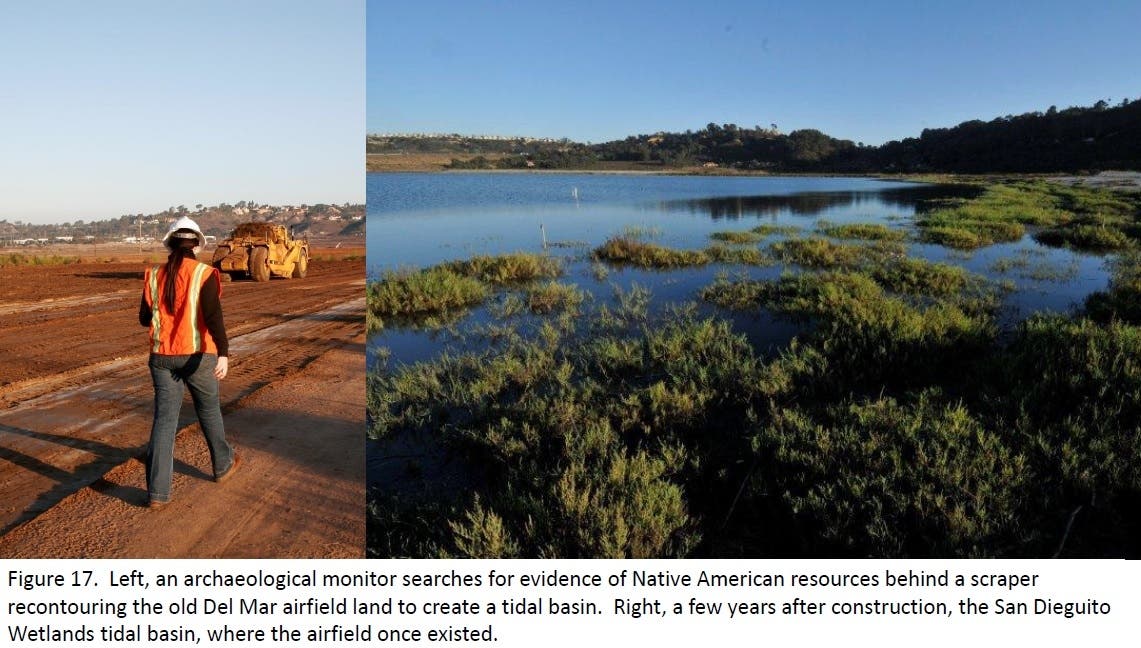
The ultimate construction plan for a comprehensive, full tidal Ballona restoration will not look exactly like the plans analyzed in the FEIR. It will be very similar, but subtle changes will emerge from the subsequent permitting actions by the Coastal Commission and other agencies. If the Department of Fish and Wildlife and permitting agencies follow our processes openly and transparently, give all ideas fair consideration and validate or dismiss each with facts, the Ballona Wetlands will be restored in a very good way. Construction will move rapidly, with mitigation requirements and on-site monitors ensuring environmental impacts are minimized to the greatest extent possible. Plants and animals will take up residence long before we finish decorating their new home. We know this to be true, because we have taken this Road Trip so many times before. Let’s look forward to reaching that familiar destination at Ballona.
See Parts One, Two and Three at the links below:
https://patch.com/california/m...
https://patch.com/california/m...
https://patch.com/california/m...
Or, download the entire essay in .pdf at: https://drive.google.com/open?...
Thanks for reading!
About the author: Dr. David W. Kay earned Bachelors, Masters and Doctorate degrees in biology and environmental science from UCLA and CSUN, and has worked professionally in environmental management at Southern California Edison for 33 years. He served on the Board of Directors of the non-profit Friends of Ballona Wetlands from 2007-13, and as its Board President from 2012-13. In 2006-12, he managed the comprehensive restoration of the 440-acre San Dieguito Wetlands complex in northern San Diego County on lands historically infilled for an airfield, waste treatment lagoons, grazing and agriculture. Dr. Kay lives in Playa Vista