Politics & Government
BART "Seat Lab" Coming to Milpitas
On June 30, Milpitas' future BART riders can try out a variety of seats and shape the new design for the next fleet of transit cars.

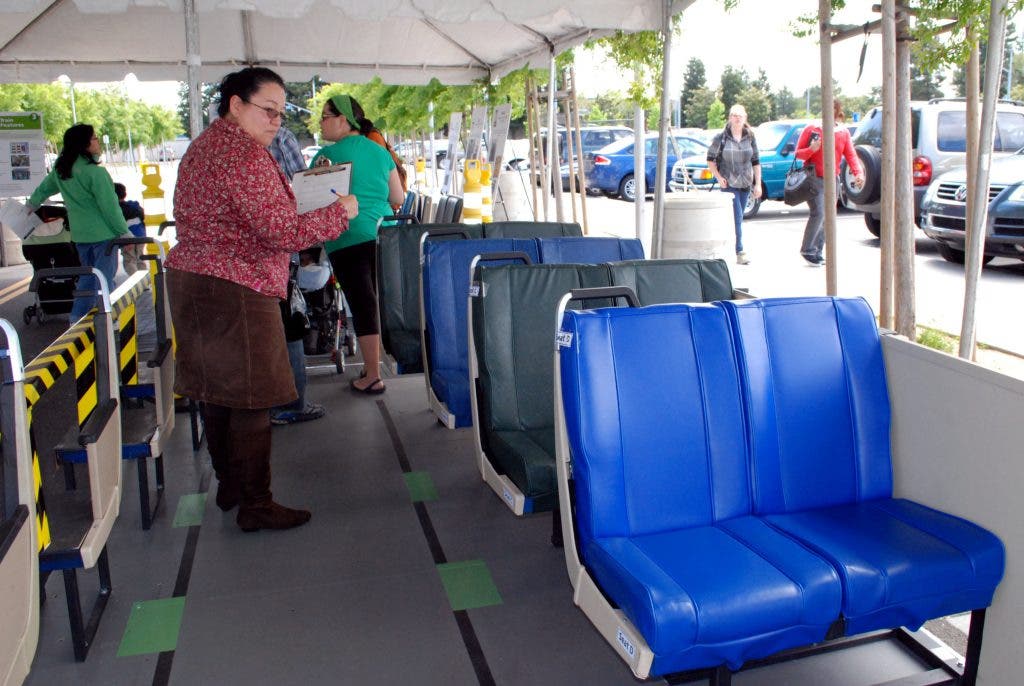


BART is bringing a mobile lab filled with seats of different heights, widths and materials to Milpitas on .
The goal is to get feedback from commuters on what kind of seats they would like to see in a fleet of BART cars scheduled to start hitting the tracks in 2018.
Already a number of commuters in other cities have said they would rather have wider aisles and take two inches off the width of the seats.
Find out what's happening in Milpitasfor free with the latest updates from Patch.
"What I might like might be different from what the public might like," said BART Board President Bob Franklin. "So, we're going to get a range of opinions from a wide variety of people."
A sampling of the seats packed into a trailer have visited at least nine communities. Milpitas is the last stop on the tour.
Find out what's happening in Milpitasfor free with the latest updates from Patch.
The seats are divided into four groups.
One is seats of varying widths. Right now, BART seats are 22 inches wide, one of the widest of any transit agency in the world. The lab seats are 19 to 22 inches across.
Another is seats of different heights. BART seats now are 16.5 inches high, lower than most transit agencies.
The third is seat rows with different leg room. Currently, BART trains have 29 inches of leg room between seats. That is one of the most expansive among transit agencies.
The fourth is material. The seats are currently cushioned and wrapped in a blue-green wool fabric that is difficult to clean, as each seat must be removed and steamed. After news reports were published earlier this year regarding what types of bacteria and fungus were found on a sample of the fabric, BART staff say that so far many people have said they would rather sit on a hard plastic seat than a comfortable fabric one.
Possible replacement materials include vinyl and plastic. The balance is between cleanliness and comfort.
Amanda Martin, who works in the transit agency's government and community relations department, helped run the Union City seat lab. She said it's almost certain that the cloth seats currently used on its trains will not be used in building the new cars.
The seats will be part of a $3.4 billion contract BART is awarding this year to build up to 1,000 transit cars.
The cars have to be built from scratch, so the seat specifications need to be figured out from the beginning.
BART has 660 cars on the rails. About 460 cars are originals from when BART opened in 1972. Two-hundred cars have been added over the years. Most of the cars were upgraded between 1995 and 1997.
"We're riding the wheels off of these things," said BART spokesman Linton Johnson.
BART expects its daily weekday ridership to increase from 350,000 to 500,000 over the next 12 years.
Johnson said the system needs a minimum of 700 cars to meet that demand with 1,000 cars a more likely figure.
Ten pilot cars are expected to be on the tracks in 2016. The first group will debut in 2018. The cars will then be added in stages until 2024.
BART directors right now are discussing how to spend a projected budget surplus this year of $10 million to $28 million, depending on how much money they get from the state.
This money will not be used on the new cars. However, it could be spent on new seat covers and other upgrades on the current fleet.
To read about how Union City commuters experienced the seat lab, .
-Jennifer Courtney contributed to this report.
Get more local news delivered straight to your inbox. Sign up for free Patch newsletters and alerts.