Arts & Entertainment
Silent (Movie) Nights at the Essanay
Just so you know, silent movies aren't really silent. There's a piano playing along with the action.

Century Theatres may be the place in Milpitas to see movies, there's an alternative to the Hollywood blockbusters in Fremont's Niles District.
At the Edison Theater inside the Niles Essanay Silent Film Museum, silent movies are accompanied by live piano during the films, expertly matching the music to the action.
Every Saturday at 7:30 p.m., a black-and-white film from the early part of the 1900s is featured. For $5 at the door, for example, on April 16, you can watch historic clips from the famous San Francisco earthquake.
Find out what's happening in Milpitasfor free with the latest updates from Patch.
Movies occasionally screen on Sundays, such as on Sunday, with Laurel and Hardy's Sons of the Desert.
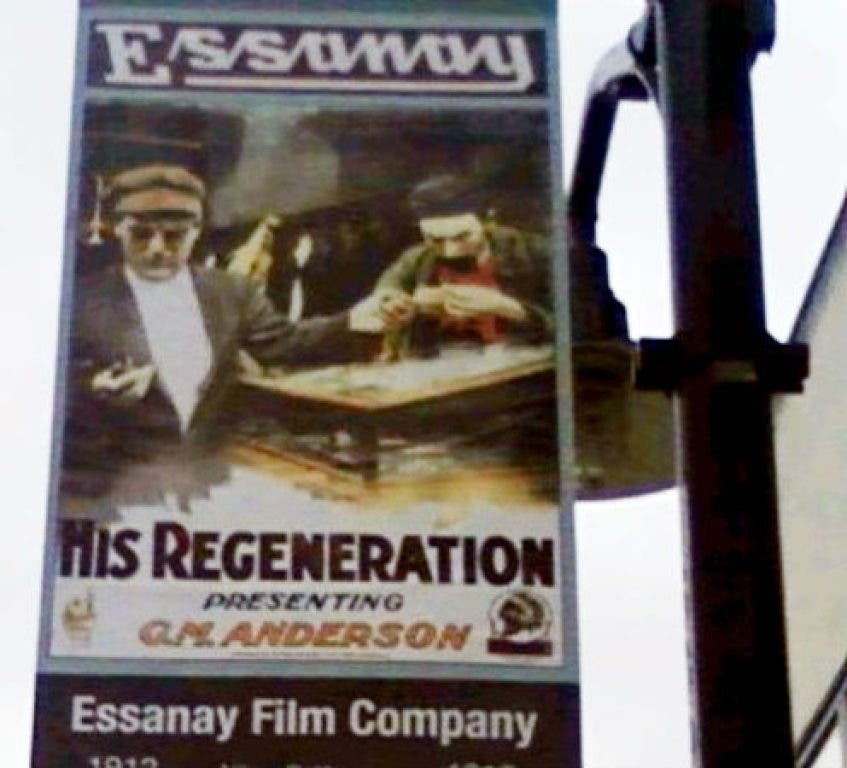
At the Niles Essanay Silent Film Museum you'll find characters such as Broncho Billy. He's a fictional character played by Gilbert M. Anderson, who starred in a series of 148 silent Western movies that were shot in Niles.
Find out what's happening in Milpitasfor free with the latest updates from Patch.
Anderson is also the “A” in “S and A,” for Spoor and Anderson, founders of Chicago’s Essanay Studios, which opened its western studio in the little hillside town next door to Newark in 1907, reports historian and author David Kiehn (Broncho Billy and the Essanay Film Company).
While George Kirke Spoor, the “S,” stayed in Chicago and ran the company like a factory, Anderson traveled the Western United States by train with a film crew. The Western Pacific Railroad route through Niles Canyon was perfect for filming Westerns. Anderson also wrote, produced, directed and edited most of his films.
The iconic Charlie Chaplin made 14 short comedies for Essanay in 1915, at both the Chicago and Niles studios. He also did a cameo appearance in one of the Broncho Billy Westerns. According to the official Chaplin website, Chaplin went to Essanay for the "unprecedented salary" of $1,250 per week, plus a $10,000 signing bonus. Before that, the average film cost $800 to make and brought in as much as $15,000. Chaplin films produced $125,000 in revenue—big bucks for 1915.
The Edison Theatre that survives in Niles is a “working person's” movie theater, as David Kiehn described it at a Saturday night show my wife and I attended. It was not built in the more splendid Art Deco style that became popular at the beginning of the Jazz Age. It's rather plain, as you will see if you go to the show. You might want to take your own cushions for the wooden folding seats.
When you think about technology, perspective tends to get lost. When you go to the Edison Theatre and watch a silent movie produced nearly a century ago—and see it just as theater-goers did when film technology was brand new—the missing perspective returns with all of its original appeal and emotion. That’s entertainment.