Health & Fitness
It's Hard Work Being Poor in Kenya - Part 2
Only those "with" can choose to go "without." For the other 80% of the world's population living in poverty...


“No one chooses to be without running water,” said Chris, the Peace Corps Volunteer I was “shadowing” for a few days in Mombasa. Chris is only in his early 20’s but already has the wisdom and grace of a village elder. If this is what you become after the long stint in Peace Corps, I was thinking, count me in.
I was in Mombasa learning the ropes of life after Pre-Service Training; what life as a bona-fide Volunteer looked like compared to mine as a protected newbie. After Loitokitok we would be disconnected from the PST umbilical cord, away from the watchful eyes of our home-stay mamas, beyond the close reach of Peace Corps honchos, and outside the chummy circle of other Trainees. We’d recently learned the locations of our work-sites so my conversation with Chris had turned to something on many of our minds - living conditions at site, e.g., just how rough would it be? As described by our Training Managers, our sites seemed to range from the luxurious – like the site on the Kenyan military commander’s summer compound – to the most primitive – an isolated mountain shack in an eco-park with no amenities, for example.
Ironically, some of those headed for luxury were disappointed. “It’s too easy having electricity,” one trainee, a sweet, eager young woman whose site was described as a “villa,” confided over a warm Tusker at Makuti’s bar. She wanted something more...rustic.
Find out what's happening in Pacific Palisadesfor free with the latest updates from Patch.
I understood her sentiments; only by living in similar circumstances and facing the same hardships can we truly accept, and be accepted by, the communities we serve. This is especially true in rural Kenya where locals judge outsiders on first impressions and create stories - usually epic “tall” tales – to fit their perceptions. Anyway there’s something to be said about being thrown into the elements; trials and tribulations can make you stronger, wiser, more resilient. I suspected my fellow trainee’s disappointment was based more in her desire to feel closer to her new community or experience personal growth than merely earning some sort of survivalist bragging rights.
In fact, there’s a particularly prevalent “harder means better” ethos in Peace Corps. It’s one of the reasons why the Peace Corps is often compared to the military. Both speak of “service” and engender a strong sense of team-playing, fidelity, and (sometimes blind) loyalty to the institution. It’s a sort of us-versus-them macho mentality shared by Volunteers and staffers of both sexes.
Find out what's happening in Pacific Palisadesfor free with the latest updates from Patch.
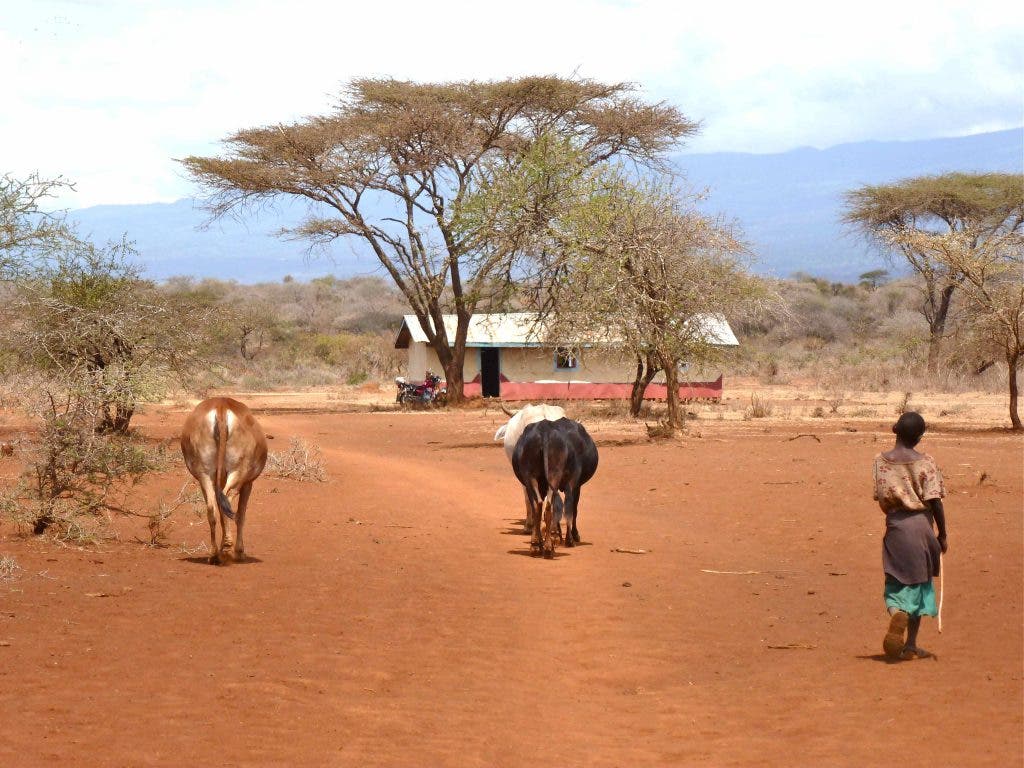
But Chris was having none of it. It was absurd to wear deprivation like some badge of honor. Shouldn’t we be striving to help raise people out of such deprivation? He began to explain his own situation, and with much to learn from this mzee, I listened intently: At his old site he’d had to walk many kilometers a day to fetch water from the local bore hole, then permitted to take back only small amounts at a time, making for several exhausting trips a day. One night he awoke with fever, his throat parched. No matter where he looked – in every bottle, cup, and pan in his shack – he found not a drop of water. That night he swore that at his next site he’d have running water.
And now, in his 3rd year as a Peace Corps Volunteer, he does.
No, people in rural Kenya don’t ask to go without running water – or refrigeration, electricity, or basic sanitation for that matter. Except maybe some Peace Corps Volunteers. I haven’t spoken with that one volunteer since she’s been at the villa, but I’ll wager a cold Tusker that she’s no longer disappointed in her accommodations.