Health & Fitness
It's Hard Work Being Poor in Kenya - Part 3
Rich, richer; poor, poorer - what does it mean?
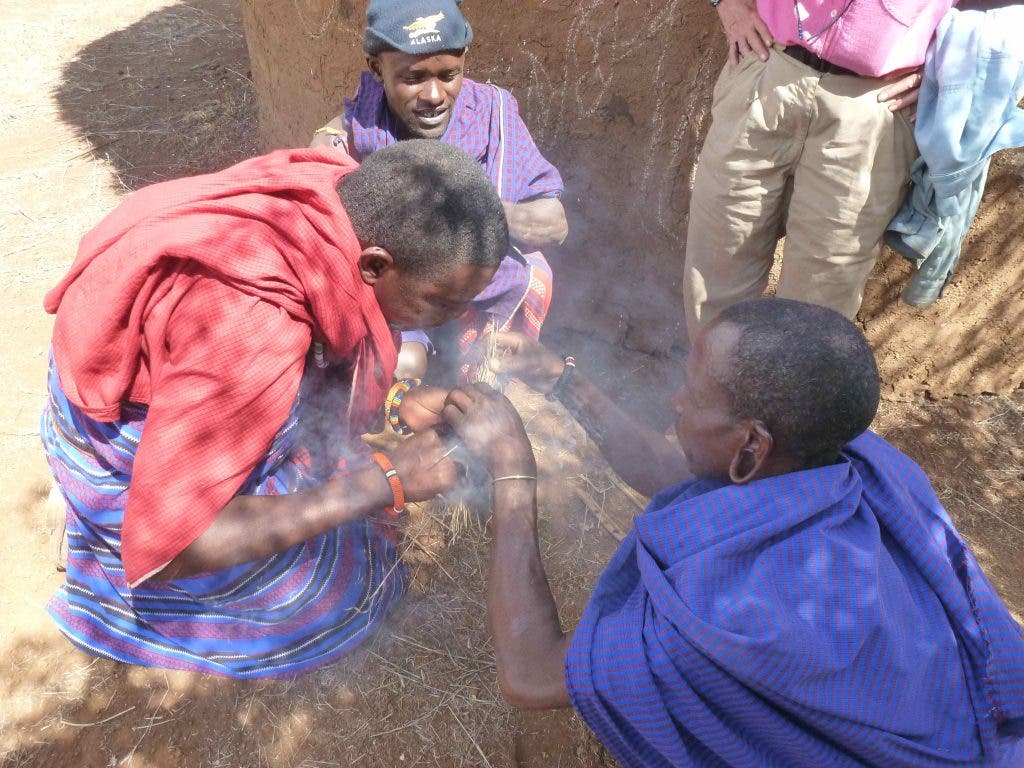


Like most human conditions, being “poor” or “rich” are relative terms. For example, we have an unsettling number of poor and deepening poverty here in the U.S., but it doesn’t rise to the level of the “extreme poverty” that’s found throughout Africa. In the U.S. we speak of food “insecurity.” But in much of Africa the problem is food “scarcity” and famine.
So naturally I observed things during my training in rural Kenya that made me question what it meant to be “rich” or “poor.” I noticed, for example, that almost no one I met in Kenya had running water. Many, like the Masai villagers I had the privilege to spend some time with in Lemong’o village, have to walk several kilometers daily to fetch water from the single bore-hole shared by more than 700 villagers. But virtually everyone I met in Kenya had a cellphone. (Look carefully at the Masai woman on the left in the Lemong’o Village photo included with this post). In the rural households that are fortunate enough to have electricity, virtually no one has refrigeration because it costs so much. Yet no household seemed to go without television. (And miss the Mexican telenova, “Soy Tu Duena,” on Citizen TV? Pole sana!)
I’m pretty sure most Americans wouldn’t say these folks are rich just because they have a television and a cellphone.
Find out what's happening in Pacific Palisadesfor free with the latest updates from Patch.
In my home-stay, where television feed was as constant as ugali and sukumawiki, my Kenyan family and I ate our evening meals while listening to the most recent statistics on the region's spreading famine and drought on KBC News. While their neighbors to the north starved and their crop fields turned to dust, those around me had plenty to eat - taking second helpings and throwing a lot away – and allowed storage bins full of maize to spoil.
Why this surprised me, I don’t know. I’m not being critical of Kenyans - we do the same thing in the U.S., relatively speaking. So why did I expect anything different there?
Find out what's happening in Pacific Palisadesfor free with the latest updates from Patch.
Levels of poverty and degrees of poorness might be relative. But the constant the world over is human nature. And as human beings we constantly need reminding about others less fortunate than ourselves. Heck, we need to be reminded about others period. And otherness, which is why I went to Kenya in the first place.
These are just some observations I made during Peace Corps training. And like most observations, these - about the nature of poverty and of being poor - are multi-layered, complex, and prone to error and misinterpretation. But I do my best. I’m human.