Health & Fitness
Navigating the Neural Processes Underlying Developmental Stuttering
Nidhi Ravishankar, a fourth year undergraduate student at the University of Toronto, helps investigate the neural processes underlying developmental stuttering in children and adults.

Stuttering is a complex speech disorder, “in which sounds, syllables, or words are repeated or last longer than normal causing a break in the flow of speech (called disfluency).” 1 It is often misunderstood due to lack of public awareness of the condition juxtaposed with some of the media’s inaccurate and, at times, demeaning portrayals of stutterers in both film and television. The perpetual myth that a left-handed child forced to be right-handed induces stuttering still remains popular on the radar, despite the fact that it was proven to be untrue by 1940.2 “The stress that resulted when a child was forced to switch hands may have exacerbated stuttering,” says National Stuttering Association.
According to the American Institute for Stuttering, nearly 4 million people in the United States and 60 million worldwide are affected by stuttering. While it is treatable, there is still “no definitive cure”.3 Recent findings have suggested a genetic link, as it tends to run in families, but not everyone who has a family member that stutters acquires this disorder.4 “Brain imaging studies indicate there is a neurological component.” 5
While science has made significant breakthroughs in its attempt to understand stuttering, it is evident that more research needs to be done to fine tune these scientific discoveries and make this condition less enigmatic.
Find out what's happening in Pacific Palisadesfor free with the latest updates from Patch.
Currently, the University of Toronto and the Hospital for Sick Children Research Institute are doing just that. Led by the highly credentialed specialist in stuttering research, Dr. Luc de Nil of the Department of Speech-Language Pathology Faculty of Medicine at the University of Toronto and the luminary, Dr. Douglas Cheyne, a neuroimaging Senior Scientist at the Hospital for Sick Children Research Institute, the study aims to examine the neural processes underlying developmental stuttering in both children and adults.
Nidhi Ravishankar, an ambitious fourth year undergraduate student at the University of Toronto, joined their research team for her thesis project after taking a linguistics course which sparked her interest and inspired her to investigate it from a neuroscientific perspective. Ravishankar, no stranger to neuroscience, having previously interned under the supervision of well-renowned neurosurgeon, Dr. Mark Bernstein of the Toronto Western Hospital seized the opportunity to merge her qualitative skills acquired while working for Bernstein with a more statistical approach.
Find out what's happening in Pacific Palisadesfor free with the latest updates from Patch.
Ravishankar says: “This particular project is aimed at investigating what neural processes occur just before a stuttered word in both children and adults who stutter and whether the brain processes differ from when they speak a word fluently. Furthermore, people who stutter will often inhibit speech responses, based on anticipated stuttering. This is thought to be driven from pre-motor planning and efferent copy based feedback mechanisms."
In simplified terms, an example of an efferent copy based feedback mechanism is the process of the brain signaling a motor movement, which is then activated, and then feedback is sent back to the brain, positive or negative, which will then influence how the brain signals its next command to that motor movement.
"These processes will also be investigated as part of the research project," says Ravishankar.
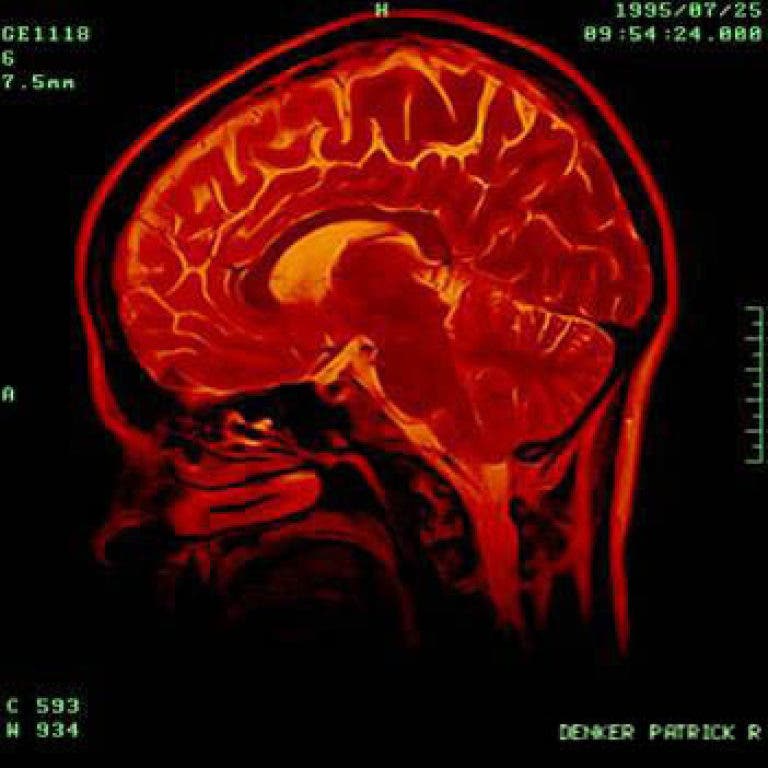
The research team first examines individuals who have fluent speech, using two neuroimaging techniques: The Magnetoencelphalography (MEG) and structural MRI. If they observe any activation in the neural process prior to a word, they then compare those results to an individual who stutters in order to detect any similar activations or differences. Whatever differences are found in this study, more research will need to be conducted in order to decipher whether it is the reaction to a specific word due to emotional history or if it is neurologically engraved.
Ravishankar explains: “Brain activations will also be studied by analyzing beta oscillations (frequency bands measuring MEG/EEG activity) Beta oscillations have been shown to change in a systematic way prior to a change in movement. It is thought that these beta changes are related to the neural processes involved in planning and preparation of movements.”
She adds: “To date, modified beta oscillations have been studied in finger movements, among other motor movements, but very little, if any, research has been done in speech and none in stuttering to my knowledge.”
This research is still in the preliminary stages and while no conclusions have been made, it will hopefully further our understanding of the etiology of this elusive disorder.
Ravishankar states: “If we know what some of the neural mechanisms are, we will be able to fine-tune treatments in the future.”
[1] U.S. National Library of Medicine; PubMed Health, last reviewed June 12, 2012
[2] National Stuttering Association.
[3] American Institute for Stuttering.
[4] The Stuttering Foundation.
[5] American Institute for Stuttering.