Health & Fitness
The Better Angels of Our Nature - Have They Evolved?
Dr. Steven Pinker suggests that violence has declined.
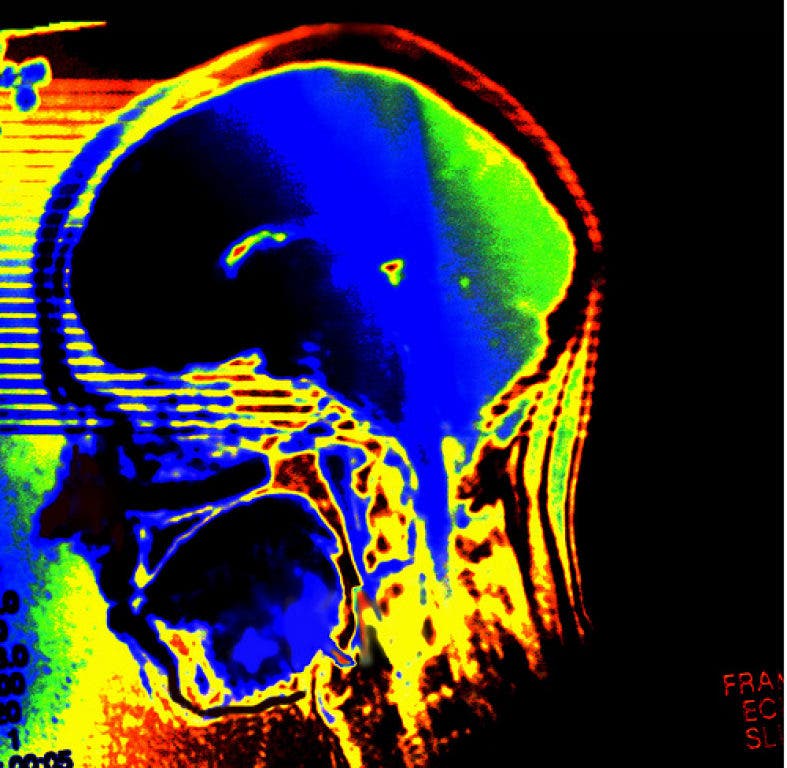
“We are not enemies, but friends. We must not be enemies. Though passion may have strained, it must not break our bonds of affection. The mystic chords of memory will swell when again touched, as surely they will be, by the better angels of our nature.” Abraham Lincoln, First Inaugural Address 1861.
In recent times, have the better angels of our nature clipped their moral wings? In light of all the violent news accentuated through the media, have they become numb to atrocities? Have Hollywood blockbuster franchises like Saw desensitized our mirror neurons of empathy? Is cyber-bullying the result of our callous angels of nature?
Find out what's happening in Pacific Palisadesfor free with the latest updates from Patch.
According to Dr. Steven Pinker, Harvard professor and well-respected intellectual icon in the cognitive neuroscience arena “violence has been in decline for long stretches of time and we may be living in the most peaceful era in our species existence.” Pinker spoke to a diverse crowd of roughly 500 people at CalTech University about the topic of his latest book, The Better Angels of Our Nature: Why Violence has Declined, a book that is no small feat at 800 pages. Pinker made two immediate disclaimers: violence has not been eliminated and the decline of violence may not continue, but he believes and in his book sets out to prove that violence has declined as “a persistent historical development, visible on a scale from millennium to years, from wars to genocides, to the spanking of children, and to the treatment of animals.”
Pinker walked the audience through a few historical events and juxtaposed them with the forces of human nature. He appropriately started with the beginning, the state of nature – anarchy. Substantiating his claims with ethnographic data, Pinker suggests that people living without government in pre-historic times not only suffered more violent trauma but had more deaths from war. According to forensic archeology, an average of 15% of prehistoric skeletons had signs of violent trauma such as decapitation or mummies found with ropes around their necks. When compared to recent figures, Europe and the United States in the 20th century had a death rate from war of 2/3 of 1%. The world as a whole in the 20th century, including all war deaths, indirect war deaths from famine and disease, and genocides was about 3%, legitimizing Thomas Hobbe’s theory that, “in a state of nature, life of man is solitary, poor, nasty, prudish and short.” While this data supports Pinker’s premise that state-controlled societies reduce violence and the severity of the death, a period he calls: The Pacification Process, it almost seems incredulous to believe considering the devastating world wars of the 20th century.
Find out what's happening in Pacific Palisadesfor free with the latest updates from Patch.
It certainly brings some questions to the forefront such as: How do we measure violence? And how is death being measured in these statistics? If our better angels of nature are indeed more moral and less violent, why does and would man still need a state-controlled society? Perhaps Jean-Jacques Rousseau’s insight was far more visionary than we had perceived it to be when he said, “nothing can be more gentle than man in his primitive state.” Maybe Rousseau was not referring to government at all, but rather the innocence in the mind's primitive state when it's not contaminated by its environment? Just as our society is trying to return to its initial state of nature with expanded humanitarian and environmental efforts, then perhaps this is a sign that our society will revisit its roots of anarchy with a newly minted mind that will navigate with its evolved moral compass. But, is our moral compass really evolved or is it just contained? Would reason be superseded by primal instincts when someone we love is in danger or under the pretense of the law of survival?
Pinker’s next point of reference in the decline of violence is what he calls the ‘civilizing process.’ During this ‘civilizing process’, Pinker states that the nationalization of criminal justice and “money, finance and technological improvements led to a psychological change which the way to get ahead was to exercise self-control and empathy rather than cultivating fierceness.” An example he provided to support his theory is the decline of homicides over the last 800 years. Certainly, Pinker was not suggesting that people no longer murdered because of altruistic motivations, but rather, they valued their own life more, because of commerce, and therefore extended the lives of others.
Despite a fierce amount of self control, could the drastic shift in economic status jolt the brain’s demons to violence? Is a poor man who is used to being poor less likely to murder for food than a rich man whose new state of poverty jolts his self-control and empathy? Is the current state of Occupy Wall Street a sign that our brains revert back to violence when financial stability is threatened? To what degree? What once started as a peaceful movement has now resulted in violence. Does desperation bury reason?
Pinker theorizes that the humanitarian revolution where forms of extreme punishment have been eliminated has also been a major contender to reduce violence. In the 18th century, cruel and unusual punishment was abolished. Pinker hypothesizes that the causes of this humanitarian revolution is what he calls the ‘Enlightenment Period.’ With increased literacy, a population is less likely to engage in malarkey. Pinker references Voltaire to highlight his point. “Those who could make you believe absurdities could make you commit atrocities.” Additionally, literacy advocates empathy as readers begin to see the world from various perspectives. But, what about taking another viewpoint? Could Twitter – our new form of briefly worded literacy – potentially increase malarkey? Could we examine Voltaire’s statement from another angle? We’ve recently seen the power of flash mobs on the streets of Chicago where young, literate minds were instigated to cause violence to innocent civilians in a matter of seconds via a ‘tweet’. We’ve seen and experienced the power of media and storytelling. In terms of literacy, would reduction of violence be contingent on the type of content that is read? If a psychologically advanced person reads violent material, would he be more or less likely to act violently? Aren’t there so many determinants? Genetics. Environment. Culture. What exactly is the trigger for violence or violent thoughts in an individual? If we really knew, then perhaps we could eliminate violence altogether.
Pinker's next topic was how the "rights revolution" has decreased violence to various groups. For example, the "Feminist Movement has helped bring down the rate of rape by 80% since the early 70’s.” Domestic violence and murder for both spouses has decreased, with a more drastic decline in husbands being murdered. Pinker got a loud chuckle from both men and women when he stated “feminism has been very good to men who are now much more likely to survive a marriage without getting murdered by their wives.” Perhaps it’s the demasculinization of man that has also contributed to this positive survival rate? Has a man's brain been rewired by contemporary times? Or shall we credit the self-help book industry encouraging men to be better listeners which is keeping wives happy and their demons at bay? He cites that the Children's Rights Movement has decreased child abuse. Spanking is now a stigma whereas in the past it was never questioned. The Gay Rights Movement has decreased discrimination of homosexuality and the Animal Rights Movement has decreased animal cruelty.
After the audience was spewed with various theories and empirical evidence for one hour, Pinker turned around and asked, "Why does violence decline on so many scales of time and magnitude?" He responded to his rhetorical question, "human nature itself has changed and our taste of violence has been bred out of us," to ignite a response from the audience. "It's a possibility," he said, "but highly unlikely."
Has human nature really changed? Or are our evil inclinations better controlled? What makes Pinker so fascinating and approachable despite his intimidating savant mind is his ability to relate his understanding of human nature in an attainable and thought provoking way. His humility and curiosity lures the listener on his intellectual quests. While his summarization of his 800 page book, an ambitious challenge which barely cusped the surface of his research, posed more questions than answers, disturbed some and left others optimistic, universally his discussion left the audience with a greater self awareness of the potential dangers that are dormant in the human mind. And while Pinker never claimed to have all the answers to his hypotheses, his foray into this subject matter is not only brave but thought provoking as we continue our human evolution. Can humanity ever achieve a world of peace where violence doesn’t exist? Can you imagine what the world would be like living under these pure circumstances? Is our mind really capable of avoiding violence and eliminating thoughts of violence? Results of surveys in college students showed that 15 percent of women and 1/3 of men frequently fantasize about homocide.
Can we truly live with the better angels of our nature? As mankind, we’re still in process, but according to Pinker, we’re doing something right.