Neighbor News
My Seventy Year-Old Uncle Suffers From Childhood Obesity
I'm a children's book app writer and wrote a fun book taking on childhood obesity. What I learned from writing the book wasn't so funny.
Until a few months ago, I knew very little about Childhood Obesity.
I thought it was one of those minor societal problems that would take care of itself – especially if you ignored it.
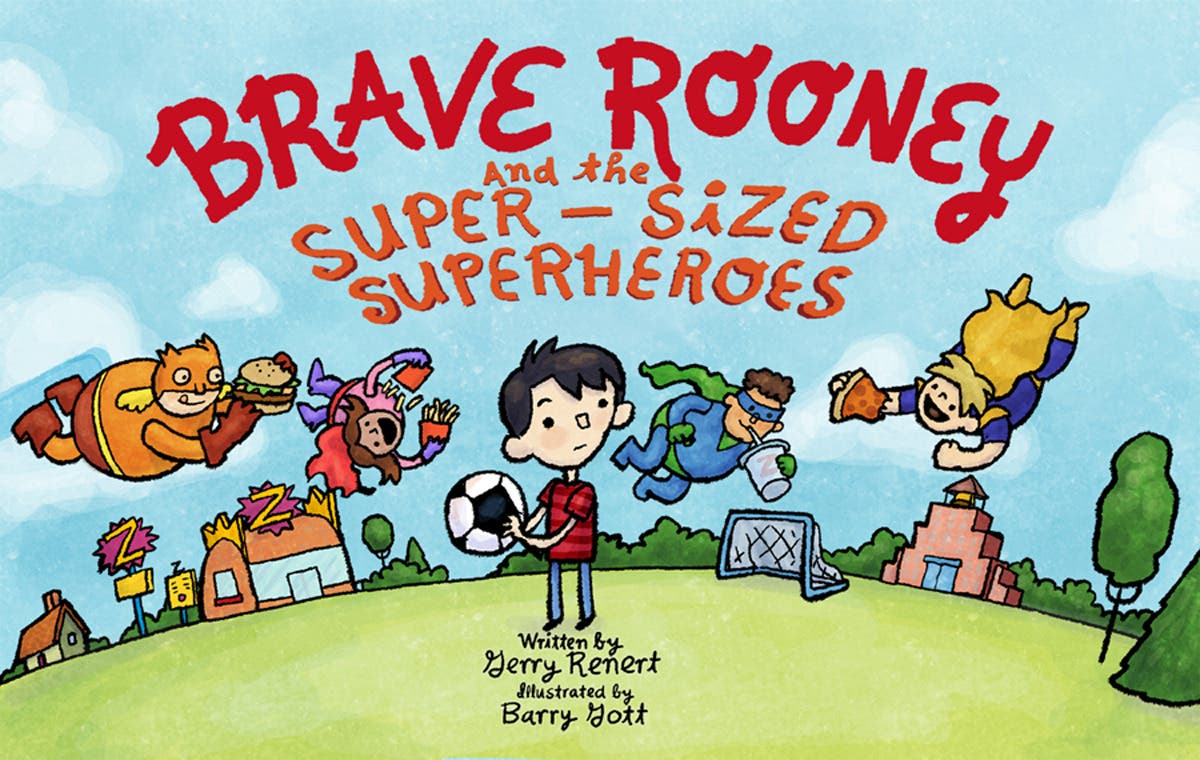
My thinking changed when I took on writing a book app intended to improve kid’s nutrition habits. My publisher wanted me to do a second book app in my BRAVE ROONEY series and, because I’m such a health nut, I figured I could teach kids about nutrition while they mostly had fun. I already had the skeleton of a story and a title, so I plowed ahead with book two: BRAVE ROONEY AND THE SUPER-SIZED SUPERHEROES.
Find out what's happening in Pacific Palisadesfor free with the latest updates from Patch.
As I started to research kid’s nutrition and interviewed a few dieticians, I became increasingly aware that Childhood Obesity is a problem that can’t be ignored. It poses a bigger challenge to our society than I could imagine – involving both young and old. I was first shocked to learn that one in every three children (ages 2 – 19) is overweight or obese, and that it costs $19,000 extra per child when comparing lifetime medical costs to those of a normal weight child, according to an analysis conducted by researchers at the Duke Global Health Institute.
One thing I learned from the endless Affordable Healthcare Act media frenzy – whether it be from the Democratic or Republican side -- was how closely connected everyone’s healthcare is, and there are real limits to the amount of available financial resources that can go toward keeping us all healthy. The brutal truth is: an overweight kid scarfing down his second bag of potato chips might soon prevent someone older from having a life-saving MRI.
Find out what's happening in Pacific Palisadesfor free with the latest updates from Patch.
With each new damaging fact I learned about Childhood Obesity, I became a proselyte, mostly because the fix seems to be so easy. All parents need to do is change some shopping and meal preparation habits and get their kids moving. I’m no psychologist, but I’d bet there are countless ways to influence kids to exercise more and to avoid fast food when it’s possible. Another thing I learned was the importance of family, and how eating (and preparing) more meals together can help reduce Childhood Obesity.
During the midst of one such family meal, I was in my proselytizing mode, and I could see, of all people, I had the attention of my seventy year-old Uncle. He follows politics a lot, and when I mentioned the effects of childhood obesity add an estimated three billion dollars in direct medical costs, he asked me if that might affect his Medicare and Social Security. Before I could attempt an answer, my Uncle suddenly looked pale and I noticed blotches on his arms. It wasn’t the spicy shrimp. It wasn’t the wine. It was Childhood Obesity.
My Uncle calmed down and was fine within ten minutes, although he kept muttering, “three billion dollars??” I felt bad I had put him into such a stir but felt relieved I managed to leave out that the three billion was calculated in today’s dollars. That means if childhood obesity continues to proliferate, the dollars spent could really put our healthcare system at serious risk in the years to come. I commend the city of Berkeley, California, for imposing a 1-cent-per-ounce tax on sugar-sweetened beverages. The tax is meant to try and reduce consumption but other cities are already thinking of earmarking potential tax revenue for nutrition, physical activity and health programs.
I don’t want my Uncle to go down in history as the first seventy year-old victim of childhood obesity, but if we don’t begin to look at this problem holistically and from the point-of-view of a society, many more will follow him – likely with symptoms worse than a rash.