Health & Fitness
In a Real Disaster, Preparedness is What Counts
Judgment Day may have been silly, but earthquakes are serious, and there are real steps you can take to be ready.
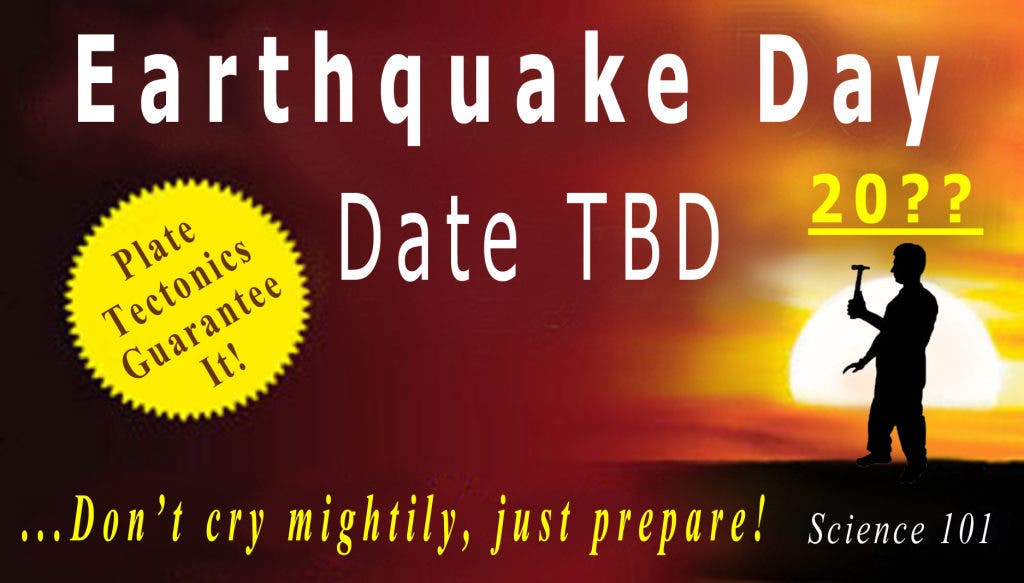
Before the Judgment Day billboards fade into the dark recesses of memory, maybe we can use them as an excuse to think about, and plan for, a different kind of looming disaster that we Californians face—the real one that is based on geology rather than theology.
I've been thinking about it because on the evening—and close to the 6 p.m. time—of the predicted and much-lampooned Rapture, there was indeed a 3.4 magnitude temblor, with an epicenter located—according to the USGS—less than half a mile from my house. in Pinole. Though minor, it was felt as far away as Oakland, and to me (and my poor startled cats), it was pretty jarring.
Once it was clear that the world wasn’t ending and that no righteous neighbors were floating heavenward, I replaced the wireless phone that had been toppled out of its base, and checked to make sure all my breakable knickknacks were in place. Luckily, none had hit the deck, but I’m pretty sure some would have, had I not long ago secured them to their shelves with Quakehold putty product.
Find out what's happening in Pinole-Herculesfor free with the latest updates from Patch.
The 100% survival rate of my knickknack community got me thinking about what larger measures I could take to be ready for the much larger quake that will one day strike, without so much as a single billboard’s or radio preacher’s warning.
Most people in the Bay Area know the basic seismic reality—that the next “big one” is not a matter of if but when, and that it will most likely strike on the Hayward fault. But too many people avoid taking action. I so often hear the rationalization, “There’s nothing I can do about it, so I’m not going to worry about it.” If you find yourself in that camp, then ask yourself: What is worse, a damaged home or a destroyed home? A few lost possessions, or many? Injury-free, or injured? True, you can’t stop the Earth’s plates from shifting, but you can—you absolutely can—minimize the potential for damage and injury.
Find out what's happening in Pinole-Herculesfor free with the latest updates from Patch.
Below are some steps to take, followed by resources to help get them done.
Make sure your home and each car has an emergency kit. The home kit should be sufficient for each family member to live on for several days. Don’t forget to include the pets. There are many ready-made kits available. If possible, store the kit outside the house, where it is likely to remain accessible even if there is structural damage inside the home. A Rubbermaid-type storage shed or box in the yard is good. Ordinary plastic water bottles from the grocery store tend to leak at the seams after a couple of years, so consider purchasing a large water container designed especially for emergency kits. A commonly-sold size is 55 gallons, and they come with water purifier that will keep the water potable for about 5 years. Check in on your emergency supplies periodically to ensure they haven’t expired.
In the car, have food bars, water, flashlight, first aid, blankets (most kits come with the foil space-blanket kind), and comfortable shoes. Many people leave out the shoe part. If you find yourself stranded by impassable roads, you may have to walk a long distance, so next time you retire a comfy pair of running or walking shoes, throw them in the car rather than the trash.
Fasten tall furniture and other potentially dangerous items to walls or the floor. People tend to underestimate the importance of this step, because they think that if an item is heavy and hard to move, it won’t move much in a quake. But keep in mind, you couldn’t personally knock over a freeway overpass, yet that’s the kind of thing quakes do all the time. Your fridge is nothing to a quake, so get it securely fastened to a wall stud. The same goes for washers, driers, cabinets, bookcases, and large TVs. The quake-safety rule of thumb for any given household item is: Are you okay with it moving eight feet in any direction at 35 miles per hour? If not, then fasten it.
Fasten framed pictures and mirrors to the wall with a strip of strong Velcro—this will prevent them from bouncing off their hooks and shattering on the floor. (If you’re worried about the Velcro damaging your paint job, note that you can remove the Velcro pretty harmlessly by applying heat from a hair dryer for a few minutes.) Small items like knickknacks, china or heirlooms can be held in place quite effectively with Quakehold™ putty or museum wax. Museums use this type product to secure priceless artifacts, so it is pretty reliable.
Have an automatic gas shut-off valve installed on your gas meter. The valve is built to sense motion from a 5.4 earthquake up, and automatically cut the gas supply to the house. The Bay Area earthquakes of both 1989 and 1906 demonstrate that post-quake fires do as much or more damage than the shaking does, so a gas shutoff valve is a small but wise investment. The valve plus installation should run you less than $400.
Make sure your water heater is securely strapped in place. This not only further reduces the risk of a gas leak, it could prevent some pretty severe water damage.
Have your home’s foundation assessed by a seismic safety specialist, especially if your home was built before 1958, when many modern codes went into place. Seismic engineering is a science, and few contractors, handypersons or homeowners have sufficient knowledge to properly upgrade a home’s safety. Howard Cook, founder and owner of Bay Area Retrofit, cautions that, while there are codes for new construction, there are no codes for seismic upgrades to existing homes. This means there is no oversight from city building departments, so homeowners must be especially diligent in making sure their seismic contractors are competent.
“The number one question to ask a contractor is what the base shear formula is,” said Cook.
You don’t have to grasp the concept yourself, but if the contractor doesn’t have a ready and confident answer, don’t hire him or her. Ask your contractor exactly what is being proposed and make sure the contractor can clearly explain the purpose of each step.
Though codes on new construction have improved over the years, they tend to be one-size-fits-all and don’t necessarily maximize a given house’s earthquake performance. Depending on the house, a simple addition of bolts at just a few keys points can make a dramatic difference.
“Many houses can double their earthquake resistance with a minimal expense of around $3000,” Cook said.
A small sum compared to the replacement cost of a home.
Finally, don’t forget to include your business when making disaster plans. Every workplace should secure furniture and fixtures such as copy machines and large printers, and should be stocked with emergency supplies sufficient to last each employee a few days. Most people assume they’ll go straight home if disaster strikes, but take into account the feasibility of doing so if BART, bridges and freeways are down.
Here are some resources to help you get quake-ready.
Bay Area Retrofit provides retrofit services and maintains a website packed with useful information about structural issues, and earthquakes in general. It also has two compelling and informative videos produced by KQED television.
Quake Prepare offers consultations that assess your home’s safety, and referrals to contractors who fasten furniture, strap water heaters, and install gas shutoff valves at affordable rates. The valves, as well as other emergency supplies, are available for purchase on the site. Founder Larry Guillot is committed to spreading knowledge and wants every Bay Area resident to be ready to stay out of harm’s way when our next quake hits.
ETC Building and Design is a company with offices in southern California and the Bay Area, specializing in fastening services for businesses. You can even learn about booking a reservation to ride the Quake Cottage quake simulator.
Your Safety Place in Dublin, and Earthquake Supply Center in San Rafael, are two extremely comprehensive emergency supply stores that should be able to meet all your emergency kit and fastener needs, including water barrels and shutoff valves.
Quakehold makes a variety of fasteners and emergency supplies, which can be purchased in most home improvement and hardware stores.
The Association of Bay Area Governments has a wealth of info, including shaking hazard maps of the entire Bay Area, and guidelines for making family emergency plans.
Pinole has a Community Emergency Response Team, which provides hands-on disaster training.
Some of the people involved in the organizations above may be evangelists of a sort, but they’re quake preachers rather than quack preachers, and their only sermon is maximum safety and minimal loss. When our real-life day of disaster arrives, whether in a decade, or two, or tomorrow, it will involve no moral judgments and, undoubtedly, very little rapture. But those who prepare for it the most are likely to lose the least.