Politics & Government
Pleasanton Voter Guide 2026: What's On The Ballot, Voting & More
From where to cast an early ballot to deciding on local and statewide candidates — here's your Pleasanton voter guide.


PLEASANTON, CA — The 2026 California general election is underway, and Dublin voters will decide a mix of state, congressional and local races, along with several measures, when ballots are counted Nov. 3.
Statewide, voters will choose California's next governor, attorney general, and secretary of state among other offices. The November ballot also includes races for the U.S. House, state Senate and state Assembly.
Closer to home, Pleasanton voters will choose a mayor, members of the Pleasanton City Council, members of the PUSD Board of Trustees, and a measure to increase hotel taxes. They will also weigh in on a congressional race and one of two assembly districts, depending on their address.
Find out what's happening in Pleasantonfor free with the latest updates from Patch.
Monday was the deadline for counties to begin sending out vote-by-mail ballots, which every registered voter will automatically receive.
Ballots returned by mail must be postmarked by Nov. 3 and received by county election offices Nov. 10. Ballots returned at designated ballot drop boxes must be deposited by 8 p.m. on Election Day.
Find out what's happening in Pleasantonfor free with the latest updates from Patch.
Early voting centers are already open. Through Nov. 3, residents can vote at early voting centers or drop off their ballots in drop boxes. Find a complete list of sites and other election information here.
Pleasanton City Council and Mayor
Patch reached out to the six candidates running for office in Pleasanton. Two candidates each are running for mayor, District 1, and District 2.
See here for a map of the districts, and to find out which district you’re located in.
For the mayoral race, incumbent Jack Balch is being challenged by Julie Testa, who currently represents District 3.
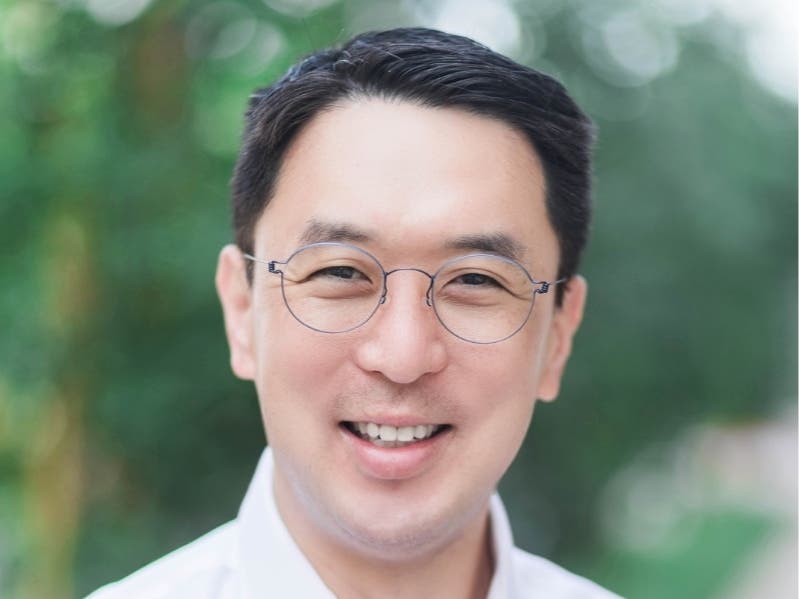
In District 1, tech entrepreneur Vin Kruttiventi is running against Kathy Narum, the director of Zone 7 Water Agency and a Pleasanton City Councilmember from 2013 to 2022.
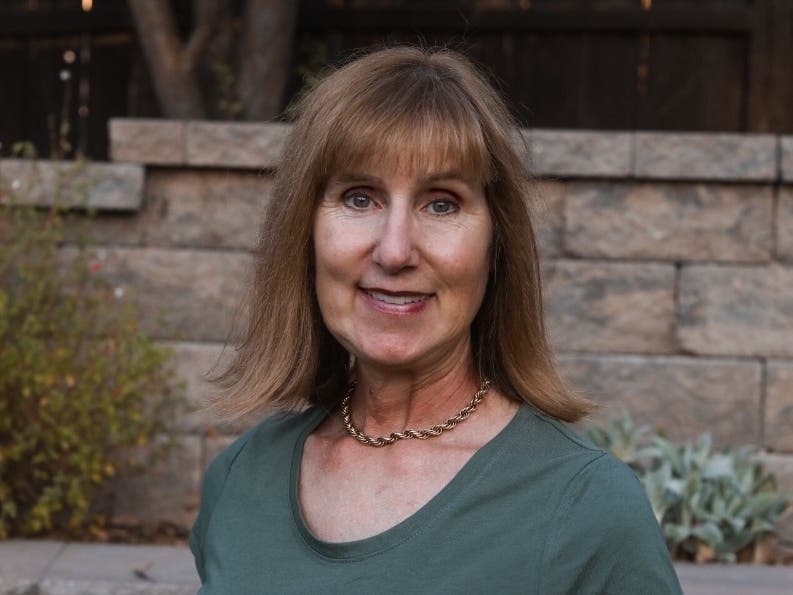
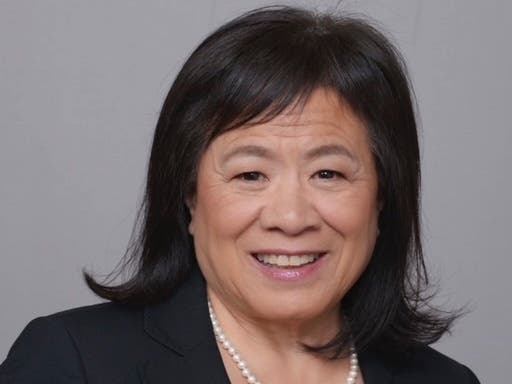
In District 3, business owner and community activist Reena Gupta is running against Jamie Yee, who currently works in communications for Alameda County Health and served on the Pleasanton Unified School Board from 2008 to 2020.
We asked each candidate several questions on issues important to Pleasanton, including housing, crime prevention, the structural budget deficit, and why they feel they are the best candidate to address them. Read their answers below.
Mayor:
District 1:
District 3:
Pleasanton Unified School District
Patch reached out to the three candidates running to represent Area 5 of the Pleasanton Unified School Board of Trustees. Area 5, located in southeastern Pleasanton near Pleasanton Middle School, is represented by Justin Brown, who opted not to seek re-election.
In Area 2, Laurie Walker is running unopposed.
We reprinted their answers to top issues facing the district, including the budget shortfall, declining enrollment, and why they feel they’re the best candidate to tackle these issues. Candidate Brett Martinez did not respond, despite attempts to contact him.
- Meet The Pleasanton School Board Candidate: Thomas Choi
- Meet The Pleasanton School Board Candidate: Karen Fletcher
- Brett Martinez did not respond
State Assembly
Most of Pleasanton will vote in the race for Assembly District 16, a contest between Democratic incumbent Rebecca Bauer-Kahan and Republican challenger Joe Rubay. Residents of parts of eastern Dublin will vote in the race for Assembly District 20, a contest between Democratic incumbent Liz Ortega and Republican challenger Patricia Muga, a Dublin resident and real estate appraiser.
District 16:
Rebecca Bauer-Kahan, an Orinda resident and former environmental lawyer, was first elected to the Assembly in 2018. Her 2026 campaign emphasizes online safety and AI, protecting homeowners insurance, increasing funding for public education, and protecting reproductive rights.
Joe Rubay, a local business owner who has served on the Contra Costa County Fair Board and as chair and vice chair of the Alamo Police Services Advisory Committee, emphasizes parental rights in education, tougher approaches to crime, and opposing state policies that encourage higher-density housing in suburban communities.
District 20:
Liz Ortega, a San Leandro resident, was elected in 2022 after serving as the first Latina to lead the Alameda County Labor Council. Her campaign has emphasized lowering living costs, strengthening worker protections, expanding health care access, and protecting public education.
Patricia Muga is a Dublin resident and real estate broker who serves on the Alameda County Republic Central Committee. Her campaign emphasizes reducing government regulation, improving government transparency, and public safety.
Congress:
Pleasanton will get to weigh in on a congressional race that attracted national attention. CA-14, encompassing much of the East Bay, was left vacant after former Congressman Eric Swalwell resigned amid sexual assault allegations.
Aisha Wahab, a former Hayward City Council member and California state senator, narrowly defeated Melissa Hernandez, president of the BART board and former mayor of Dublin, in a special election in August. She was sworn in September.
Wahab and Hernandez will face off again in November for a two-year seat. Both candidates are Democrats, though Wahab is generally seen as the more progressive candidate, emphasizing affordable housing, expanded social services, civil rights, and addressing corporate practices that contribute to high costs.
Hernandez emphasizes job creation, small-business growth, housing construction, public safety, and reducing health care costs. While both candidates prioritize affordability, Wahab emphasizes expanding social programs, while Hernandez focuses more on economic development.
Measure HH
Measure HH will ask voters to consider raising the city’s Transient Occupancy Tax, levied on hotels, from 8% to 10% effective July 1, 2027, and from 10% to 12% effective July 1, 2028. The measure is projected to generate roughly $1.4 million in the first year and $2.8 million annually once fully implemented.
Key Statewide Races
Millions of Californians will be called back to the ballot box in November to decide who will occupy the governor’s seat as well as a slew of other important statewide positions.
Golden Staters will be asked to vote on candidates for:
Governor
Democrat and former U.S. Secretary of Health and Human Services Xavier Becerra is facing Republican Steve Hilton, a former Fox News commentator, in the race to succeed Gavin Newsom as governor.
In a state that hasn’t elected a Republican to statewide office in 20 years, Becerra likely already overcame his biggest challenge when he survived the chaotic June primary that saw sexual assault allegations topple the field’s frontrunner, former Rep. Eric Swalwell.
After months of turmoil with a large field in the June primary election, the contest to succeed the outgoing Newsom has settled into a stolid affair. With numbers on his side, Becerra’s low-key campaign is an acknowledgment that if he avoids mistakes, he is likely to get the job.
To become California’s next governor, Hilton must conjure up a feat of political wizardry, the equivalent of pulling voters out of thin air, he acknowledged.
“I’ve never said it’s going to be easy,” Hilton said in an interview with The Associated Press. “It’s obviously an uphill battle. I still see this as a winnable race.”
With mail ballots already arriving in homes, Hilton is angling to pull off what would be one of the great upsets in California record books against Democrat Xavier Becerra. Aligned against him in the heavily Democratic state are the weight of recent history, a national electorate that has soured on President Donald Trump and, perhaps inescapably, basic math.
Any Republican starts at a disadvantage. Registered Democrats outnumber Republicans by a staggering 4.6 million voters, a margin approaching 2-to-1 statewide. Trump — who has endorsed Hilton’s candidacy — is widely loathed outside his conservative base in a state the president often depicts as representing all that is wrong in America.
“I like Steve a lot, but the math is very hard,” says GOP consultant Mike Murphy, who advised the last Republican to hold the office, former Gov. Arnold Schwarzenegger. He was elected to his second term in 2006.
“I think the most relevant equation is how many cases of beer you have to drink to be drunk enough to think it’s doable in this election cycle with the Trump dynamic and the registration advantage the Democrats have,” Murphy wrote in an email. “My model starts at four cases.”
Still, polling conducted in early September by the Public Policy Institute of California found about half of voters think the state is moving in the wrong direction while a majority think economic conditions will be bad over the next year.
California — where Democrats hold every statewide office and dominate the legislature — has one of the nation’s highest unemployment rates. Its gas prices are the highest in the nation, and its utility prices are near the top nationally. Home prices often soar into the seven digits. After decades of meteoric growth, the population has essentially flatlined, with California expected to lose a congressional seat as states like Florida and Texas grow at a faster pace.
In his pursuit of a breakthrough, Hilton has anchored his campaign to making California more affordable, including bringing gas prices down to $3 a gallon. Yet he doesn’t appear to be gaining the traction he needs to catch the Democrat. A September poll conducted by the University of California, Berkeley’s Institute of Governmental Studies found that Becerra had a sizable lead over Hilton.
READ MORE: 'Creepy, Weird, Disturbing' Campaign Ad By Candidate For CA Governor Draws GOP Condemnation
Attorney General
Attorney General Rob Bonta, who was appointed after Becerra became the first Latino secretary of the Department of Health and Human Services, is now up for re-election.
Bonta, a Democrat and former state lawmaker, will face off against Republican Deputy U.S. Attorney Michael E. Gates.
Gates got 37.9% of the vote in the June 2 primary, while Bonta won 56.6%.
Insurance Commissioner
Democratic state Sen. Ben Allen is facing Republican lawyer Jane Kim to become the state’s newest insurance commissioner, a seat that is tasked with regulating California’s stumbling insurance industry. Residents in recent years have seen their rates skyrocket while major insurers pull out of the Golden State as it faces climate-driven environmental catastrophes.
“In the California State Senate, I’ve built a reputation for tackling difficult problems, and perhaps no problem in our state is as vexing as fixing our insurance system. It’s a system under severe strain, with the consequences falling hardest on those least able to absorb them,” Allen told CalMatters. “Stabilizing the market, protecting ratepayers, and fixing the FAIR Plan are not abstract policy goals. They are essential if California is going to remain a place where people can live safely and securely. The current trajectory of the system threatens the future of our quality of life. And God forbid a disaster strikes, California must be a place where people can recover afterwards, rather than be forced out.”
Kim is calling for more oversight of insurance companies that deny claims following disasters.
“We need to re-imagine and redesign insurance to work for all of us. And this means taking on the $3.3 trillion industry, which has been posting blockbuster profits for shareholders and CEOs. In fact, CEO’s at the 10 largest insurance companies raked in $391 million over the last three years,” she told CalMatters.
READ MORE: The Race For Insurance Commissioner
Secretary of State
Incumbent Secretary of State Shirley Weber, a Democrat, was appointed by Newsom after Alex Padilla ascended to his seat as a U.S. senator. She will face Orange County Supervisor Donald P. Wagner, a Republican.
Weber has overseen California’s implementation of universal mail-in voting and has battled the federal government’s ongoing efforts to curtail vote-by-mail. She has said she plans to increase cybersecurity in the state’s election system and has faced criticism for the state’s notoriously slow vote certification process.
Wagner has vowed cooperation with President Donald Trump’s investigation of alleged voting irregularities and endorsed voter ID measures.
READ MORE: The Race for Secretary of State
Controller
Incumbent Democrat Malia M. Cohen will face Republican challenger Herb W. Morgan to oversee spending and accounting in the nation’s largest state and one of the largest economies in the world.
READ MORE: The Race For CA Controller
State Treasurer
Democratic Lt. Governor Eleni Kounalakis, the first woman elected to the role, is now looking to trade places with State Treasurer Fiona Ma, who is running to succeed her as lieutenant governor.
Kounalakis will face Republican executive retiree Jennifer Hawks in a bid to oversee the state’s investments and debts.
READ MORE: The Race For CA Treasurer
Lieutenant Governor
Looking to change hats from treasurer to lieutenant governor, Ma, a Democrat, is facing Republican Gloria Romero to be second in line to the governor.
READ MORE: The Race For CA Lieutenant Governor
Propositions
Proposition 1
Proposition 1 seeks to authorize the state to issue $11.25 billion in new bonds for affordable housing, homeownership programs and veterans’ housing assistance.
If approved, Proposition 1 would authorize $10 billion in general obligation bonds for affordable rental housing and homeownership programs. Another $1.25 billion would support a state program providing home, farm and mobile home purchase assistance to veterans. It's expected to help build about 40,000 new homes or apartments while also helping another 40,000 people become homeowners.
Read more about it: CA Proposition 1: Bonds For Housing Affordability Programs
Proposition 2
Voters will consider whether to amend the state constitution to strengthen its rainy day fund, allowing the state government to squirrel away up to 10% more savings each year for lean years.
Proposition 2 would give lawmakers greater flexibility to manage reserves and debt by changing rules governing the Budget Stabilization Account. Formally called the Save for California’s Future Act, the proposition was placed on the ballot by the legislature.
Read more about it: CA Proposition 2: Amendment To Increase The State's Rainy Day Fund
Proposition 3
Currently, state income tax rates adjust upward for high wage-earners under a measure approved by California voters in 2012 (Proposition 30) and extended in 2016 (Proposition 55). The progressive tax brackets, which require the wealthiest residents to pay more, are set to expire in 2031. Proposition 3 would make them permanent.
Read more about it: CA Proposition 3: Makes Progressive Income Tax Rates Permanent
Proposition 4
Among the slate of 14 statewide ballot measures, Proposition 4 is the only one that asks voters to consider repealing something.
The measure aims to overturn a 1988 ban on using taxpayer dollars to fund campaigns for candidates running for state and most local government offices. Proposition 4 would allow state and local governments to create public financing programs within broad restrictions.
The bill is designed to encourage candidates without deep pockets or access to monied donors to run for office. Proponents of the measure say public campaigns keep private donors from having outsized influence on elections.
Critics oppose publicly funded campaigns because they put taxpayers in the position of subsidizing political campaigns — even for candidates they don't support.
Read more about it: CA Proposition 4: Changing The Rules On Public Campaign Donations
Proposition 5
Proposition 5, a legislative constitutional amendment, would change what happens after voters remove a state official from office by recall. Instead of immediately choosing a successor during the recall election as in current practice, Californians instead would vote only on whether to remove an official from office. If the recall succeeds, then the office would generally be filled based on the same procedures for filling vacancies in other, non-recall circumstances.
Read more about it: CA Proposition 5: Constitutional Amendment Changing The State's Recall Process
Proposition 37
Proposition 37, which qualified for the ballot as an initiative statute, would authorize up to $25 billion in bonds to back a loan program to help middle-income earners enter the housing market.
Specifically, the proposed programs would provide loans of up to 17% of a home's purchase price to help buyers with the standard 20% down payment. They would have to repay the loan to private lenders as with a standard mortgage payment. The program would be open to buyers earning up to twice the area's median income.
Read more about it: CA Proposition 37: Loan Program For Middle-Income Homebuyers
Proposition 38
Proposition 38 is one of California's responses to the Trump administration's massive cuts to funding medical research, impacting studies on cancer, Alzheimer’s, cardiovascular disease and diabetes.
If it passes, it would authorize the state to issue $8.4 billion in bonds to fund immunology and immunotherapy research. The measure would require the state to give half the funds to the University of California for research and the rest to public and nonprofit medical research facilities in the state. The measure would also require research facilities that develop medication with Prop. 38 funding to offer the drugs at a 20% discount to California residents while also giving 10% of the revenue back to the state.
Read more about it: CA Proposition 43: Raises Threshold For Passing New Tax Ballot Measures
Proposition 39
Proposition 39 seeks to amend the state constitution to require government-issued identification at the polls and the last four digits of a unique government-issued identifying number on mail-in ballots. Prop. 39 would also require the state to verify current voter registration lists, regularly audit compliance with the new rules and pass laws to ensure their implementation.
Read more about it here: CA Proposition 39: Voter ID Measure
Proposition 40
The fight over Proposition 40, dubbed the billionaire tax, has garnered massive attention and significant campaign dollars from both supporters and opponents. If passed, the labor union-sponsored initiative would impose a one-time state tax of up to 5% on residents with assets over $1 billion, excluding real estate and certain pensions or retirement accounts. The added tax revenues generated from Prop. 40 would be designated to help fund health care, food assistance and education programs across the state.
Read more about it:
CA Proposition 40: The Billionaire Tax
Billionaire Tax Explained: What You Need To Know About Prop. 40
Proposition 41
Proposition 41 prohibits new state taxes that exclude revenues from the state spending limit approved by voters in 1979, and requires audits for new special taxes.
Read more about it: CA Proposition 41: Counter To Billionaire Tax
Proposition 42
Proposition 42 prohibits new state taxes on personal property, including business interests, intellectual property, and financial assets such as retirement or investment accounts.
Read more about it: CA Proposition 42: Bars New Taxes On Personal Property; Could Blow Up Billionaire Tax
Proposition 43
Proposition 43 combined two hot topics of taxes and voting. If approved, it would amend the state constitution to make it harder to raise local special taxes.
Citizen initiatives asking voters to approve local special taxes would require a two-thirds vote instead of a simple majority to be enacted. By raising the threshold, it becomes less likely that new tax ballot measures that arrive on the ballot via signature-gathering efforts can pass. Currently, the two-thirds threshold only applies to taxes proposed by government officials. If it passes, the growth of local government tax revenues is likely to slow.
Read more about it: CA Proposition 43: Raises Threshold For Passing New Tax Ballot Measures
Proposition 44
The union-backed Proposition 44 aims to make sure federally funded community clinics spend the vast majority of funding on care-oriented services as opposed to expenses such as executive compensation.
Also known as the Clinic Funding Accountability and Transparency Act, the proposition would require certain nonprofit community clinics to spend at least 90% of their total annual revenue on program services “advancing their charitable purpose,” according to the proposition text.
The proposition would give the state attorney general the authority to issue guidance regarding what constitutes qualifying spending. If a clinic falls short of the 90% requirement, it would be penalized by its shortfall – in other words, if a clinic is required to spend $90 million of its $100 million revenue on qualifying expenses, and only spends $82 million, it would be penalized $8 million. If the clinic comes back into compliance within five years and can demonstrate that it spends at least 90% on qualifying expenses, the money will be returned. If not, the money will remain with the state and will be used for clinic worker training, recruitment and retention.
Read more about it: California Prop. 44: What To Know About Community Clinic Spending Measure
Proposition 45
Proposition 45 aims to restrict the California Environmental Quality Act by placing time limits on legal and environmental reviews for housing, transportation and water projects. Supporters of the proposition say the environmental law needs updating because it has been used to inappropriately stymie development. Opponents say the landmark law helps protect Californians from potentially harmful building projects.
A yes vote would make eligible projects subject to the new review and court-challenge procedures when applicants choose them.
A no vote would keep existing review and court-challenge procedures in place.
Read more about it: CA Proposition 45: How Environmental Review Laws Turned Into Spending War
The Associated Press contributed to this report.
Get more local news delivered straight to your inbox. Sign up for free Patch newsletters and alerts.