Business & Tech
Loma Linda Develops Reliable Treatment for Common Sports Injury
Delayed Onset Muscle Soreness is tough to treat, but a unique infrared imaging has proven to give solid data on the extent of an injury.
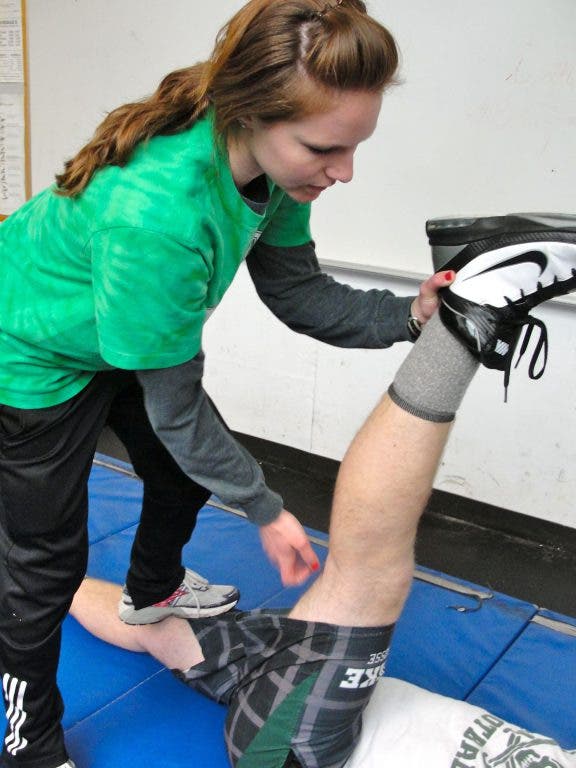
Researchers from Loma Linda University and Azusa Pacific University have developed a unique technique that could help treat one of the most common forms of sports injuries.
The method makes use of thermal infrared imaging on patients to quantify Delayed Onset Muscle Soreness (DOMS), a painful muscle condition. The researchers’ findings are outlined in an article to be published in the peer-reviewed video journal, Journal of Visualized Experiments (JoVE), on Jan. 27.
“The main advantage of this technique is that it gives you absolute, quantifiable data, unlike visual analog scales which are kind of subjective measures of whether someone is sore or not,” said Jerrold S. Petrofsky, professor of physical therapy at Loma Linda University School of Allied Health Professions and one of the study’s principal investigators.
Find out what's happening in Redlands-Loma Lindafor free with the latest updates from Patch.
“This method has the additional advantage of being able to detect delayed onset muscle soreness in its early stages. This allows more detailed studies of the micro physiology of exercise and muscle soreness, rather than using subjective scales,” he said.
Delayed onset muscle soreness, also known as Exercise Induced Muscle Damage, is one of the most common types of sports injuries. The painful injury is commonly experienced among people who have been physically inactive for long periods of time, and begin with an unexpected bout of exercise. It can also occur in athletes who exercise beyond their normal limits of training.
Find out what's happening in Redlands-Loma Lindafor free with the latest updates from Patch.
DOMS is not easy to assess. The easiest means is by asking the person how sore they feel using a Visual Analog Soreness Scale, which is a poor measure of actual muscle damage. To assess damage well, the previous tools all involved drawing blood and expensive blood analysis that took days to complete. This makes it difficult to verify if a chosen intervention really works.
The new technique involves a simple infrared picture of the skin and determines the extent of the damage after exercise. This technique got its start as part of the dissertation of Loma Linda University doctoral student Hani H. Al-Nakhli, who has since returned to his native Saudi Arabia.
The technique replaces blood work with used of thermal infrared images of a person’s exercised and un-exercised arms taken immediately before the exercise and 24 hours after the exercise, to determine the extent of DOMS. Information that can be observed from the technique could help in the early detection of DOMS and help in lowering the incidence of injuries from over-exercising sore muscles on days following the initial exercise.