Arts & Entertainment
Chasing Celebs Isn't a First Amendment Right, Judges Rule
An appeals panel ruled against a paparazzo prosecuted for tailing singer Justin Bieber through the Valley.


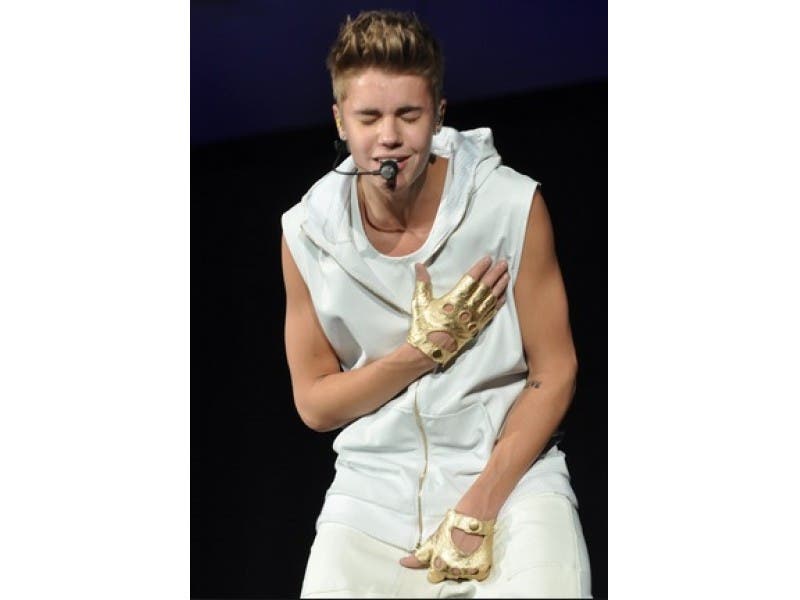
An appellate panel today ruled against a paparazzo who was prosecuted for tailing singer Justin Bieber on a Southland freeway in an allegedly reckless manner, rejecting his argument that the state law under which he was accused is unconstitutional.
In a 27-page ruling, the three-justice panel from California’s 2nd District Court of Appeal found that state law under which Paul Raef was charged “does not violate the First Amendment of the United States Constitution.”
“It is a law of general application that does not target speech or single out the press for special treatment and is neither vague nor overbroad,” Presiding Justice Norman L. Epstein wrote, with Associate Justices Thomas L. Willhite Jr. and Audrey B. Collins concurring.
Find out what's happening in Redondo Beachfor free with the latest updates from Patch.
Raef was charged in July 2012 with four misdemeanor counts for allegedly chasing Bieber on July 6, 2012, on the Hollywood (101) Freeway in the San Fernando Valley.
In a November 2012 ruling in which he found that the law was “problematic” and “overly inclusive,” Superior Court Judge Thomas Rubinson threw out two of the charges against Raef -- driving in willful and wanton disregard for the safety of others and following another vehicle too closely, both with the intent to capture a visual image of another person for a commercial purpose.
Find out what's happening in Redondo Beachfor free with the latest updates from Patch.
The judge noted then that the law could be applied to a wedding photographer rushing to get to a ceremony or even someone who was late for a pre-arranged appointment to take photos of a celebrity since it applies to people taking photos for commercial purposes.
The Los Angeles City Attorney’s Office appealed the judge’s decision. The Los Angeles County Superior Court’s Appellate Division later granted the prosecution’s petition and directed the trial court to reinstate the two counts, prompting Raef and his attorneys to seek relief from the appellate court.
The appeals court panel concluded that the Vehicle Code section under which Raef was charged “does not target the intent to engage in a First Amendment activity,” and is “sufficiently narrowly tailored to address the particular problem the (state) Legislature sought to alleviate without unnecessarily or seriously burdening speech or press rights.”
The justices found that there is no reason why the Vehicle Code section under which Raef was charged “should not apply to any driver who follows too closely, swarms in, or drives recklessly with the requisite intent or purpose, whether or not the driver is a celebrity photographer.”
City News Service
Get more local news delivered straight to your inbox. Sign up for free Patch newsletters and alerts.