Politics & Government
The Blue Economy: "If it's wet, it's blue."
The Blue Economy is the economy of the 71 percent of the world that is water.


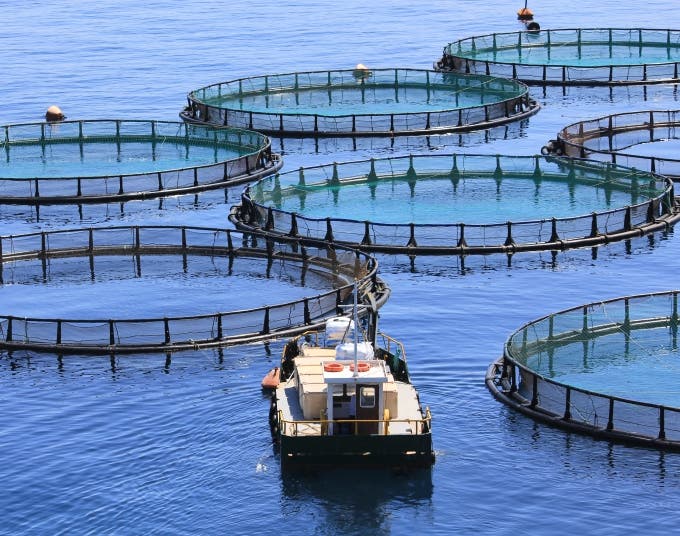
Forget the Green Economy. This year it is the Blue Economy that is taking off. I am not talking of Gunger Pauli’s Blue Economy of 1996, the theory that by focusing on the local economy we could inject cash and local resources into the local economy. Instead this Blue Economy is the economy of the 71 percent of the world that is water. Now being lead by the non-profit Maritime Alliance, this effort aims to promote sustainable, science based ocean and water industries.
According to the Maritime Alliance there are at least sixteen sectors to the Blue Economy:
- Aquaculture and fishing
- Biomedicine
- Boats and Shipbuilding
- Cables and connectors
- Defense and security
- Desalination and clean water
- Marine recreation
- Ocean Energy and Minerals
- Ocean Instrumentation
- Oceanography and Marine Science
- Ports and Maritime Transportation
- Professional Services
- Robotics and Submarines
- Telecommunications
- Very Large Floating Platforms
- Weather Science and Climate Change
These sixteen sectors acknowledge not just the traditional segments such as boats, shipbuilding and marine recreation; but also new water technology sectors such as biomedicine, robotics, desalination and clean water.
Find out what's happening in Redwood City-Woodsidefor free with the latest updates from Patch.
Just as an example in aquaculture, in 2011 the State of California did $43 billion of business in agriculture of which only $54 million were in aquaculture. As Greg Murphy, Executive Director of the Maritime Alliance based in San Diego noted: “right now the United States imports about 91 percent of the seafood we consume.” That means that there is a potential $14B untapped industry just in the aquaculture space alone. According to Conservation International aquaculture is likely one of the best ways to feed a growing population. Unlike cattle and produce, aquaculture requires zero land, zero fresh water and has a lower carbon footprint.
If the global population is expected to grow to nine billion from the current seven billion by the year 2050, we will likely need to look to the water for solutions for housing and feeding these additional two billion individuals. The Blue Economy is a worldwide market. In San Diego alone were the Maritime Alliance is based, the blue economy in 2011 supported 1400 companies and 46,000 jobs of well paid blue (pun fully intended) and white collar jobs.
Find out what's happening in Redwood City-Woodsidefor free with the latest updates from Patch.
Locally in San Mateo County, the Blue Economy acknowledges our maritime heritage and takes advantage of our physical location bounded by the Pacific Ocean on one side and the San Francisco Bay on the other. San Mateo County and Redwood City could quickly become real leaders in the growing Blue Economy and even be the perfect location for a northern California blue tech incubator.