Neighbor News
What does Ted Hannig have on Redwood City?
How did Hannig get the city to approve his lawsuit over Docktown without even a perfunctory challenge?

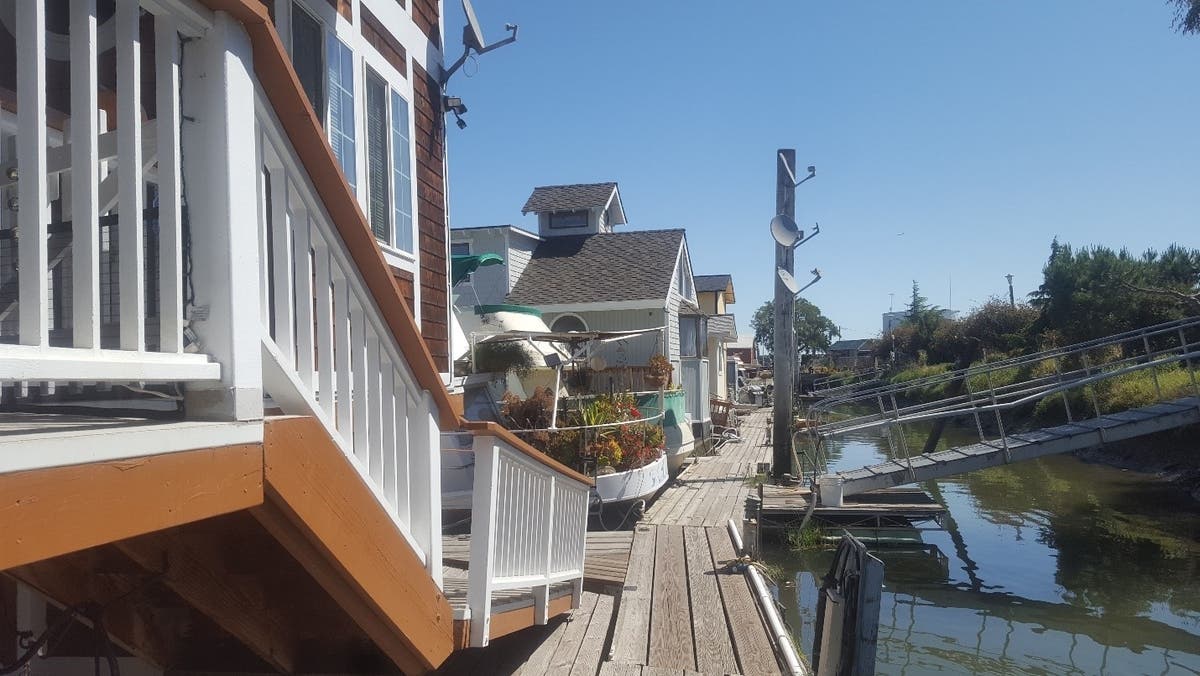
Ted Hannig’s lawsuit against Redwood City calling for the removal of the floating homes at Docktown Marina earned him a cool $1.5M for two months’ work, and may end up costing the taxpayers over $20 million. Why then did the city settle the suit without even a challenge? This story investigates the curious story of a lawuit against the City that appears to have given officials the cover they needed to finally deliver a coup de gras to the beleaguered floating community that has held them at bay for over 40 years. Supporting players in our drama include developers and local business interests, the staff of the State Lands Commission, and our own California legislators.
Ted J. Hannig is a flamboyant Redwood City attorney who likes to be known as a contributor to the common good. He was heavily involved in the No H8 campaign a few years ago, and is still a member of their board, sponsors a sailboat race called the Hannig Cup every year at the Sequoia Yacht Club where he is a member, contributes to charity events, and doles out money to a number of worthy causes and politicians (mostly from a trust given to his father to manage when Hannig senior was still active in the firm.)
So how and why did Hannig convince the City of Redwood City to give him $1.5 million to settle a spurious lawsuit he filed calling for the removal of the 50-year-old floating community of Docktown, and allocate another $3 million towards relocating the residents?
Find out what's happening in Redwood City-Woodsidefor free with the latest updates from Patch.
The obvious reason would simply be that he doesn’t like the view from his new condo overlooking the creek. That wasn't addressed in his complaint.
Rather his claims included purported pollution and environmental degradation on the part of the residents, the rundown condition of the docks, and neglect and financial mismanagement by the City (which he accused of embezzlement), and a series of other issues, including a “high velocity” golf ball he claimed someone at Docktown fired at him across the creek as he unloaded his groceries. And a poster that made fun of him he said was keeping his aging parents up at night worried about the safety of their son.
Find out what's happening in Redwood City-Woodsidefor free with the latest updates from Patch.
The charges seemed laughable to the people who live at Docktown, so they were astounded when the City didn't even challenge his assertions, or answer the complaint. They settled rather than address a single contention.
The City fathers said it was because they faced financial ruin if he won the case on even one count, and were afraid of losing control of city management to a court appointed Special Master. The library was at risk said former Mayor Gee, and so was the police force. They had no choice.
After the vote four of the Council Members said publicly how badly they felt about the decision to settle, and promised to meet with Docktown residents and work with them to find a way they could stay. None of them ever did. Instead they went back behind closed doors and developed a plan to present to the State Lands Commission that appeared to give residents 15 more years. When residents objected to the conditions against buying, selling, renting, or transferring homes they were accused of not being cooperative. The City sent out a press release noting they had tried to do the residents a favor, and were sorry it didn't work out.
Notably, the settlement also conveniently gave the City the leverage they needed to close down the Marina on a very short time frame.
Under the terms of the agreement Redwood City agreed to create a plan by the end of 2016 and start implementing it by the end of 2017. Written by a relocation team hired by the City the plan was adopted on December 12, 2016.
Residents had countered actions by the City to close the Marina many times before. Showing up in numbers to make their case including participating in a 10-month series of meetings of an Inner Harbor Task Force, where keeping a floating community emerged as one of the Task Force's guidelines in their report to the City Council.
Which brings us back to Ted Hannig, who happened to acquire the townhouse at the end of the new One Marina development overlooking Docktown a month before the task force's report was presented to a joint session of the City Council and the Planning Commission.
Hannig had never attended any of the task force meetings and wouldn't have known what was discussed, and yet at that meeting had already submitted a letter to the record, outlining spurious claims similar to what ended up in his law suit a year later. Where was he getting his information? And why was he doing it?
Clues can be found in Hannig's relationship with developer Paul Powers. Power'does s firm, Pauls Corp out of Denver, had bought the private Marina just across the berm from Docktown and evicted all the liveaboards there prior to developing what is now One Marina.
With construction underway he then turned his attention to buying the nearby property famously known as Pete's Harbor, also privately owned except for the boat moorings which were on waters leased by Pete Uccelli from the State Lands Commission. Unable to come to terms with the residents and the State, which looked like it was going to rule against his taking the docks private, Powers and Pete's widow Paula Ucelli evicted the boats, and then pulled out the Docks. That made a total of nearly 500 live aboard boats Powers had removed from the harbor to make way for his condos.
Ted Hannig was Uccelli's attorney during the Pete's Harbor matter and now also represents Powers.
But what would Powers want with Docktown? Although it is just across the creek from the One Marina development Docktown is not located on lands he owns. The answer to that is still a mystery. But it's noteworthy that Hannig's settlement with the City unexpectedly also included a push for Powers in the form of an agreement to complete an underpass below the freeway that separates One Marina from Downtown Redwood City, which he had promised to the buyers of the condos.
Hannig invited Paula Ucelli and Councilwoman Janet Borgens, and likely other council members to lunches at his new condo so he could lobby them on closing Docktown. When the condos were all sold the only thing that still belonged to Powers was the eight-acre lagoon where the Peninsula Marina boats had been docked. The address for the company that has title to the “lake” in a small town near Denver. And the contact person for the property, residents recently learned, is listed as Ted Hannig.
Which makes him a player in any future talks of floating developments on the eight-acre pond, which his condo also overlooks, which might not be compatible with Docktown. The lake now includes a small private Marina where Hannig keeps his own catamaran, the "Knot Guilty” which he can also see from a window looking out the front of his condo. Some would ask if that is why Hannig gambled $50k of own money to draft and file a lawsuit over Docktown, hiring a young lawyer to wade through hundreds of City documents that mention Docktown and help draft his lawsuit. But hard evidence is difficult to come by. A sleeper which may be related is that the City does have its own plans for the creek, which they are not sharing.
Some history would be helpful here. The creek where the Floating Homes are located was part of a grant to the City by the State Lands commission in 1945 (as amended.) Intended uses as stated were for Fishing, Navigation, and Commerce (and a small airport !) but did not include a floating community. That would evolve, starting with a lease by the city in the early 60's to an influential citizen named Franklin J. (Jay) Salaman, who already owned the land adjoining the creek. He had big plans for his Marina. including a boatyard, sales offices, a narrow-gauge railroad, and a restaurant inside the tower supporting an old oil tank (that since 1980 has housed the Peninsula Yacht Club.) Salaman was an original member of the group.
By the 80's Salaman was now leasing the land he owned to Fred Earnhart Jr. and by then it was called Docktown Marina, and the city signed a lease for him for use of the water. With the creek silting in, deep hulled vessels became less useful, and people starting building homes on flat bottom barges, borrowing ideas from Sausalito which was also the source of the floating concrete hulls most the larger homes now sit on.
Apparently realizing at some point that this development was happening and might not be consistent with their grant the City told the builders to cease and desist building without permits and then discovered they had no building codes for floating homes. Instead of adopting codes from Sausalito or some other city, they just backed down and let it continue.
A 3rd party law suit over one of the floating homes that extended beyond the boundaries of the City's lease to Fred Earnhardt brought the proliferation of floating homes up onto the table again in 2005. A proposed settlement allowed 47 liveaboards providing that Earnhardt got approval from State Lands. The City, through its legislator, asked State Lands to amend the charter. The record on what happened is very thin, but the word was that State Lands objected to the change, and after two years the issue was dropped.
Earnhardt Jr. continued to pay the City rent while operating without a signed contract for the next 8 years, during which time he made no capital improvements, blaming his lack of a long-term lease. His income from the houseboats was in the neighborhood of $30,000 a month against his leasehold costs of $1700 a month.
Documents from 2005 and 2007 show City officials discussing getting rid of Docktown, but deciding there could be lawsuits and negative PR and choosing to just ignore it. The residents knew nothing about any of this at the time.
They learned of it in 2013 soon after the City forced Fred Earnhardt out and took on running the Marina themselves, when it became apparent that one of new Community Development Director's Bill Ekern's assignments was to stir up problems for Docktown at the State Lands Commission. In discussions with the residents he alerted them that there might be issues with State Lands over their presence on grant lands.
Docktown Community leaders set up an informal meeting with State Lands staff to discuss the situation and were told (1) that State Lands was aware that people were living on granted lands and their position was that the community's presence was not consistent with the grant or the public trust, but (2) they would take no action against Docktown unless "someone made an issue of it".
Which is exactly what happened next. Residents later learned that Bill Ekern had already met with State Lands about Docktown, followed by inviting them to send representatives to the new City's Inner Harbor task force, where the future of the Inner Harbor would be decided. Residents now believe the purpose of the Task Force proceedings was mostly to find a way to phase out Docktown, however this proved to be more difficult than the City thought. In addition to the community member invited to join the proceedings, 20-25 residents consistently turned out for every session and argued persuasively that floating communities are desirable, and Docktown should be allowed to stay where it is.
The task force agreed that the City should keep a floating home community in the Inner Harbor. The guidelines they adopted called for "preserving existing and accommodating new floating communities".
When State Lands reps did not show up for the first two meetings, citing the distance they had to travel, Ekern set up a special tour of Docktown for them by boat, and invited them to a working lunch to talk about closing the Marina. Residents only learned about this much later. Making that more palatable to State Lands was his telling them the City would move the community to a nearby body of water that was privately owned known as Ferrari Pond.
A subsequent letter from State Lands' Sheri Pemberton that the City presented to task force members officially confirmed that they felt Docktown's presence was inconsistent with the Public Trust, and thanked the City for finding a new location for the community, which of course was never realized. Ekern also planted a story in the newspapers during the Inner Harbor proceedings that Docktown had to move to allow more public access, but again found he could not find council support for this abrupt move.
The final recommendation from the task force to the City with regards to Docktown was that the City should either move the community to Ferrari Pond, or work with State Lands to find a way for the community to stay.
The first recommendation proved impossible, and the City never showed any interest in the second. Instead they continued a dialog with State Lands about removing the community.
It was at the Task force's presentation of their recommendations to the City Council and Planning Commission that the first Hannig salvo unexpectedly surfaced. Citing business overseas, he did not appear but submitted written comments.
The residents published Hannig's document along with a rebuttal, which effectively shut him down for the year that the City was writing their own version of the Inner Harbor Plan.
When the city found it difficult to move their Inner Harbor plan forward, for a variety of reasons, only some of which involved Docktown, Hannig began a campaign to discredit Docktown on his own Facebook Page, announced his PRA request for hundreds of documents related to Docktown, and his intention to file suit, all of which he did.
The suit was filed in November, 2015, on behalf of a group he created called Citizens for the Public Trust, which included Hannig, his partner, Elmer Guerrero, and Trevor Ross, the attorney Hannig hired to help him file the suit. It included the proviso that, by the end of 2016, the City needed to have a plan that would bring Redwood City into compliance with the positions taken by the State Lands Commission, and that absent that a special master would be appointed to make sure the terms of the settlement were followed.
The settlement provided for a cash payment of $1.5M from the City to Hannig, and setting aside another 3 million to cover a contamination study of the creek, make improvements, and relocate Docktown Residents. The city approved the settlement without doing any significant due diligence of his claims, hired a relocation firm to help them, and embarked on a plan to remove residents.
The relocation company has outlined a plan whereby the amount allocated for relocations (including $430,000 to pay the companies hired to manage, write, and execute the plan) was increased to $10 million, of which $4 million would be allocated to buy the large floating homes and $400,000 for the other 50 boats. That works out to an average of $160,000 for the larger places, and an average of about $8000 for boats converted to residences.
Why they think they can buy the homes so cheaply defies logic. An appraiser hired by some of the residents reported that some of the larger homes are worth more than $1M (and would be over $2 million in Sausalito). And owners of some of the smaller boats have invested tens of thousands converting them to residences, while the city's appraisers apparently are looking at the homes as boats.
The total package will almost certainly top $20M.
A lot of Redwood City Citizens don't think that is money well spent. Many are asking what is really going on here. Why are taxpayers being asked to shell out $20M to get rid of the residents of this charming little floating community that could be Silicon Valley's answer to Sausalito? What is Hannig holding over the City's head? Who is behind him? In spite of allusions to a news waterfront development project on the site none has been announced. What would they do with the expensive homes they propose to buy? So many unanswered questions.