Politics & Government
Record Number Of Women Candidates Win California's 2018 Election
Now the numbers are in.

CALmatters is a nonprofit, nonpartisan media venture explaining California policies and politics. Sign up for WhatMatters: Your daily guide to California policy & politics here.
On election night, Susannah Delano, executive director of Close the Gap CA, a group focused on increasing the share of women in the state legislature, made a prediction: “2018 will be the biggest single leap for women in state history.”
Find out what's happening in Sacramentofor free with the latest updates from Patch.
Now the numbers are in.
Sure enough, the 2018 midterm election in California was a high-water mark for women seeking elected office. But it was also a reminder of just how male-dominated our politics remain.
Find out what's happening in Sacramentofor free with the latest updates from Patch.
Though not every race has been called, it appears 53 women were elected at the state and federal level across California this year. That includes 28 members of the Legislature and 19 members of Congress, as well as three statewide constitutional officers—Lt. Gov.-elect Eleni Kounalakis, Treasurer-elect Fiona Ma and state Controller Betty Yee.
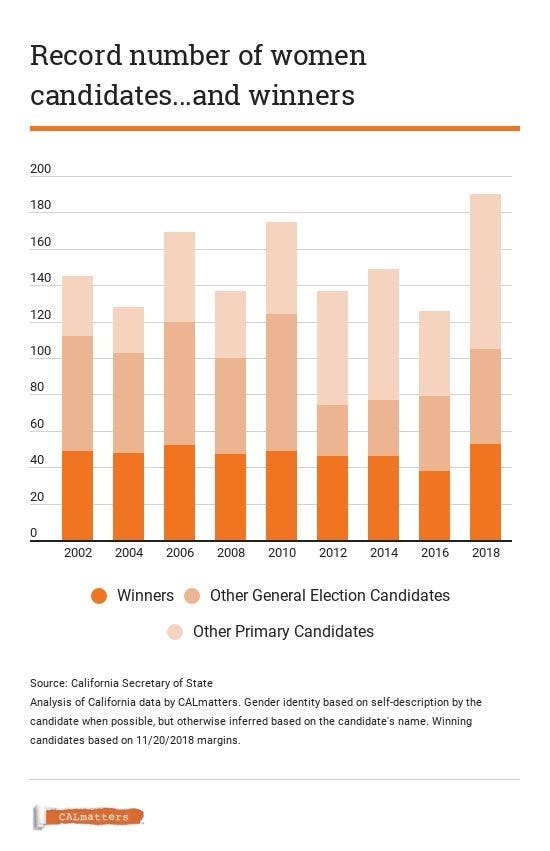
That’s a higher number than any other election this century. It’s also a record-high rate: one-in-three winning candidates this year were women. Or, to put it another way, men hit a record-low, winning a measly two-thirds of all state and federal races across the state.
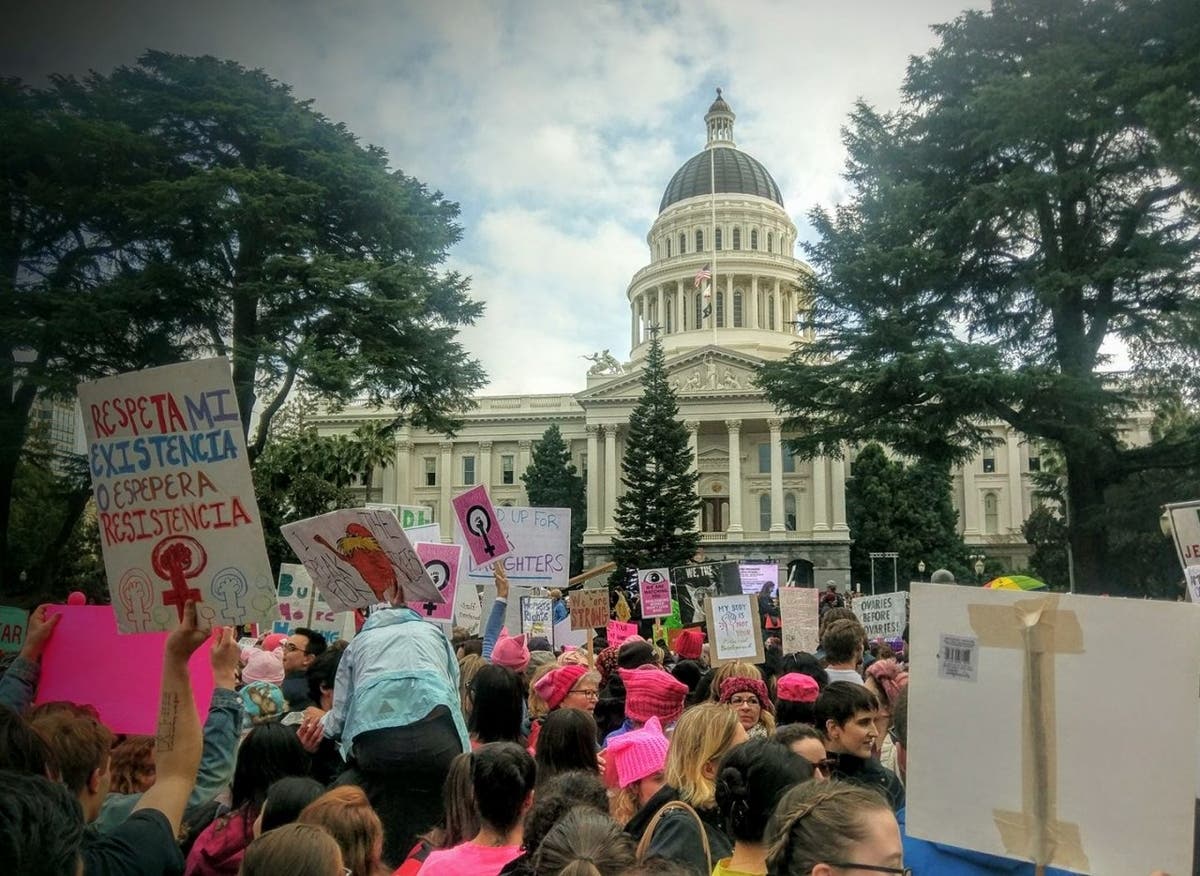
Many saw this coming. Since our last federal last election, we’ve seen the inauguration of President Trump and two rounds of nation-spanning Woman’s Marches; we’ve seen the downfall and prosecution of Hollywood titan Harvey Weinstein and the emergence of the #MeToo movement; we’ve seen the resignation of lawmakers in Washington D.C. and California in the face of sexual assault allegations and the appointment of a Supreme Court Justice despite them.
And while many have dubbed 2018 the second “year of the woman,” a redux of 1992 when a record number of women were elected to federal office including U.S. Sen. Dianne Feinstein, it might be more accurate to call 2018 the “year of the Democratic woman.”
Just 6 percent of the female candidates who won this year in California were Republicans—a total of three women. That isn’t simply because there are fewer Republican women candidates.
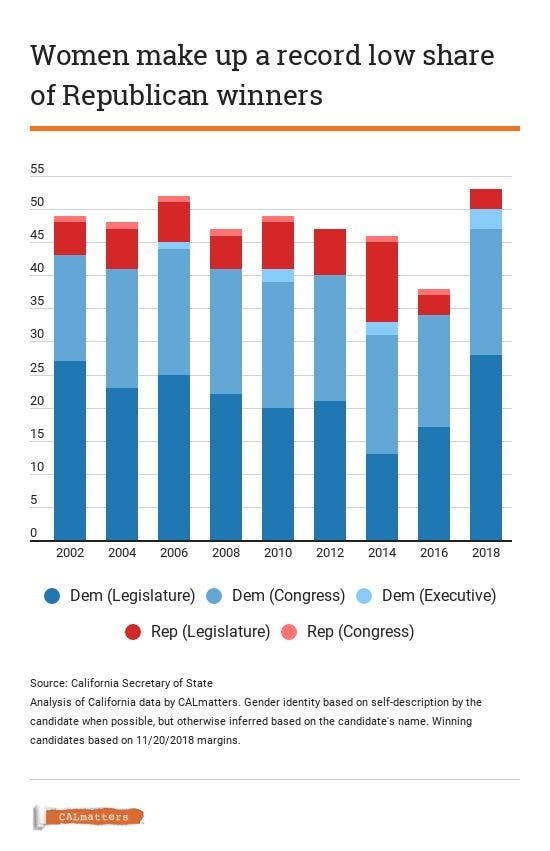
Republicans in a blue state like California are less likely to win than Democrats, but male GOP candidates were more than twice as likely to win than their female counterparts.
And of all the candidates who ran, including those in the primary, only 7 percent of Republican women went on to win in this year’s general election (compared to 17 percent of Republican men). Meanwhile, 40 percent of Democratic women won their races (compared to 35 percent of male candidates).
In concrete terms, the 2018 election results mean that many more of the state’s residents will now be represented by women. Or, at least, by one. The two maps below offer a before and after picture, with orange showing those regions with at least a female congressional representative, assemblywoman or state senator. Viewing the two maps side by side, you can see the large strides toward something approximating gender equity in our state politics. You can also see how much more work there is to be done.
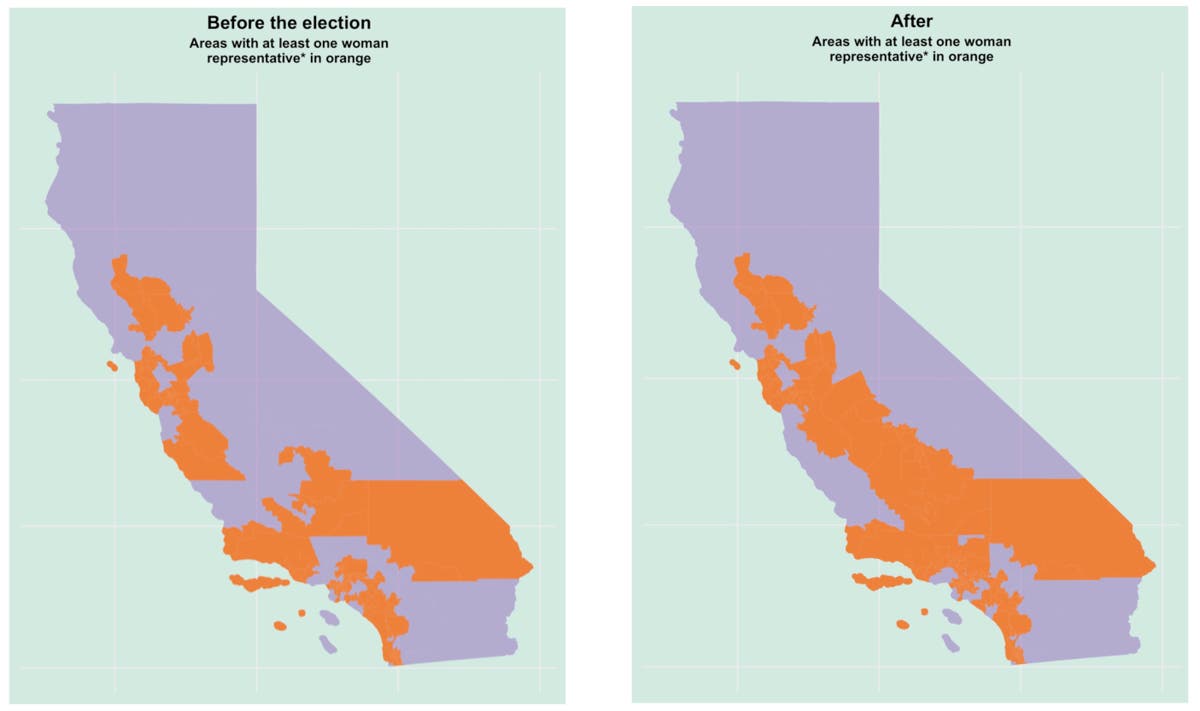
Despite the unprecedented number of women elected this year, large sections of California are still represented by only men in the U.S. House of Representatives and the state legislature.
Do you like what you're reading from CALmatters? Sign up for our newsletters and follow us on Facebook or Twitter.
Photo Credit: Crowds arrive at California’s Capitol for the 2017 Women’s March. Photo by Jim Heaphy/Creative Commons