Community Corner
Crew Of Historic Artemis II Mission To Splash Down Off SoCal Coast: 5 Things To Know
Navy divers will be on hand Friday to help the crew exit their Orion spacecraft and safely escort them aboard the San Diego-based ship.


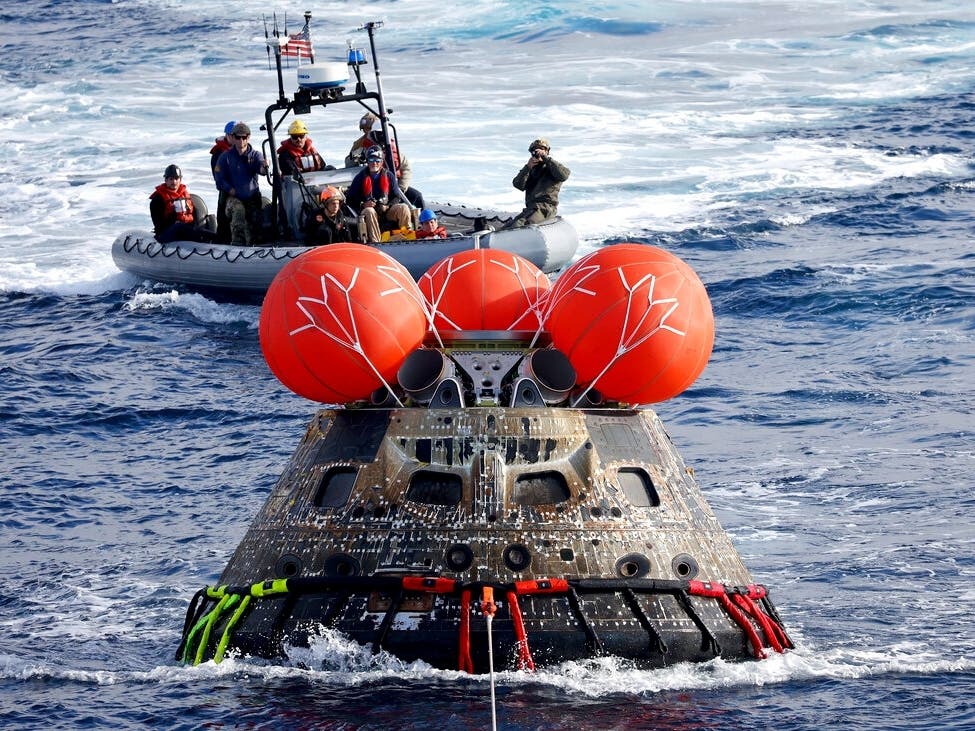

SAN DIEGO, CA — The crew of the historic Artemis II mission is set to splash down this week off the coast of California.
After months of training, U.S. Navy divers will be on hand Friday to help the crew exit their Orion spacecraft and safely escort them aboard the San Diego-based USS John P. Murtha upon their return to Earth.
The spacecraft is scheduled to splash down around 5:07 p.m. Friday off the coast of San Diego, according to NASA. Recovery teams will retrieve the crew members using helicopters and take them to the San Diego warship. Once aboard, the astronauts will be evaluated in the ship's medical bay before returning to shore and being flown to NASA's Johnson Space Center in Houston, Texas.
Find out what's happening in San Diegofor free with the latest updates from Patch.
Millions are expected to watch the return of the first humans to ever venture so far out into space. NASA will livestream the splashdown off the California coast Friday, and you can watch it here:
Here are five key things to know about the history-making mission:
Find out what's happening in San Diegofor free with the latest updates from Patch.
What Are The Artemis Missions?
The Artemis missions are a series of NASA‑led lunar exploration initiatives, developed with international and commercial partners to return humans — including the first woman and the first person of color — to the Moon.
Artemis II is NASA's first crewed mission under the Artemis program.
Who Is The Crew Of Artemis II?
The crew of the Artemis II mission successfully launched at 6:35 p.m. EDT April 1 from Launch Complex 39B at NASA's Kennedy Space Center in Florida. The mission carries four astronauts aboard the Orion spacecraft on a 10-day journey around the Moon, marking the first crewed deep-space mission in over 50 years.
The crew consists of NASA astronauts Reid Wiseman, California native Victor Glover, Christina Koch, and CSA (Canadian Space Agency) astronaut Jeremy Hansen. Key objectives include testing the Orion spacecraft's life support systems with astronauts for the first time and laying the foundation for future crewed Artemis missions.
"Artemis II is a test flight, and the test has just begun. The team that built this vehicle, repaired it, and prepared it for flight has given our crew the machine they need to go prove what it can do," NASA Associate Administrator Amit Kshatriya said in a statement after the successful launch. "Over the next 10 days, Reid, Victor, Christina, and Jeremy will put Orion through its paces so the crews who follow them can go to the Moon's surface with confidence. We are one mission into a long campaign, and the work ahead of us is greater than the work behind us."
Artemis II Crew Makes History
The Artemis II mission reached a historic milestone Monday as astronauts flying around the far side of the moon traveled farther from Earth than any humans in history.
The astronauts on the test flight around the Moon made history at 12:56 p.m. CDT, traveling 248,655 miles from Earth and surpassing the previous human spaceflight distance record set by Apollo 13 in 1970. At its farthest point, the crew inside the Orion spacecraft will reach about 252,756 miles before turning back toward Earth, establishing a new record for the farthest humans have ever traveled in space.
Navy Sailors To Help Crew
Sailors assigned to the USS John P. Murtha have been undergoing training in preparation for recovering the Artemis II crew, according to the Navy.
In a statement, the Navy said the amphibious transport dock ship has "unique advantages" that will assist NASA in the Orion space capsule's recovery and collection of "critical data to help ensure it's ready to recover the astronauts and capsule during future Artemis missions."
A Navy helicopter squadron based out of Naval Air Station North Island in San Diego will assist in tracking the capsule while it travels through Earth's atmosphere, then recover the four astronauts and bring them to the ship for assessment, the Navy said.
Navy divers will also recover and transport the Orion space capsule from the water to the ship's deck.
More Missions Planned
During what NASA describes as the "Golden Age of exploration and innovation," the Artemis missions will enable astronauts to explore the Moon, advancing scientific discovery, unlocking economic opportunities, and laying the groundwork for the first crewed missions to Mars.
More California News:
- Famed CA Chef Killed In Crash
- 'All You Had To Do Was Pay Us Enough To Live.' Video Shows Man Starting IE Warehouse Inferno
- DHS Secretary Threatens International Travel at SFO over Sanctuary Policy
- Joe Biden Makes Surprise Visit To LA County Ice Cream Shop
- ICE Shoots Man In Car On NorCal Highway: Authorities
- Hacker Nabbed 'Some Of LAPD's Most Closely Guarded Records' In Massive Breach: Report
- Man Who 'Viciously' Attacked Neighbor's Dog Convicted Of Animal Cruelty
- Trump Accounts To Debut Soon: Here's How To See If You Qualify In CA
City News Service contributed to this report.
Get more local news delivered straight to your inbox. Sign up for free Patch newsletters and alerts.