Community Corner
2 Whale Deaths In San Francisco Bay This Week
Marine Mammal Center scientists performed a necropsy on one of the gray whales.
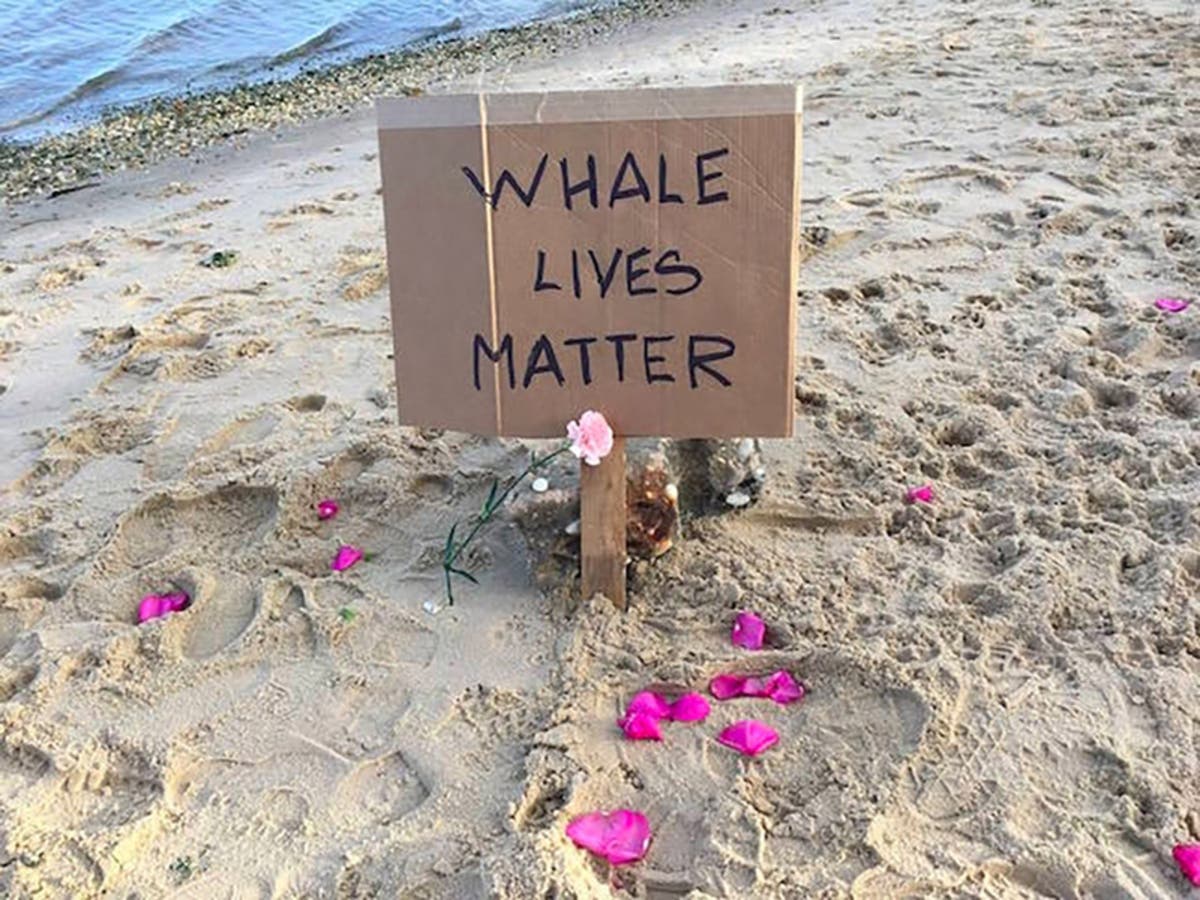
Two gray whales were stranded in San Francisco Bay this week, and one of them died of severe malnutrition, Marine Mammal Center officials said Thursday.
The first whale was floating between Tiburon and Angel Island near Raccoon Strait. It stranded on the shoreline near Belvedere Cove late Sunday.
A report of a second whale was received Monday from the U.S. Army Corps of Engineers. The whale was towed to Angel Island Monday afternoon.
Find out what's happening in San Franciscofor free with the latest updates from Patch.
Investigations into the deaths of the whales were performed Tuesday at Angel Island.
A necropsy identified the first as a year-old, 23-foot female with a significant lack of blubber and body fat and a lack of content in its stomach. There was no evidence of trauma or infectious disease, officials with the Marine Mammal Center said.
Find out what's happening in San Franciscofor free with the latest updates from Patch.
A necropsy could not be performed on the second whale, also a year-old, 23-foot female. The necropsy could not be performed due to its unsafe location near the surf line at Angel Island. The carcass was moderately decomposed and it had a decent amount of blubber reserves. Additional evidence, including tissue and blubber samples, will be gathered to determine its cause of death, Marine Mammal Center officials said.
Blunt force trauma from ship strikes, malnutrition, entanglements and other trauma are leading causes of whale deaths.
Dr. Padraig Duignan, chief research pathologist at the Marine Mammal Center, said biologists have observed cases of young gray whales in poor body condition migrating south from Alaska in the fall to water off the coast of Baja, Mexico. "This species faces the longest annual migration of any whale on earth," Duignan said. He said that it's likely the malnourished whale at Angel Island
didn't feed this winter and had inadequate reserves to survive the journey north.
Marine Mammal Center scientists have responded to more than 70 gray whales in the organization's 44-year-history. Scientists have completed two whale necropsies this year. They responded to five strandings in 2018, three of them in San Francisco Bay.