Business & Tech
How CIOs Drive an AI Stategy and Avoid a Jobs Backlash
IT strategy has moved from empowering to eliminating workers as automation technologies like AI and robotics become strategic disruptors.

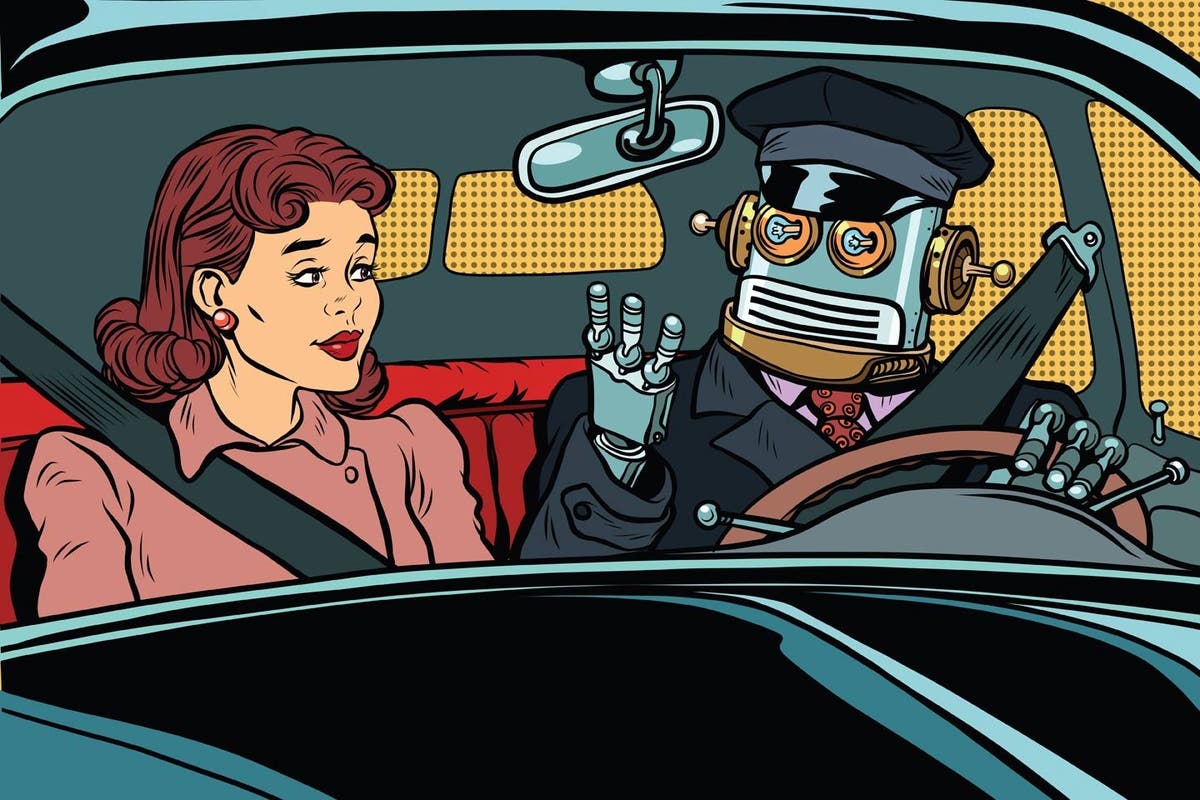


In a recent article on CIO.com I warned that the role of CIO has strategic shifted to automation technologies like machine learning, text-to-speech, self-driving vehicles, robotics and much more. That will pose new problems for CIOs to get buy-in as the types of jobs that these technologies threaten expand beyond factories and branches to the company headquarters and boardroom.
Back in 1981, when their role was defined, they were responsible for everything related to IT. Technology purchases and implementation had to be authorized by the CIO. Added to the systems that they had to put in place, they were also responsible for developing a company’s IT strategy and policy.
Although AI is aimed at efficiency, it does so with automation which inevitably means the end of repetitive or routine jobs. Instead of providing solutions for staff to become more efficient, they now destroy jobs in the name of efficiency.
Find out what's happening in San Franciscofor free with the latest updates from Patch.
Growth and development are then promoted under the guise of better jobs. In September, PwC released a report entitled ‘Workforce for the Future’. This report did not bode well for certain career paths.
According to the report, one of the major findings was that typical careers where one would climb a ladder of advancement was steadily declining. Robots and AI were found to be the reason behind the decline seeing that they replaced humans to do the job. An Oxford University study affirmed the report’s findings and estimated that 47% of US jobs could be replaced by automated, intelligent robots within the next 20 years.
Find out what's happening in San Franciscofor free with the latest updates from Patch.
The threatened working class that the report indicated will be required to adapt their skills and make more frequent career transitions if they have a hope to remain employed. The Oxford study indicated the same results, but went deeper and stated that the rate of displacement would differ across industries.
Moore’s Law
AI development has gone largely unnoticed over the last couple of decades. It has only recently made greater perceptible strides. At the beginning of the digital age, nearly 70 ago, robots weren’t capable of much. Today they have the ability to drive cars, play instruments and even beat humans in jeopardy.
Better hardware and software was the cause for the latest influx in AI development. According to Moore’s law, technology’s power and efficiency double every couple of years. This means that although the growth was nearly imperceptible during the first couple of decades, it was doubling none the less. This exponential growth means that by 2025, AI will develop at unprecedented rates and that human-level AI would be possible as early as 2045.
The job destruction won’t occur in parallel across all industries. It is generally believed that routine jobs will be the first to disappear with non-routine jobs to follow not too long after. The question remains as to the role of CIOs is the impending job destruction.
Technological Advancement
A crucial part of a CIO’s job is to stay up to date with technological advances, including AI development. However, the development of AI requires that certain jobs need to become obsolete in order for it to advance. This is not the easiest development to promote unless it can be framed in such a way that everybody wins. Old jobs make way for new ones and the companies benefit.
This picture has the potential of looking promising if the right areas are highlighted. Any company would want their employees to be more efficient. Any company would want to create more job opportunities and be recognized for innovation. These are the points that will sway most executives to buy into AI development.
There is, however, no doubt that there will also be resistance to the notion of AI development. Certain companies will remain skeptical and it will ultimately mean the end of them. Vladimir Putin was even of the opinion that whoever became the leader in the field of AI would inevitably rule the world. He further stated that AI was the future of all mankind.
The rate at which jobs are disappearing is alarming, considering that experts believe that by 2060, most jobs will have vanished. The World Economic Forum predicted that by 2020, nearly 5 million jobs will already have disappeared. A survey conducted by Oxford and Yale indicated that 10 years later almost all routine jobs will have been destroyed. Yet another panel of experts believe that within the next decade, 40% of the world’s 500 biggest companies will already have closed their doors.
The question that now remains is not whether AI is really a possibility, but rather when it will happen. Furthermore, will the world, and your HR department and leadership team, be prepared for the effects that AI development is bound to have?