Politics & Government
Quarantined: A New Law Is Disrupting California School Reopenings
As classes resume, a new law governing independent study is worsening staff shortages and forcing students to relive last year's shutdowns.

August 25, 2021
In summary
Find out what's happening in San Franciscofor free with the latest updates from Patch.
As classes resume, a new state law governing independent study is worsening staff shortages, threatening school budgets and forcing quarantined students to relive last year’s school shutdowns.
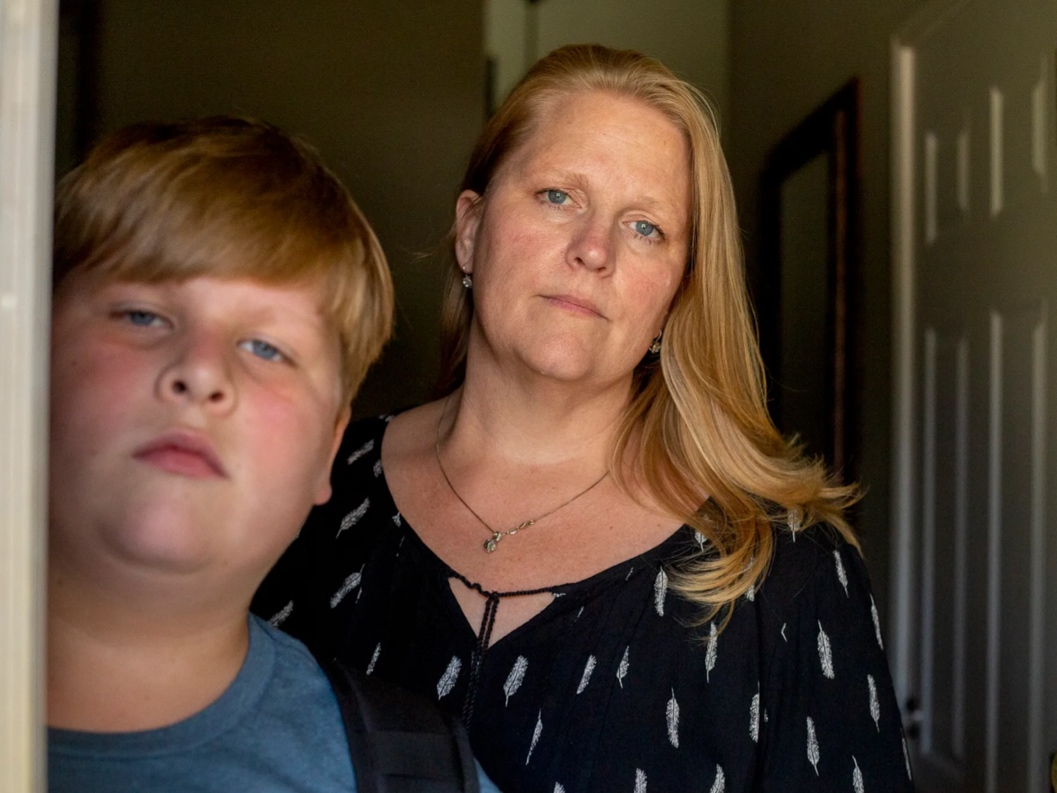
Heather Christensen got an email on Aug. 14 from her son’s school, saying her 10-year-old had been in contact with a classmate who tested positive for COVID-19.
Find out what's happening in San Franciscofor free with the latest updates from Patch.
As required by California health guidelines, Christenson’s son Kayden would have to quarantine at home for 10 days.
“It was only the fourth day of school,” she said. “He’s missing out on not only his friends, but he’s stressing out about falling behind.”
Kayden’s teacher at Madera Elementary in the Simi Valley Unified School District near Los Angeles provided a packet for him to complete during the 10 days of quarantine. Christensen said Kayden finished it in three days and has since then spent his time watching TV and playing video games.
As California schools reopened amid the spread of the more transmissible and deadlier delta variant, student quarantines became commonplace within days. San Francisco Unified reported 64 positive cases among students within the first week of opening. On Tuesday, Los Angeles Unified reported about 6,500 students were in isolation a week after school started.
But a new state law is undermining the ability of schools to keep these quarantined kids engaged. Its provisions attempt to stretch independent study — a program intended for long-term remote learning— to meet the spontaneous, short-term needs of students temporarily quarantined.
Schools say they are unable to hire the teachers required to provide independent study for these quarantined students. As a result, they can languish in an educational limbo, while schools risk losing state funding for the days they are technically “absent.”
At Simi Valley Unified, Superintendent Jason Peplinski says the district lacks the staffing needed to offer any substantial instruction to students like Kayden.To make matters worse, he says the district might lose state funding, which is based on attendance, due to its failure to deliver instruction during quarantines. With about 250 students already in quarantine as of last week, Peplinski estimates the district will lose $13,000 a day.
Nor can many schools meet the needs of a growing number of parents — concerned about the risks of the delta variant — who are seeking to move their kids into more permanent independent study.
“What they did was they wrecked both programs. I know legislators are well-intended people, but they didn’t have enough educators’ perspectives.”
Jason peplinski, simi valley unified district superintendent
At San Francisco Unified, 800 students recently applied for independent study to avoid the spread of the delta variant, more than doubling the number of students who registered before the school year started last week. A spokesperson for the district says there might not be enough teachers to accommodate these students.
District superintendents say the new state law has forced a marriage between independent study and distance learning, further disrupting school reopenings already threatened by the delta variant.
“What they did was they wrecked both programs,” said Peplinski. “I know legislators are well-intended people, but they didn’t have enough educators’ perspectives.”
Independent study — not a catch-all solution
Independent study existed long before the pandemic. This mode of instruction worked best for traveling athletes, child actors and students who wanted to advance more quickly.
Students would collect packets from their schools and complete them on their own. Teachers typically weren’t required to contact students frequently, but that varied depending on their individual needs.
“Independent study is not appropriate for all kids,” said Peplinski. “The only kids that can really choose independent study are the ones who can stay at home with child care.”
State legislators drastically changed these rules just weeks before California schools reopened for the first fully in-person school year since the start of the pandemic.
After the devastation of school closures, distance learning became a radioactive term for legislators. Since the start of the pandemic there’s been little accountability for both students and teachers. Attendance and grades plummeted. Younger learners especially became disengaged. English learners and students with disabilities fell disproportionately behind.
Independent study provided a template to fix distance learning for the small percentage of students whose parents weren’t yet comfortable with sending them back to campuses.
The new law’s provisions “enhanced the existing program to ensure students receive comparable curriculum and increased time with teachers,” said Democratic Assemblymember Patrick O’Donnell of Long Beach, chair of the Assembly Education Committee. “As we start the new school year, we will monitor and contemplate adjustments if needed.”
A spokesperson for the committee’s vice chair, Republican Kevin Kiley of Rocklin, said the distance learning of last year was never meant to be a permanent solution. “Legislators were trying to draw a hard line,” said spokesperson Josh Hoover. “and say schools need to be open in person, and distance learning is no longer on the table.”
But superintendents say the legislation signed by Gov. Gavin Newsom on July 9 overcorrected for the shortcomings of distance learning by forcing districts to completely redesign independent study programs as the only alternative to in-person instruction.
“At the elementary level, it can easily mean a student may not have a spot when they choose to return.”
Don austin, palo alto unified district superintendent
Districts are now required to provide students with live instruction as a part of independent study. Teachers have to work with parents and students to design a plan of study. Student-teacher ratios for independent study cannot be higher than district-wide averages.
And under the new state law, if a student decides to move back to in-person instruction, the district has five days to comply. This could be a logistical nightmare considering that many class sizes have already hit their maximum.
“In middle and high schools that’s not just one student, it’s one student times the number of classes they take,” said Don Austin, superintendent of Palo Alto Unified. “At the elementary level, it can easily mean a student may not have a spot when they choose to return.”
Austin and his team ultimately decided to hire a third party to manage its independent study program. The district is paying an additional $3,000 for each of its approximately 230 students enrolled.
“We had to figure out the rules from the Legislature in one month,” he said. “It was pretty out-of-touch.”
As classes resume, independent study meets the delta variant
According to district officials and their lobbyists in Sacramento, the new independent study rules were approved during a more optimistic time when vaccination rates were rising and the pandemic seemed to be receding.
“In defense of the governor and Legislature, it was a whole different set of circumstances,” Snider said. “COVID was trending down. The delta variant spike changed everything.”
At San Francisco Unified, 700 students had signed up for independent study by the district’s initial July 30th deadline. But after more parents expressed interest out of fear for the delta variant, the district extended the deadline to Aug. 27. So far, 800 additional students have signed up. Staffing is the most urgent concern.
“We’re already experiencing a teacher shortage,” said Gentle Blythe, a spokeswoman for the district. “Trying to add teachers to independent study just exacerbates that challenge.”
At Nevada Joint Union High, a district of about 2,500 students, the independent study program is already full. After seeing 30 COVID cases within the first three days of school, Superintendent Brett McFadden said he expects more parents to request a switch to independent study.
“Right now with the explosion of the delta variant, the only other option is independent study,” he said “But all of us only have so many teachers who can teach it.”
The irony of this moment is not lost on lobbyists like Snider. With this year’s state budget, California’s schools are getting more money than ever. But money won’t create more teachers, he said.
“The disconnect is that Sacramento has given districts buckets of money to hire, but there’s no one to hire,” he said. “We’re bleeding more teachers than we can recruit.”
More on covid-19 and education
Newsom makes California the first state to require teacher vaccines or COVID tests
Lea este artículo en español. After months of reluctance, Gov. Gavin Newsom on Wednesday mandated that all California school employees be vaccinated for COVID-19 or be tested weekly. This is the first such statewide mandate for teachers in the country. Until now, Newsom stopped short of such a requirement: He spent the past several months voicing […]
by Joe Hong
August 11, 2021
We want to hear from you
Want to submit a guest commentary or reaction to an article we wrote? You can find our submission guidelines here. Please contact CalMatters with any commentary questions: commentary@calmatters.org
CalMatters.org is a nonprofit, nonpartisan media venture explaining California policies and politics. Sign up for our newsletters and follow us on Facebook, Twitter and Instagram.