Community Corner
Sequoia National Park Reopens Giant Forest After Wildfire Damage
The park is reopening three months after a wildfire ripped through thousands of ancient trees near Giant Forest's famous redwood grove.


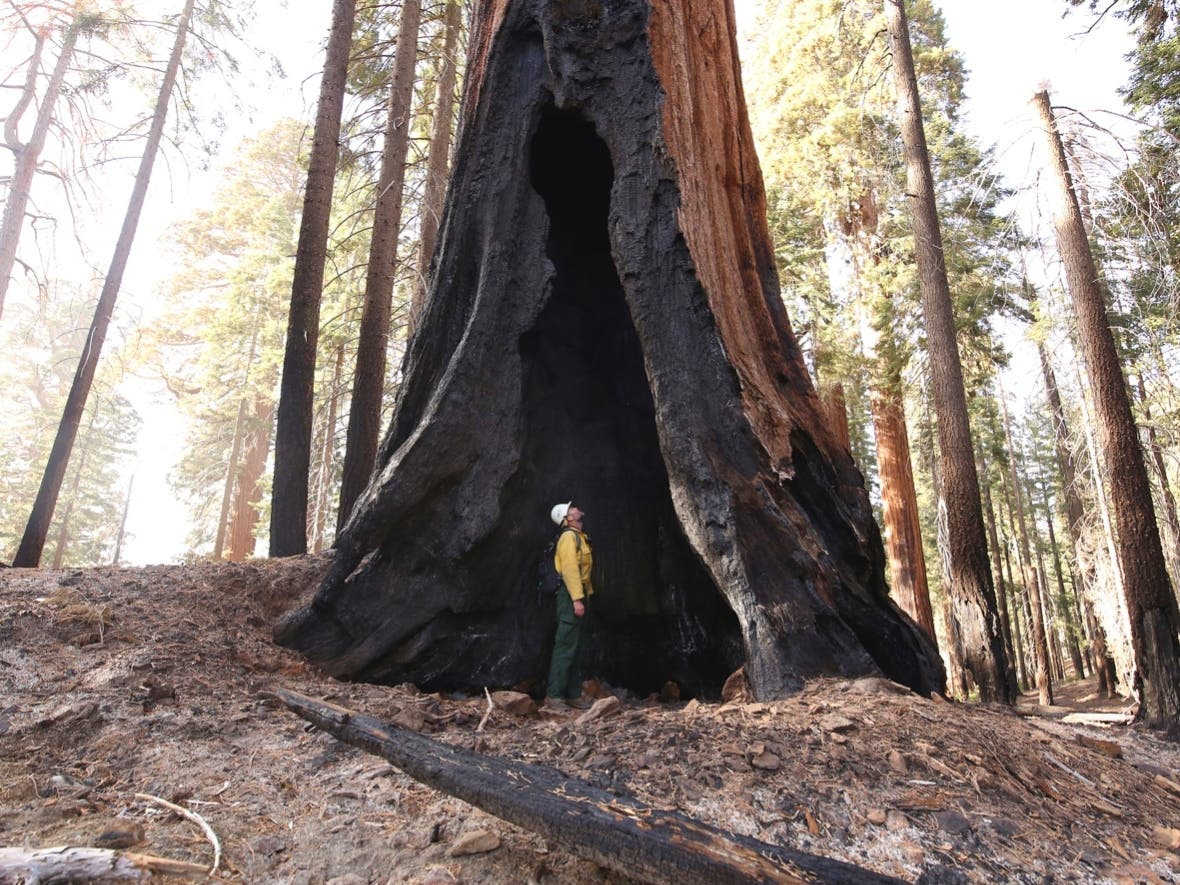
CALIFORNIA — Wildfires tore through Sequoia National Park in late summer, threatening one of the oldest redwood groves in the nation. On Saturday, Giant Forest — home to one of the largest living trees on earth — reopened after three months of closure.
The Giant Forest will be open during daylight hours on Saturday and Sunday and after that, it will open from Thursdays through Sundays. The grove will go to a seven-day schedule between Christmas and New Year's if winter weather allows, according to the National Park Service.
The Giant Forest includes the General Sherman tree, the largest living thing on earth by volume.
Find out what's happening in San Franciscofor free with the latest updates from Patch.
In September, fire agencies were able to protect four of the largest and oldest sequoias on the edge of Giant Forest, called "The Four Guardsmen," from the KNP Complex Fire as it barreled toward the edge of the forest.
Fire crews were able to save the iconic trees by clearing out nearby vegetation and wrapping the base of the trees in fire-resistant material.
Find out what's happening in San Franciscofor free with the latest updates from Patch.
"Generally fires can be destructive however low-intensity fires can be beneficial to giant sequoia trees. A damage assessment will be done in these groves when it is safe to do so," park officials said.
This year, fires in Sequoia National Park and surrounding Sequoia National Forest tore through more than a third of groves in California and torched an estimated 2,261 to 3,637 sequoias, park officials said.
Nearby wildfires last year killed an unprecedented 7,500 to 10,400 giant sequoias that are only native in about 70 groves scattered along the western side of the Sierra Nevada range.
Losses now account for 13 percent to 19 percent of the 75,000 sequoias greater than 4 feet in diameter.
Sequoia trees are equipped with a durable armor of bark, designed to weather wildfires and even thrive within them. Their cones also release seeds when exposed to fire. But a threatening combination of the 2012-16 drought, rising climates and relentless fire seasons have wreaked havoc on hundreds of these trees over the past decade.
Fires have torn through dozens of groves in the Sierra Nevada mountains in the past six years, killing the giants in large numbers for the first time.
In Alder Creek Grove, along the western slopes of the Sierra Nevada, the Castle fire charred at least 20 giant sequoia groves this year.
Sequoia experts may never be able to calculate how many of these massive trees died in the Castle fire, some say that number could top 1,000, the LA Times reported.
"This fire could have put a noticeable dent in the world's supply of big sequoias," Nate Stephenson, a research ecologist with the U.S. Geological Survey, told the LA Times.
The Save the Redwoods League estimated that on its privately owned property, the Castle fire killed at least 80 monarchs, ranging from 500 years old to well over 1,000 years old.
The Associated Press contributed to this report.
Get more local news delivered straight to your inbox. Sign up for free Patch newsletters and alerts.