Business & Tech
'Tainted Wines' Saga Continues; View Wines Sorted by Arsenic Level
New table shows wines named in suit, sorted by highest arsenic levels.


It’s been one month since a lawsuit alleging many low-cost wines made in California contain dangerously high levels of inorganic arsenic, and the idea of poison being in one’s glass remains disturbing.
The suit, which is pending class-action status, was filed March 19 in Los Angeles County Superior Court. To date, none of the 28 wineries named as defendants have filed responses with the court and no future court dates have been set, according to court records.
This doesn’t mean that the case is stalled, though, as these sorts of legal proceedings take time. In the meantime, lawyers representing the plaintiffs have put together a website aimed at answering many of the frequently asked questions related to the case— aptly titled taintedwine.com. They’re also reaching out to consumers who may wish to join the suit once it’s officially a class-action.
Find out what's happening in San Mateofor free with the latest updates from Patch.
The Basics
The plaintiffs in the case claim that dozens of wineries produced and marketed 83 wines that ”...contain dangerously high levels of inorganic arsenic, in some cases up to 500% or more than what is considered the maximum acceptable safe daily intake limit,” according to the complaint.
Find out what's happening in San Mateofor free with the latest updates from Patch.
“Put differently, just a glass or two of these arsenic-contaminated wines a day over time could result in dangerous arsenic toxicity to the consumer,” it continues.
The complaint states some 1,306 different types of wine were tested via three separate, independent labs to reach their disturbing conclusions.
“Until now, consumers have no way to know how much arsenic they’re getting in their wine,” said plaintiffs’ lawyer Michael Burg, partner in Denver, Colorado-based Burg Simpson. “This class action suit will help shine a light on the wine industry’s dirty secret.”
The EPA’s standard for arsenic in drinking water is currently 10 parts-per-billion. Laboratory tests utilized for the court complaint found levels as high as 50 parts-per-billion in some wine, according to a laboratory that analyzes wine who was interviewed by CBS News.
Few of the winemakers have responded publicly to the suit, but those who have say consumers shouldn’t be worried about the elevated levels of arsenic.
Trader Joe’s, whose popular Charles Shaw wine which has the nickname “two buck Chuck” and is named in the complaint, immediately reached out to the public, saying their is nothing for consumers to fear in their wine.
“We will not offer any product we feel is unsafe. Ever. We have no reason to believe the wines we offer are unsafe, including Charles Shaw White Zinfandel,” spokeswoman Rachel Broderick told Patch via email.
“...it is misleading to claim that wines with trace amounts of arsenic above the U.S. government standard for drinking water are unsafe,” representatives for The Wine Group— which owns Franzia, Cupcake, Concannon, Almaden, Fisheye and Flipflop— said in a statement shared with Patch. ”After all, people do not consume wine in the same amounts as water.”
The Wines
Among the wines named in the suit are popular brands like Franzia, Ménage à Trois, Sutter Home, Wine Cube, Charles Shaw, Glen Ellen, Cupcake, Beringer and Vendage.
Patch has a list of all the wines cited in the lawsuit here.
We’ve also pulled in a list of those wines, sorted by alleged arsenic levels, courtesy of taintedwine.com. The wines with the highest levels found in testing are at the top.
- Franzia, Vintner Select White Grenache, The Wine Group, NV
- Menage A Trois, Pinot Grigio, Trinchero, 2011
- Wine Cube, Moscato, Trinchero, NV
- Menage A Trois, Moscato, Trinchero, 2010
- Bandit, Pinot Grigio, Trinchero, NV
>>CLICK HERE TO SEE OUR LIST OF ALL 83 WINES.<<
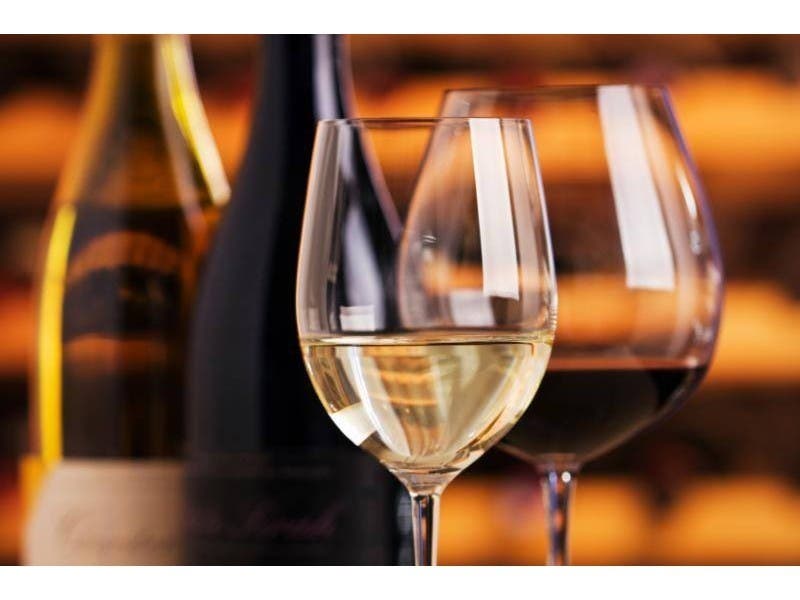
(Image via Shutterstock)
Get more local news delivered straight to your inbox. Sign up for free Patch newsletters and alerts.