Politics & Government
Meet Robert Sandoval, Candidate For San Rafael City Council
Robert Sandoval told Patch why they should be elected to the San Rafael city council.


Robert Sandoval is vying for a seat on the San Rafael City Council representing District 3.
As county elections officials begin mailing ballots, voters will prepare to decide between candidates running for several offices, and Patch has put together local voter guides and candidate profiles.
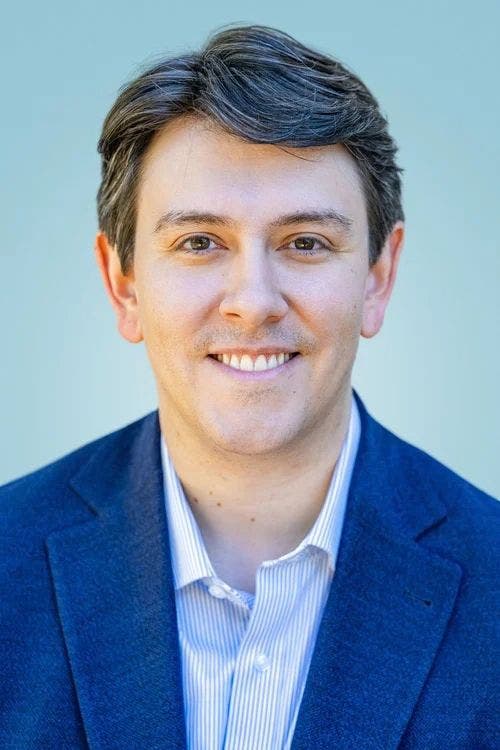
Learn more about Robert Sandoval:
Find out what's happening in San Rafaelfor free with the latest updates from Patch.
Age: 35
What is your educational background?
Find out what's happening in San Rafaelfor free with the latest updates from Patch.
I earned my B.A. in Politics and Economics from Occidental College, and my J.D. from the University of Chicago Law School.
What is your professional background?
I am an attorney with experience across public service and the private sector. I served as a California Deputy Attorney General in the Kamala Harris and Xavier Becerra administrations and as a federal judicial law clerk. I also practiced complex litigation at a major law firm, before moving to in-house counsel in the technology sector.
Have you ever held public office, whether appointive or elective?
Yes. I currently serve on the Marin County Planning Commission, the San Rafael Park and Recreation Commission, and the San Rafael Public Art Review Board.
What are the top three issues facing your district/constituents right now?
The top three issues are: housing and how our city will address the influx of large development applications; improving the economic vitality of our downtown, including addressing vacancies, homelessness, and permitting; and modernizing our infrastructure, including safer streets, mitigating traffic, emergency preparedness and addressing flooding and sea-level rise. These issues are connected. Growth can make our community better when our roads, public safety, utilities and public spaces keep pace.
What is one specific policy you would implement in your first 100 days?
I want to focus on meaningful actionable changes we can make to improve people’s quality of life in San Rafael. For instance, San Rafael already has plans identifying many infrastructure needs but the challenge is making sure those projects are funded and delivered. Residents should be able to see what the City has committed to, when it is expected to happen, and whether it is on schedule and on budget. We can accomplish this with an infrastructure accountability dashboard that allows residents to easily track projects. As another example, in my first 100 days, I would work with the Mayor, staff, and our regional partners, to address and improve traffic. My focus would be on execution: taking many of the plans we already have and making sure our residents see real results. I have a track record of turning concerns into real results that residents can count on. On the Pt San Pedro Road Coalition, I brought together stakeholders in the East San Rafael corridor to advocate for pedestrian activated crosswalks, and we were able to successfully encourage the City staff to apply for grant funding. New, safer, crosswalks will now be expected at three intersections along Pt San Pedro this Fall.
What is your plan to reduce homelessness, and how would you measure success after one year?
To reduce homelessness, I would strengthen San Rafael’s partnership with Marin County and service providers to move people from the street into shelter, treatment and permanent supportive housing, while keeping public spaces safe and accessible. While we continue to expand behavioral-health and substance-use connections, and support interim shelter as a bridge to housing, I would also enforce our laws governing public spaces consistently. After one year, I would measure success by the number of permanent housing placements, and the number of people living unsheltered in San Rafael. Success should mean fewer people living outside and more people stably housed. I also would consider it a success if we could enforce our laws and clear the dangerous large unsanctioned encampments on Andersen Drive.
What is one specific change you would make to improve public safety?
In District 3, residents regularly raise concerns about speeding, pedestrian crossings and visibility along major corridors. The City should be able to respond faster with practical tools such as improved crosswalks, pedestrian-activated beacons, lighting, vegetation clearance, signage, traffic-calming measures and targeted speed enforcement. Public safety also means maintaining strong fire and emergency medical response, particularly as wildfire and evacuation risks grow.
How would you improve transparency or accountability in local government?
My commitment to our community is that I will do at least quarterly updates reporting what I’m working on, what the City Council is doing, and where we are headed. I will also regularly post on social media with video formats that allow residents to engage and interact with me. As a Director of the Pt San Pedro Road Coalition in our district, I have years of hands-on experience working to improve transparency and accountability by our local government and I will be even more effective at creating positive change in this arena as a member of the Council. In addition, I will work with City staff to explore ways we can increase public reporting, more easily searchable public records, and access to meetings and upcoming decisions. Transparency is useful not only for our residents to know what is happening in their City, but for the Council to understand that the decisions they are making will actually benefit the community the way they intend them to.
Why are you a better choice than your opponents?
What distinguishes my candidacy is the combination of experience, fresh perspective, and a real commitment to public service that I would bring to the City Council. As an attorney and Marin County Planning Commissioner, I have experience working through complex housing and land-use issues and ensuring that new development works for the communities around it. As a San Rafael Parks and Recreation Commissioner, I helped develop the City’s first Citywide Parks and Recreation Master Plan and have worked to improve parks and playgrounds throughout San Rafael. Earlier in my career, I served as a California Deputy Attorney General, and public service has remained a constant throughout my professional and civic life. San Rafael is ready for a new generation of leadership. As a father raising a young family here, I think every day about the city we are building for the next generation. I would bring that perspective to the Council as we make consequential decisions about affordability, housing, infrastructure, public safety, and climate resilience. I offer both the experience to understand how our local government works and a fresh perspective on how it can work better for San Rafael’s future.
What changes, if any, would you support regarding the role of federal immigration enforcement agencies, including ICE, and how they interact with state and/or local governments?
Our local law enforcement officers should continue to be focused on local public safety that protects our community, not on carrying out federal civil immigration enforcement that only serves the political narrative in DC. Clear boundaries matter for public safety. Residents should feel safe enough to report crimes, serve as witnesses and seek help from police without fearing that an unrelated interaction will become an immigration proceeding.
What role do you believe government should play in regulating or supporting the development and use of artificial intelligence?
At the local level, our government should be thinking about clear rules for how the City buys and uses AI. We need to protect resident data, require cybersecurity safeguards, preserve public records, disclose significant AI use, and require meaningful human review before AI influences high-impact decisions involving public safety, employment, benefits or other individual rights. As a lawyer in the technology sector who regularly uses AI, I also understand how it can make work more effective. The same holds true for our local government. AI can help staff analyze information, improve service to our residents, and automate repetitive administrative work. I would take a risk-based approach that encourages useful, low-risk applications while imposing stronger safeguards where errors, bias, privacy breaches or security failures could seriously affect people.
Get more local news delivered straight to your inbox. Sign up for free Patch newsletters and alerts.