Event Details
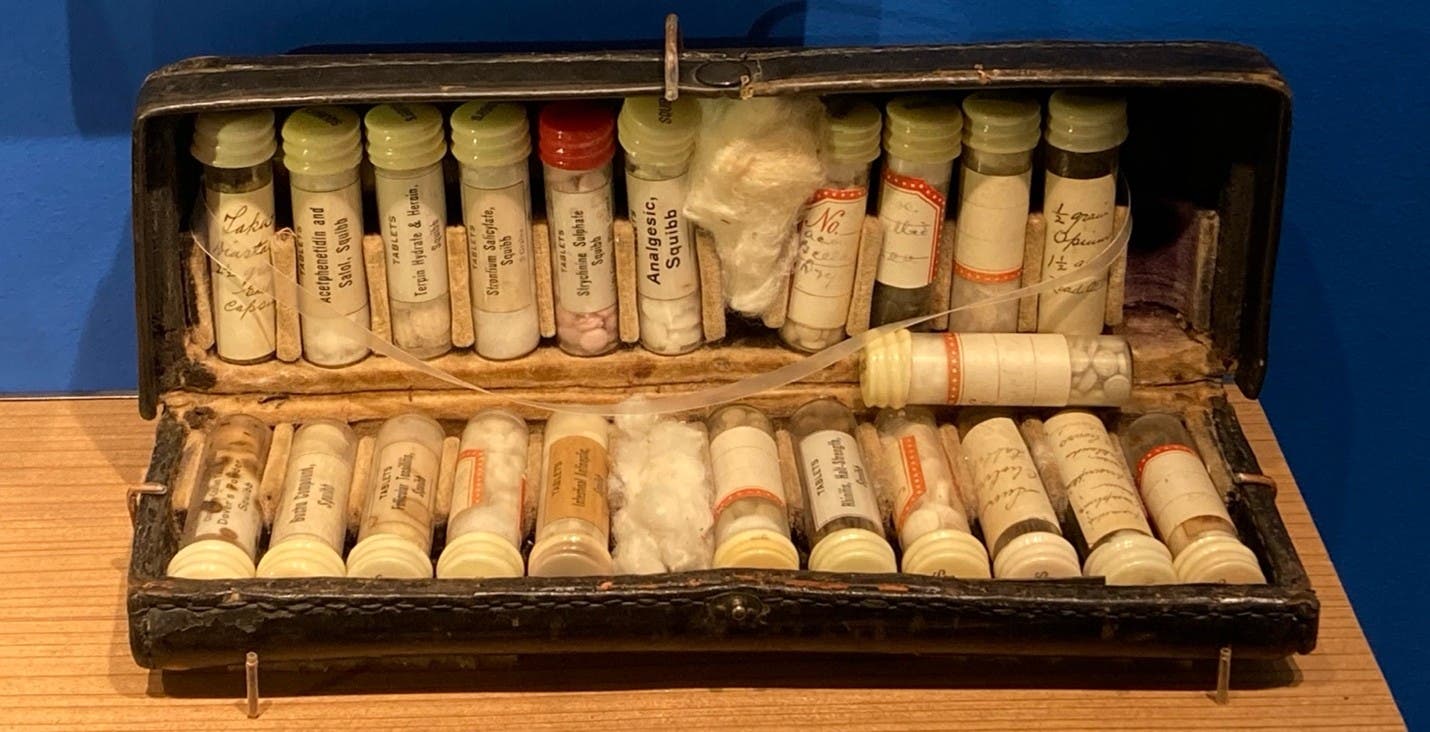
Step inside the House of Happy Walls Museum for a fascinating exploration of Jack London’s personal medicine case and the remarkable story it reveals about his life, health, and writing. Dating from 1909–1910, the black leather Squibb medicine case on display in the museum contains 22 glass vials with metal screw caps and drugs mostly in tablet form. The drugs in the case include various opioid and non-opioid analgesics, antipyretics (fever reducers), anti-inflammatories, drugs for respiratory disorders (bronchitis, the flu, and expectorants), diuretics, antiseptics, and drugs to treat rheumatism and malaria.
This engaging presentation will examine the medicines known to have been used by Jack London himself and explore his understanding of germ theory, the physiological actions of the drugs he used, and their potential for toxicity. Visitors will also discover how London incorporated these medicines into the dramatic fabric of his novels and short stories, including “The Sea-Wolf,” “The Little Lady of the Big House,” and “The Kanaka Surf.”
Presenter Richard M. Rocco, PhD is Associate Professor of Pharmacology at Samuel Merritt University, with current research interests focused on methods for detecting counterfeit anti-malarial drugs, as well as the history of medicine and drug discovery. His interest in Jack London began after a visit to the House of Happy Walls Museum, where the Squibb medicine case was on display. That discovery led to several published papers exploring Jack London’s life and his use of medicine in literature. This presentation will mark the first major talk focused specifically on London’s use of this particular medicine case.
This event is part of a speaker series co-hosted by Jack London Park Partners and the Jack London Society, honoring the 150th anniversary of Jack London’s birth. JLPP is grateful for the support of the Jack London Society and its scholars in bringing this speaker series to life.